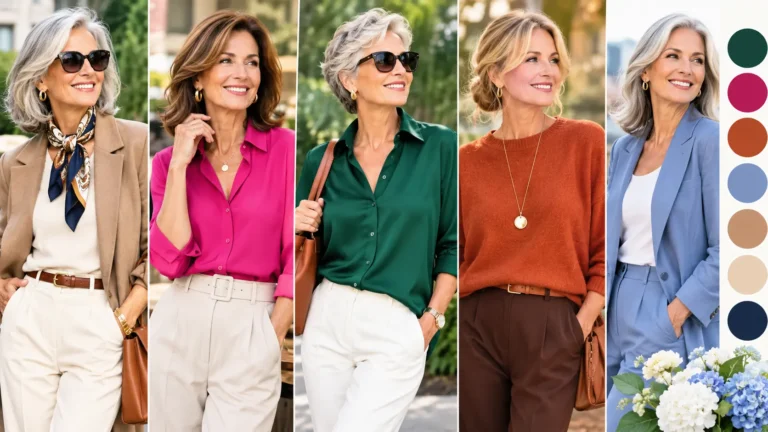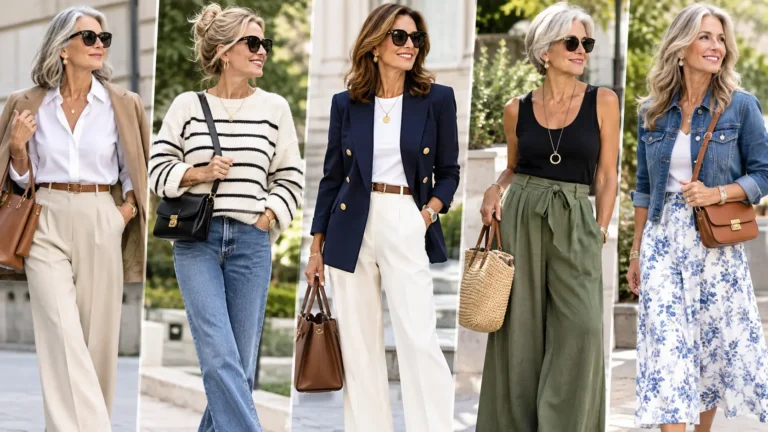
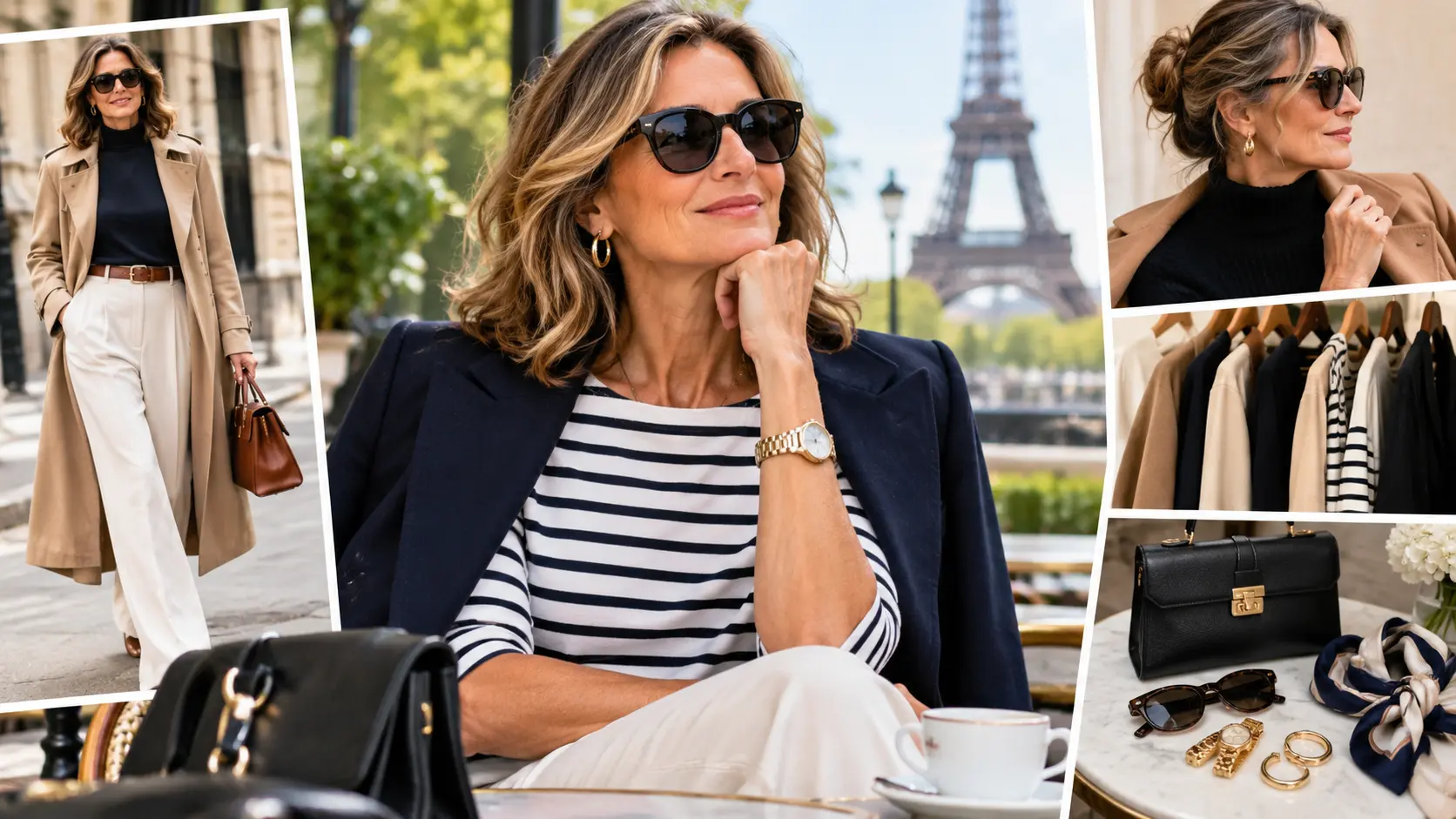

I used to think French women had some secret wardrobe rulebook that the rest of us never received.
You know the look I mean: straight-leg jeans, a beautiful knit, a structured coat, simple gold jewelry, and shoes that look elegant without appearing uncomfortable. Nothing seems overworked, yet every piece feels intentional.
The more I pay attention to French-inspired fashion, the more I realize that the appeal isn’t really about expensive designer labels or having a perfectly slim figure.
It’s about knowing what suits you, choosing clothes that work together, and understanding when an outfit needs one beautiful detail instead of five competing ones. Those ideas become especially useful after 50, when you may want your wardrobe to feel polished without sacrificing comfort or personality.
If you’re looking for the French woman’s style secrets for dressing over 50, I’m sharing the principles I would borrow first, from building a timeless capsule wardrobe to choosing flattering jeans, layering neutrals, and adding accessories that make ordinary outfits feel special.
You don’t need to replace everything in your closet, either. Some of the best changes begin with wearing what you already own a little differently.
1. Build Your Wardrobe Around Timeless Basics
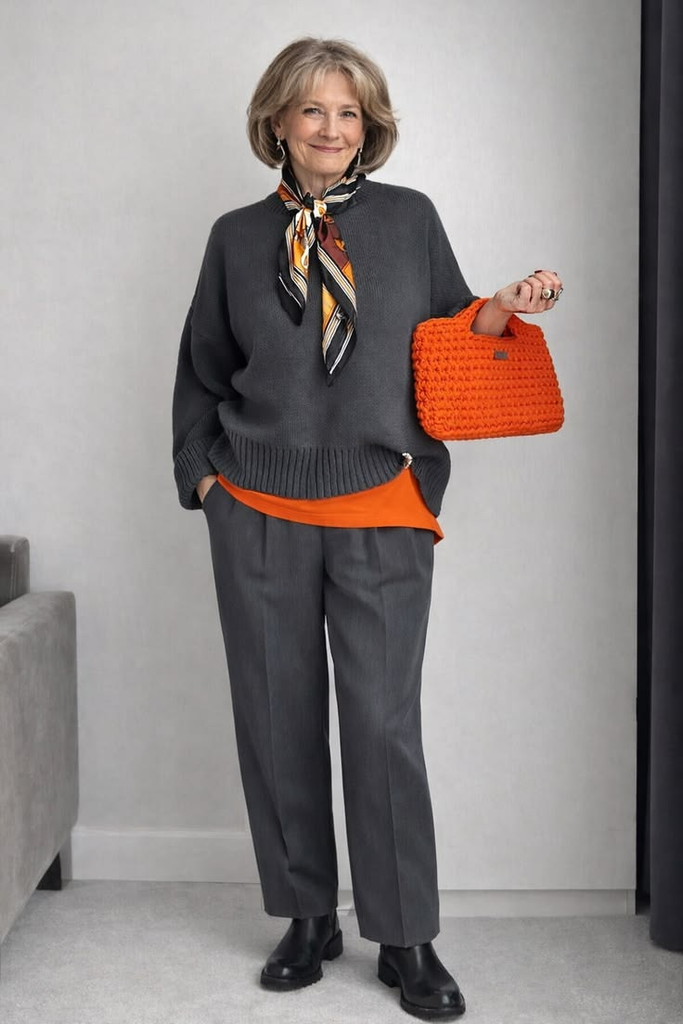
One thing I admire about French-inspired dressing is how often the simplest pieces do the most work. A well-fitting pair of trousers, a crisp button-down shirt, a soft sweater, and a classic blazer can create more outfits than a closet full of items that only work together one particular way.
For women over 50, this approach is practical because it reduces the daily struggle of figuring out what to wear. Instead of buying a different outfit for every occasion, I would start with versatile clothing that fits your current lifestyle. If you spend most of your week running errands, meeting friends, and attending casual lunches, you probably need more comfortable polished separates than formal dresses.
Start with a small collection of pieces in colors that naturally coordinate. Navy, cream, black, camel, gray, and denim are useful foundations, but you don’t have to wear all neutrals. A wardrobe built around colors you genuinely enjoy will always feel more personal than one copied entirely from someone else’s closet.
My practical starting point: Choose one pair of trousers, one pair of jeans, two tops, a cardigan, and a blazer that all work together. Try making five different outfits before shopping for anything else.
2. Choose the Right Fit Instead of Following Every Trend
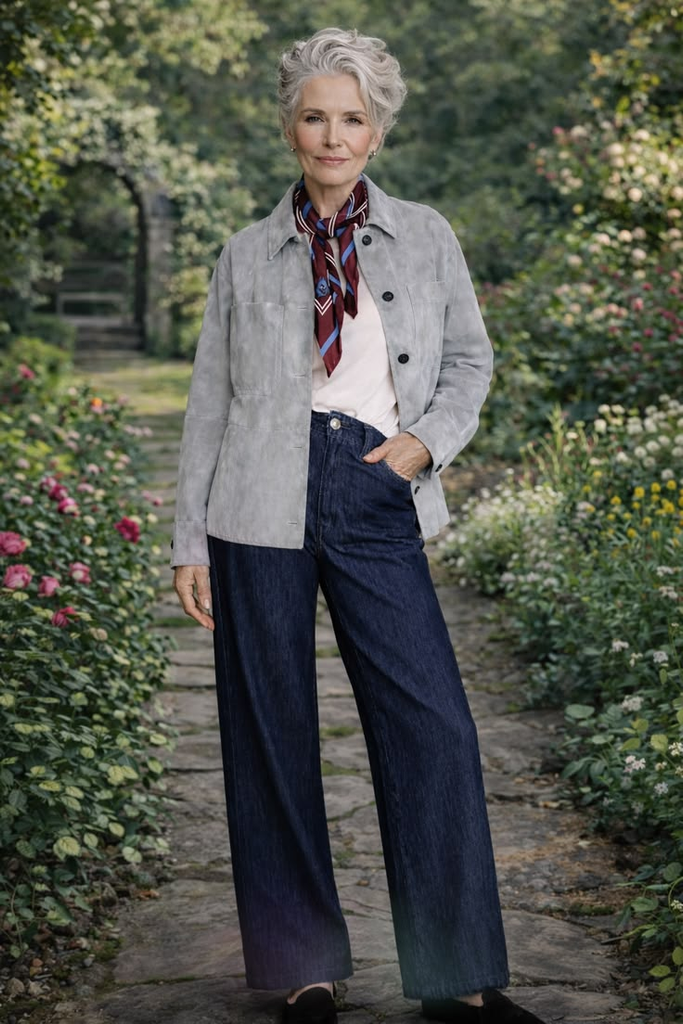
French-inspired style is often associated with clothes that skim the body rather than cling tightly or hang without shape. That doesn’t mean every woman should wear tailored clothing all the time. It means paying attention to proportion and choosing silhouettes that make you feel comfortable and confident.
For example, a straight-leg jean with a slightly relaxed shirt can look balanced without being tight. If you prefer wide-leg trousers, a tucked-in knit or a shorter jacket can keep the outfit from feeling overwhelming. If you love oversized shirts, try rolling the sleeves and leaving the neckline open rather than adding several other loose layers.
Fit is also about the details you may overlook when shopping online. Shoulder seams that sit in the right place, sleeves that reach your preferred length, and trousers that break neatly over your shoes can make an inexpensive outfit look considerably more polished.
I wouldn’t automatically size down to achieve a fitted appearance, either. Clothing that pulls across the buttons or restricts your movement rarely looks as elegant as a garment that fits properly.
Pro tip: When trying on a new piece, sit down, raise your arms, and walk around before removing the tags. If you keep adjusting it in the fitting room, you will probably keep adjusting it at home.
3. Make a Striped Shirt One of Your Wardrobe Staples
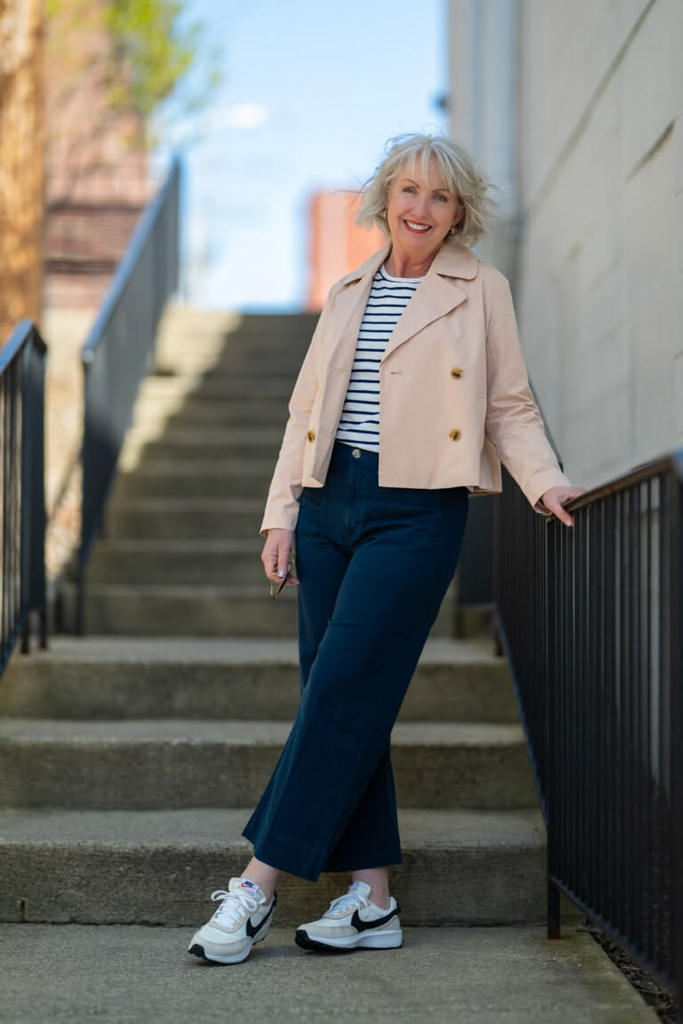
A striped shirt is one of the easiest ways to introduce a French-inspired detail into an everyday outfit. Navy-and-white stripes are particularly versatile because they work with denim, black trousers, cream pants, and even a simple skirt.
I would choose a stripe scale that feels right for your proportions and personal taste rather than assuming one pattern suits everyone. Fine stripes create a quieter effect, while wider stripes can make more of a statement. Both can work beautifully.
For a relaxed daytime look, pair a striped cotton shirt with straight-leg jeans and loafers. When the weather turns cooler, layer a trench coat or cardigan over the top. You can also wear a striped knit with tailored trousers for an outfit that feels a little more put together without becoming formal.
The trick is to let the stripes be the main pattern. You don’t need a printed scarf, statement necklace, and patterned shoes competing for attention at the same time.
A small detail I wouldn’t skip: Check the fabric before buying. A breathable cotton or cotton blend that holds its shape will generally be more useful for everyday wear than a thin shirt that twists after washing.
4. Invest in a Great Blazer That Works With Your Lifestyle
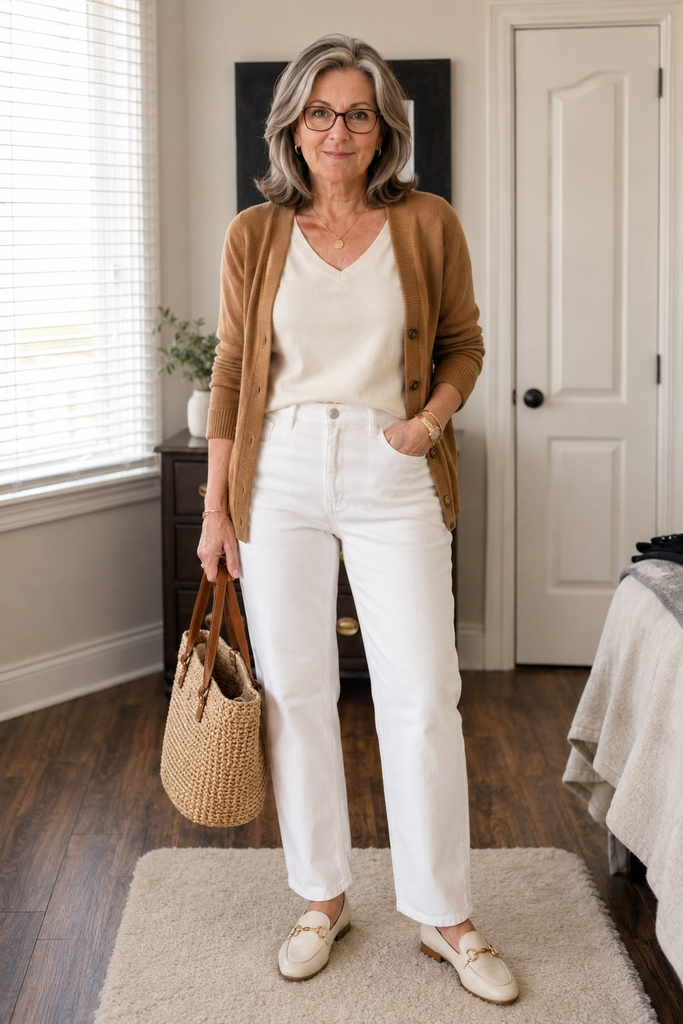
A blazer can make an ordinary outfit feel intentional in seconds. It adds structure to a simple top and jeans, makes casual trousers look smarter, and provides an extra layer without requiring a completely different wardrobe.
For dressing over 50, I would look for a blazer that feels comfortable across the shoulders and allows enough room for a light sweater underneath. A slightly relaxed cut can be easier to style than an extremely fitted design, especially if you want to wear it throughout the day.
Color matters, but versatility matters more. Navy is an excellent choice if you wear blue denim frequently. Black works well with darker trousers and monochrome outfits, while camel and beige create a softer look that pairs beautifully with cream, white, and brown.
You don’t need a designer blazer to get the effect. Check the lining, buttons, fabric weight, and shoulder fit. A moderately priced blazer that hangs well will be more useful than an expensive one that stays in your closet because it feels restrictive.
I especially like the idea of wearing a blazer with a plain T-shirt, jeans, and loafers. It feels appropriate for lunch with friends, casual meetings, and days when you want to look polished without dressing up too much.
5. Wear Jeans That Make You Feel Like Yourself
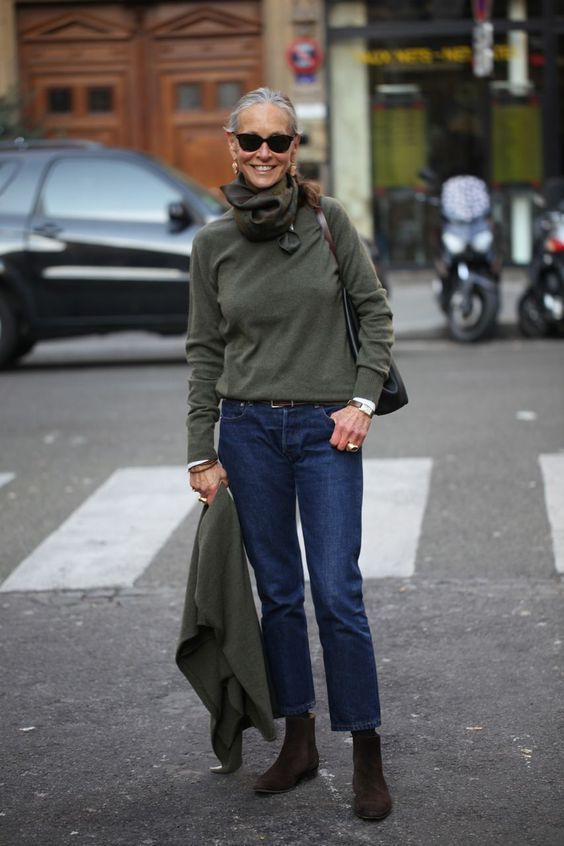
Denim is not reserved for a particular age, and I wouldn’t give up jeans simply because your style is changing. The better question is which cut works with your wardrobe, preferred shoes, and everyday activities.
Straight-leg jeans are a dependable starting point because they pair easily with flats, loafers, ankle boots, and sneakers. Wide-leg jeans can look elegant with a fitted knit or a shorter jacket. A slim-straight cut offers a neater silhouette if you prefer something less loose.
For a French-inspired outfit, try dark or medium-wash denim without excessive distressing. A clean finish makes jeans easier to dress up, especially when paired with a structured bag and a good coat.
Pay attention to the rise, too. Mid-rise and high-rise styles can feel supportive for some women, but neither is universally flattering. The right rise is the one that stays comfortable when you sit, walk, and move.
| Jean style | Best styling partner | Overall effect |
|---|---|---|
| Straight-leg | Striped shirt and loafers | Classic and versatile |
| Wide-leg | Fine-knit sweater and structured bag | Relaxed and sophisticated |
| Slim-straight | Blazer and ankle boots | Neat and tailored |
| Dark-wash denim | Cream blouse and pointed flats | Polished and slightly dressy |
Before buying another pair, I would try styling your favorite jeans with three different tops and two pairs of shoes. You may discover that the jeans are perfectly fine and that a better combination is all you needed.
6. Use a Neutral Color Palette Without Making It Boring
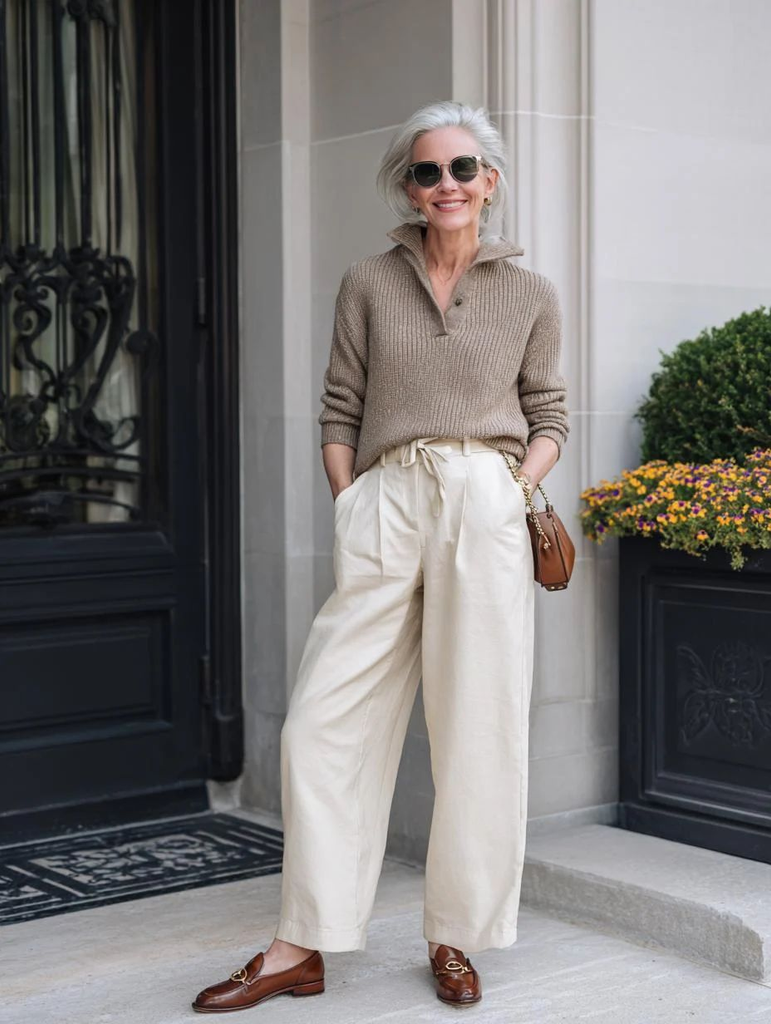
Neutral colors are useful because they allow separate pieces to work together. They can also make getting dressed easier when you don’t want to spend much time coordinating an outfit.
Cream, navy, camel, gray, chocolate brown, and black are all good starting points. You might choose three core colors and introduce one or two accent shades, such as burgundy, olive green, dusty blue, or red.
The important thing is not to wear only beige. A wardrobe full of neutrals can feel flat if every item has the same texture and intensity. Mixing a smooth cotton shirt with a textured cardigan, tailored trousers, or a leather belt gives the outfit more depth.
For instance, cream trousers, a navy knit, brown loafers, and a cognac-colored bag create a balanced combination without relying on prints. If you prefer brighter colors, replace the navy knit with a rich red or emerald-green top.
I would also consider which shades you enjoy wearing near your face. If stark white feels too harsh, try ivory or soft cream. If beige makes you feel washed out, choose a deeper camel or introduce a contrasting color.
Pro tip: When buying a new neutral item, compare it with two or three things you already own. If you can’t immediately imagine at least two outfits, it may not be the versatile purchase you expected.
7. Add a Trench Coat for Effortless Layering
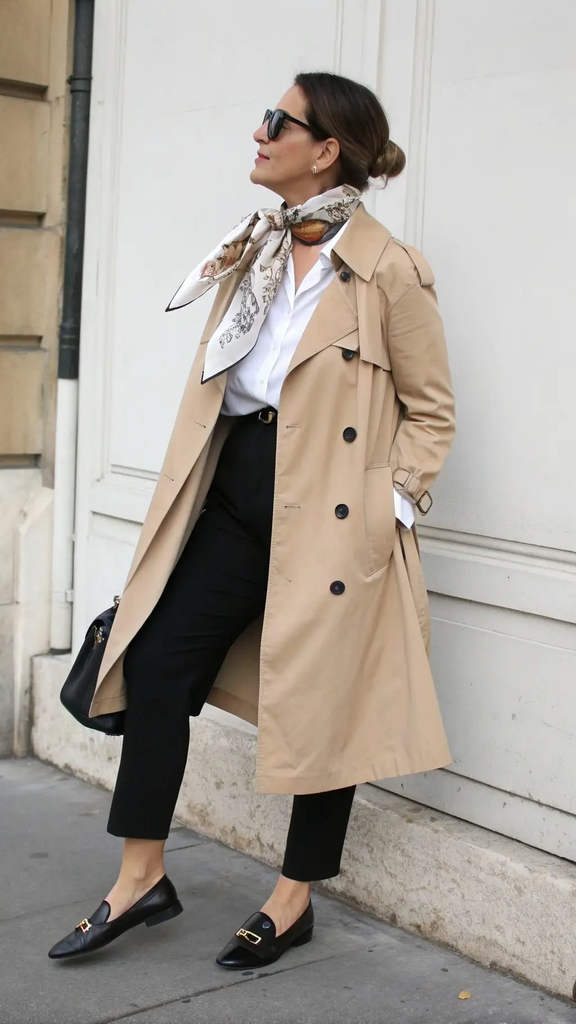
A trench coat is one of those wardrobe pieces that can make a basic outfit feel complete. It works over jeans, tailored trousers, dresses, and lightweight knitwear, which makes it particularly useful during transitional weather.
A classic beige trench is an obvious option, but navy, olive, and darker neutral shades can be just as practical. Look for a length that works with your height and usual outfits. A knee-length or mid-calf design may offer the look you want, but the proportions should feel balanced with your shoes and trousers.
I would prioritize the fabric and construction over decorative details. A coat that moves comfortably, fastens properly, and accommodates your usual layers will earn more wear than one chosen only because it looks beautiful on a hanger.
For a simple outfit, wear the trench open over a striped shirt, dark jeans, and loafers. When it’s colder, add a fine-knit sweater and a scarf. You can also belt the coat loosely to create definition without pulling it tightly around your waist.
Keep in mind that a trench isn’t a substitute for a winter coat in very cold weather. Choose the weight according to your climate, and don’t pay extra for heavy lining if you live somewhere warm.
8. Choose Comfortable Shoes That Still Look Polished
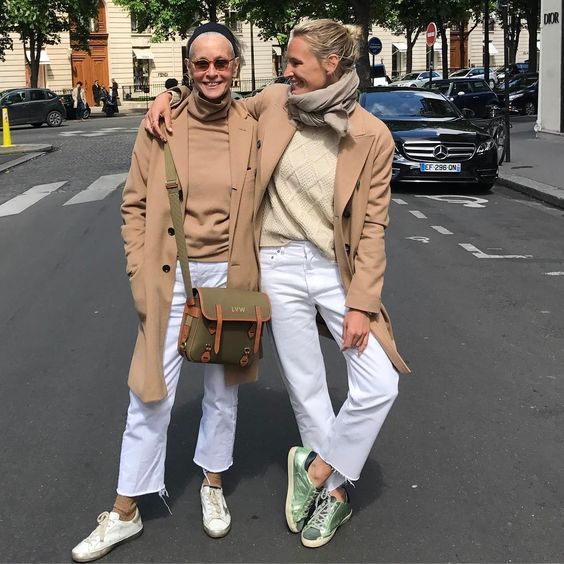
Shoes have a surprisingly large influence on how an outfit comes together. You can wear a beautiful blazer and well-fitting trousers, but if your shoes are uncomfortable, you may spend the entire day wishing you’d chosen something else.
French-inspired dressing often includes simple loafers, ballet flats, ankle boots, and understated sneakers. These styles are versatile because they can work with jeans and more tailored outfits without looking overly formal.
For everyday wear, I would begin with one pair of comfortable loafers or flats in a color that coordinates with your wardrobe. Black is useful with darker outfits, while brown, burgundy, or tan can soften neutral combinations. If you prefer sneakers, choose a clean, minimal design that works with your usual trousers.
Comfort should involve more than a soft-looking insole. Check the width, toe room, arch support, sole flexibility, and heel stability. If you need extra support or orthotic inserts, make sure the shoe accommodates them.
There is no style rule that says women over 50 must wear flats. A low heel, block heel, or another comfortable style may suit you better. The goal is to choose shoes that support the way you actually live.
9. Use Accessories to Make Simple Outfits Look Finished
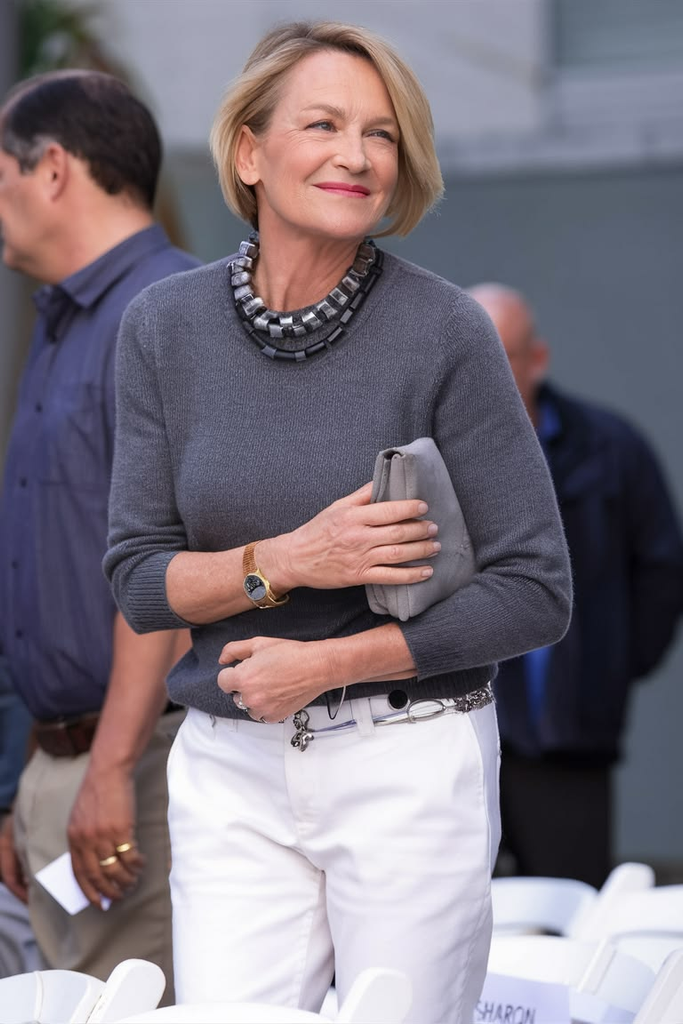
Accessories are where a basic outfit can begin to feel personal. You don’t need a large jewelry collection or a designer handbag. A few carefully chosen pieces can give familiar clothes a different mood.
A leather belt can define the waist of straight-leg jeans. Small gold hoops or simple silver earrings can add a subtle finishing touch. A structured handbag can make a casual outfit feel more intentional, while a silk-style scarf introduces color without requiring a completely new top.
I would choose accessories according to how often you will use them. If you carry the same everyday bag five days a week, it makes sense to prioritize comfort, useful compartments, and durable material. If you rarely wear necklaces, buying an expensive statement piece probably isn’t the best place to start.
The key is restraint. Try one noticeable accessory with otherwise simple clothing rather than wearing every favorite piece at once. A red scarf, for example, can look striking against a navy coat and cream sweater.
You can also experiment with texture. A woven bag, leather belt, brushed-metal jewelry, or soft scarf adds interest even when your clothing is made up of solid colors.
10. Learn the Art of Simple Layering
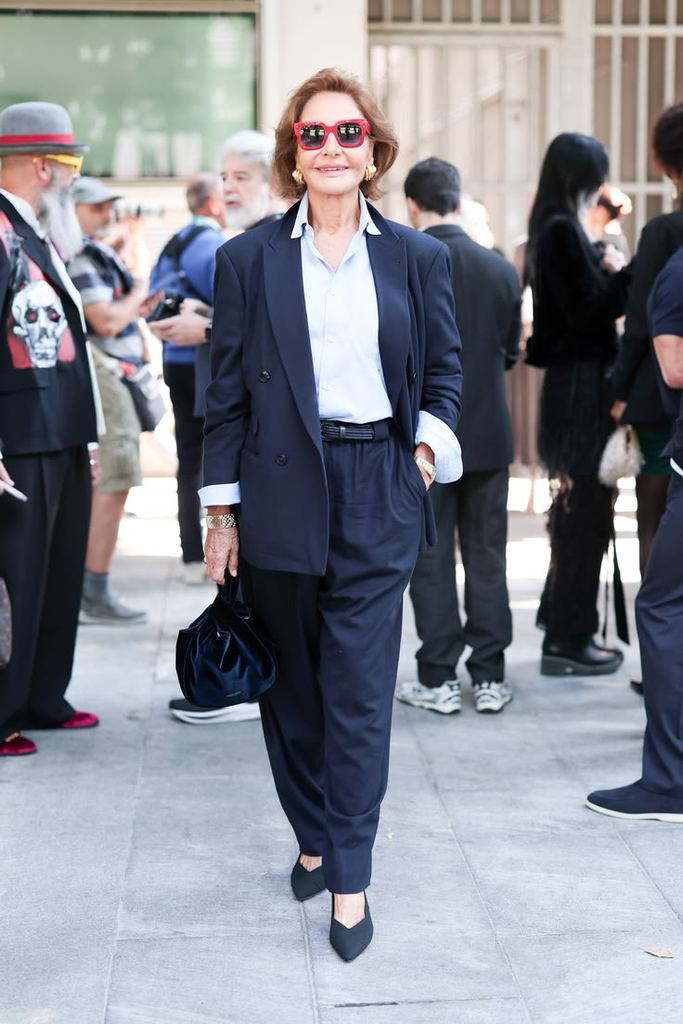
Layering adds dimension to an outfit and makes your wardrobe more adaptable across seasons. It also helps you get more use out of clothes you already own.
Start with a lightweight base, such as a cotton T-shirt, blouse, or fine-knit top. Add a cardigan, blazer, or lightweight jacket, then finish with an outer layer if the weather requires it.
The main consideration is bulk. If you wear a thick sweater under a tightly fitted blazer, the sleeves may bunch and the shoulders may feel uncomfortable. A thinner knit is often a better choice beneath structured outerwear.
Length matters, too. A longer shirt under a shorter sweater can create a deliberate layered effect, while a blazer over a tucked-in top can produce a cleaner silhouette. Try different combinations in front of a mirror and take a quick photo; it’s often easier to spot proportion issues in a picture than while looking down at your clothes.
For a simple weekend outfit, combine a white T-shirt, straight-leg jeans, a cardigan, and comfortable sneakers. Add a trench coat if needed. Each piece serves a purpose, and you can remove a layer without the outfit falling apart.
11. Choose Fabrics That Look Good and Feel Good
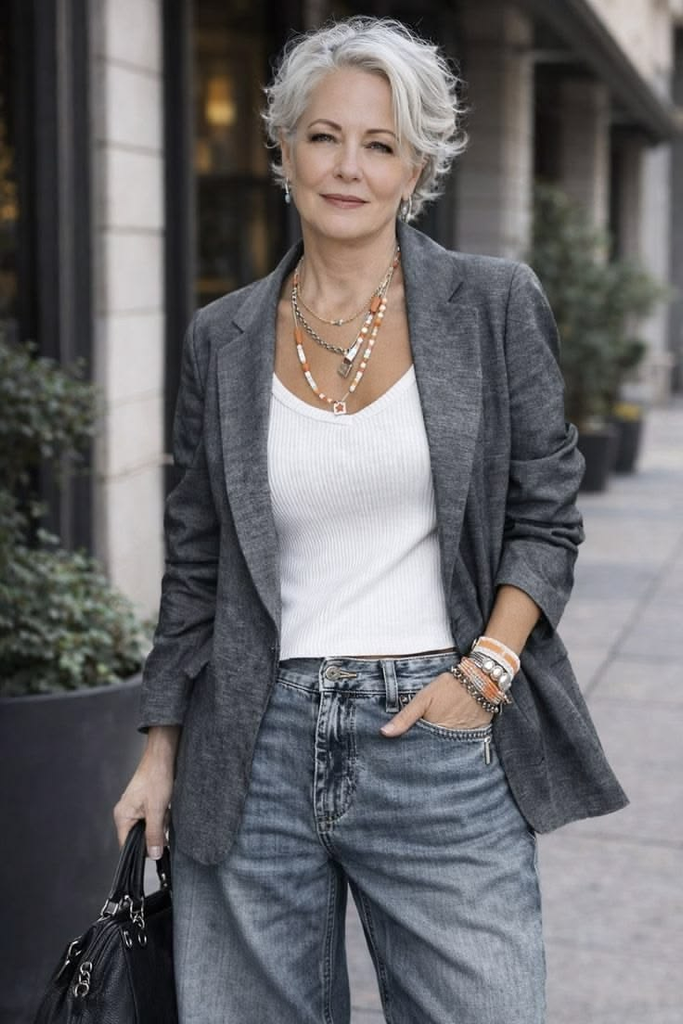
A beautiful silhouette means very little if the fabric feels uncomfortable against your skin or requires more care than you’re willing to give it.
Cotton is useful for shirts and everyday tops, wool can provide warmth in knitwear and coats, and linen is a practical option for warm weather. Viscose and other blended fabrics may drape nicely, although their care requirements and durability vary. There isn’t one universally superior fabric; the right choice depends on the garment and how you plan to wear it.
I would check the care label before buying something expensive. A sweater that needs delicate handwashing may be worthwhile if you love it, but it may not suit a busy routine. Likewise, linen naturally wrinkles, so you should be comfortable with that relaxed appearance before investing in several linen pieces.
Look at how a garment hangs, whether the seams lie flat, and whether the fabric becomes transparent when stretched. These practical details are often more useful than the brand name.
For a wardrobe that gets regular wear, I would rather own a few dependable pieces that feel comfortable than a large collection of garments that require constant maintenance.
12. Keep Your Jewelry Simple but Intentional
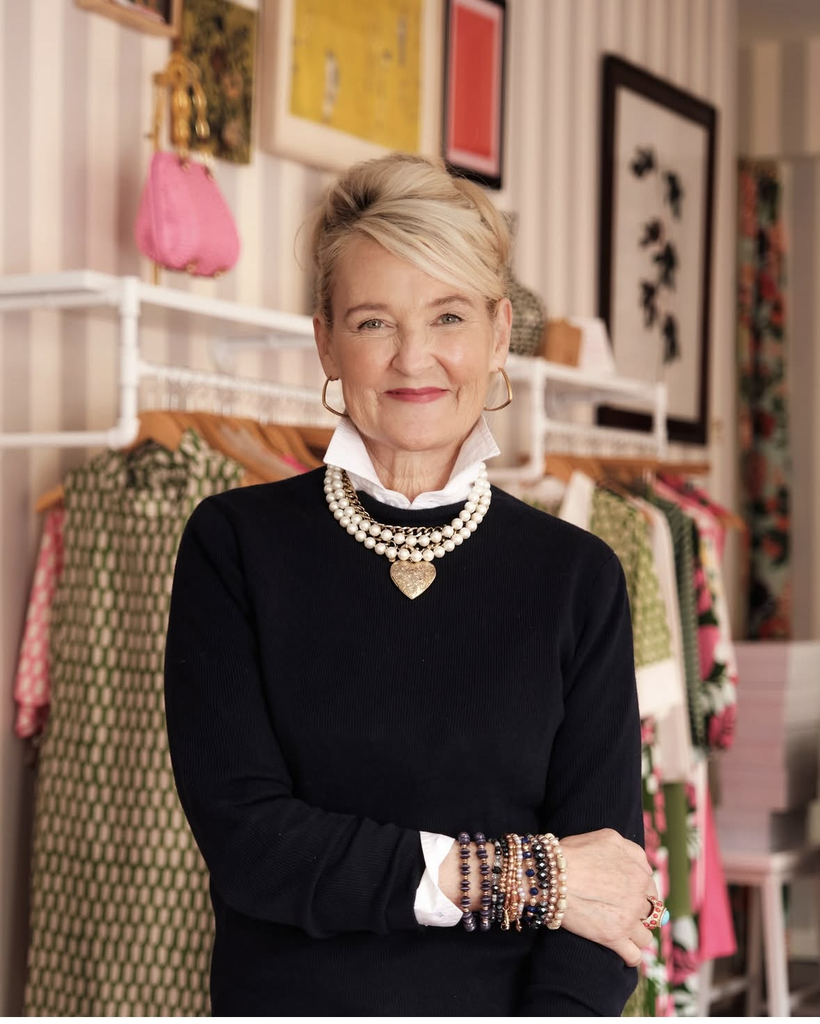
Jewelry can help you express your personality without changing your entire outfit. The trick is choosing pieces that work with your neckline, clothing style, and daily routine.
Small hoops, stud earrings, a simple pendant, a watch, or a delicate bracelet are all useful options. If you enjoy statement jewelry, you can absolutely wear it; just give it enough space to stand out.
For example, a plain black knit with a pair of sculptural earrings may look more interesting than an outfit covered in multiple accessories. A fine chain can work beautifully with an open-neck blouse, while a shorter necklace may suit a crew-neck sweater better.
You don’t have to choose gold over silver because of an arbitrary age-related fashion rule. Wear the metal you enjoy, and consider mixing metals if that suits your style.
I would also think about practical comfort. Heavy earrings may become uncomfortable after several hours, and bracelets that catch on sleeves can be irritating. The best everyday jewelry is the kind you forget you’re wearing until someone compliments it.
13. Create a Small Capsule Wardrobe That Actually Works
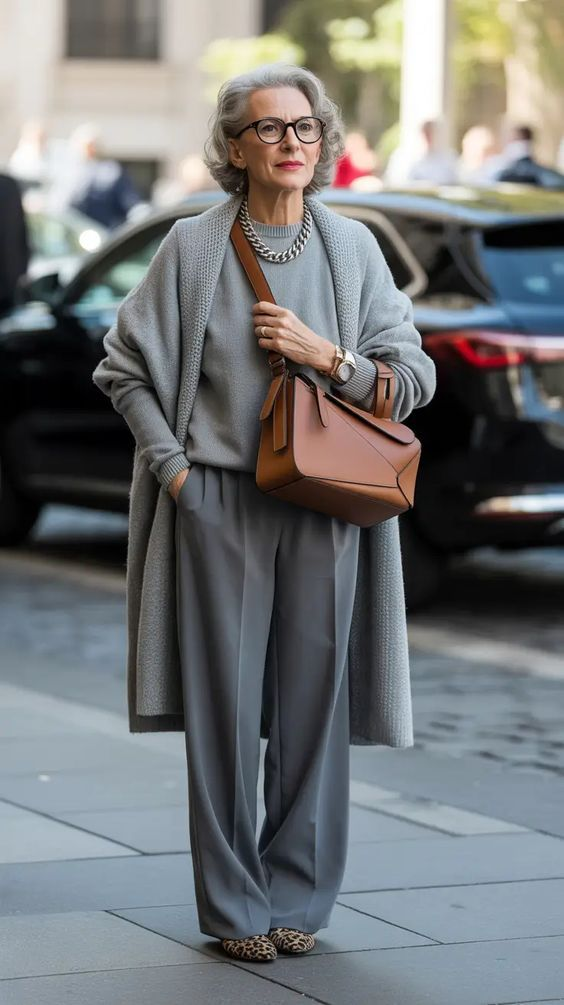
A capsule wardrobe is a collection of versatile pieces that can be combined into multiple outfits. It can be especially useful if you want to simplify your closet, reduce unnecessary shopping, or make getting dressed less time-consuming.
There is no magic number of items you must own. Some people enjoy a very small wardrobe, while others need additional pieces for work, travel, hobbies, or different seasons. I would focus on how well your clothes work together rather than forcing yourself to reach an arbitrary number.
Here is a practical example of a French-inspired capsule wardrobe for women over 50:
| Wardrobe category | Suggested pieces | Why they help |
|---|---|---|
| Tops | White shirt, striped top, neutral T-shirt | Easy everyday combinations |
| Knitwear | Fine-knit sweater, cardigan | Comfortable layering |
| Bottoms | Straight-leg jeans, tailored trousers, versatile skirt | Covers casual and dressier occasions |
| Outerwear | Blazer, trench coat | Adds structure and weather flexibility |
| Shoes | Loafers, sneakers, ankle boots | Covers different activities |
| Accessories | Everyday bag, belt, simple jewelry, scarf | Adds personality and polish |
You can adjust this list according to your climate and lifestyle. If you rarely wear skirts, replace that category with another pair of trousers. If you live somewhere hot, lightweight shirts and breathable dresses may deserve more space than knitwear.
Before purchasing a capsule wardrobe, pull out the clothes you already wear regularly. Identify the gaps that genuinely prevent you from making outfits, then shop for those specific pieces rather than buying an entirely new collection.
14. Spend Strategically Instead of Buying Designer Labels
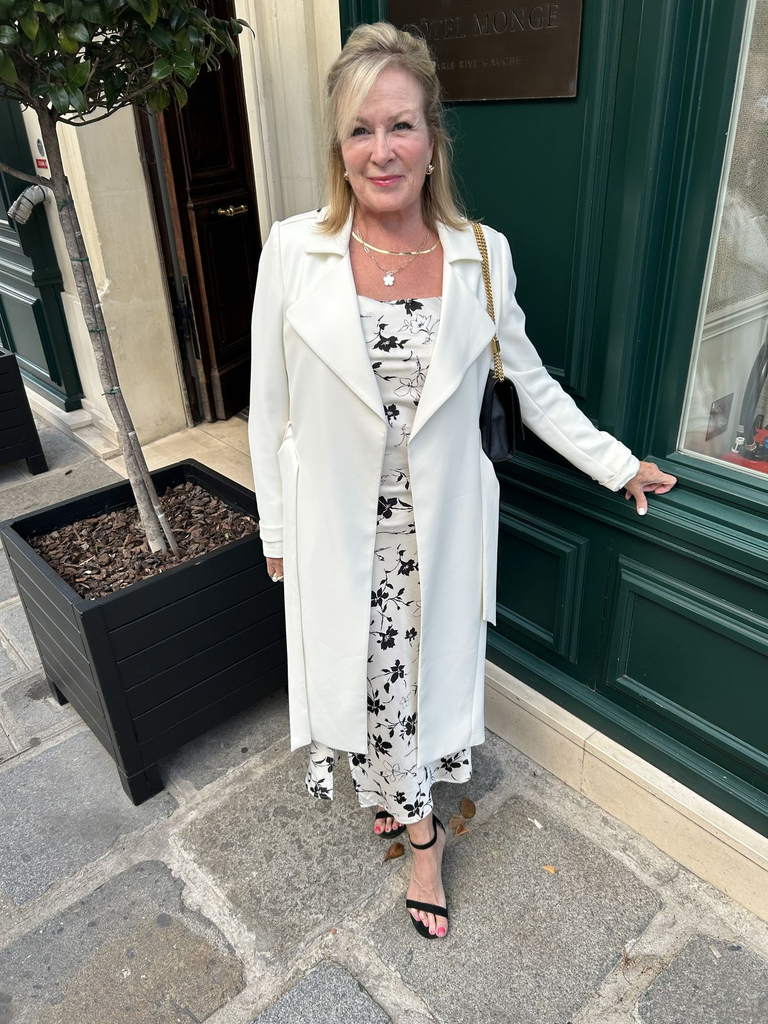
French style is often associated with luxury fashion houses, but you don’t need designer clothing to adopt its most useful principles. Fit, fabric, color coordination, and thoughtful styling usually matter more to the overall effect than the logo on a label.
If your budget is limited, spend more carefully on items you wear frequently, such as jeans, a coat, or everyday shoes. Save on seasonal colors, trend-led accessories, and pieces you’re not sure you’ll wear regularly.
The right budget also depends on your needs. A $40 shirt that fits well and survives frequent washing may be a better purchase than a $150 shirt that requires special care and rarely leaves your closet. Prices vary by market and retailer, so compare quality and cost per wear rather than assuming that more expensive always means better.
A simple cost-per-wear calculation can help:
Cost per wear = purchase price ÷ number of times you wear the item.
For example, a coat costing $180 that you wear 90 times costs $2 per wear. A $60 trend-led top worn six times costs $10 per wear. These figures are only illustrations, but they show why versatile basics can be worthwhile purchases.
I would never recommend buying an expensive item solely because it is described as timeless. It should fit your body, coordinate with your wardrobe, and suit your real life.
15. Dress for Your Current Life, Not an Imaginary One
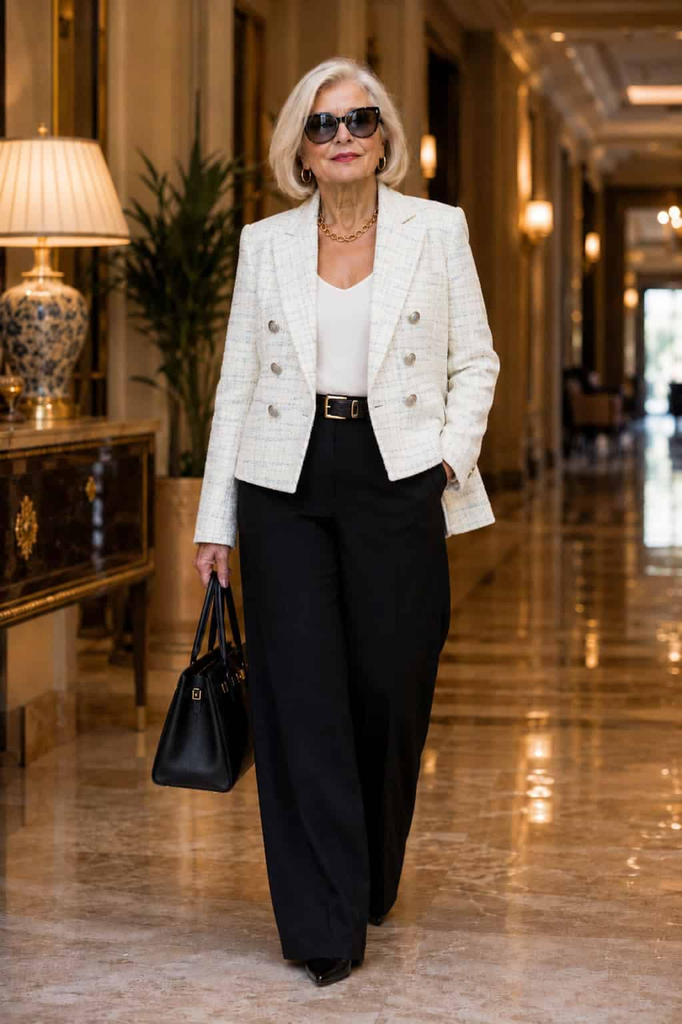
One of the most useful style lessons I would take from French-inspired dressing is the importance of dressing for the life you actually have. A wardrobe should support your daily activities instead of making you feel as though you need to become a different person to wear it.
If you work from home, comfortable trousers, polished knitwear, and a few good layering pieces may serve you better than a collection of formal suits. If you enjoy social lunches and cultural events, a versatile dress, blazer, and comfortable dress shoes may be more useful.
Think about the occasions that make up most of your week. Do you walk frequently? Spend time outdoors? Need clothing for an office? Prefer dresses to trousers? Your answers should shape your wardrobe.
I would also stop keeping uncomfortable clothes simply because they were expensive or looked good years ago. If something no longer fits, suits your preferences, or matches your lifestyle, consider whether tailoring, restyling, donating, or selling it makes more sense.
Your style can evolve without losing its identity. You can still love bright colors, romantic dresses, bold prints, or contemporary sneakers while borrowing the French approach to fit, quality, and simplicity.
16. Keep Grooming and Outfit Details in Balance
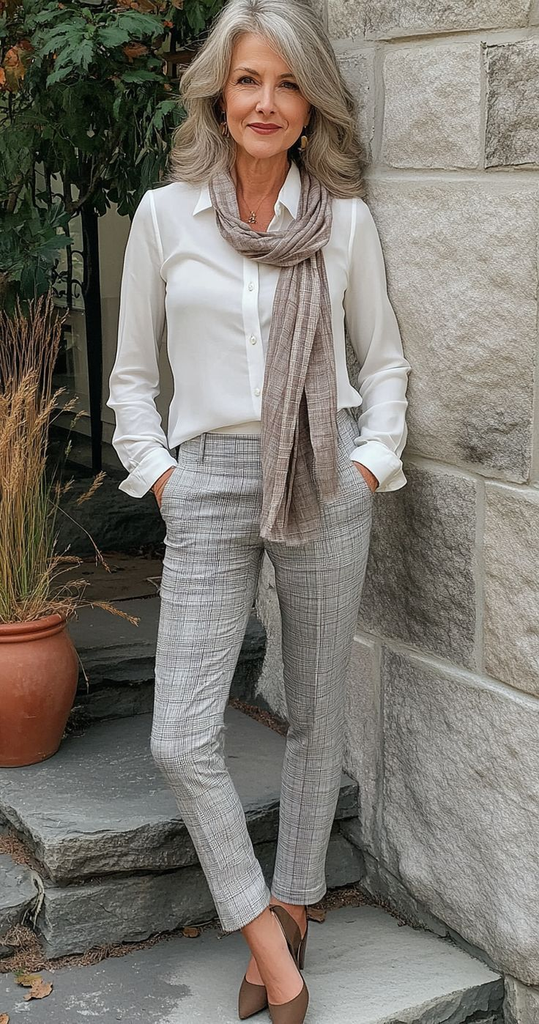
Clothing is only one part of a finished look. Small details such as clean shoes, well-maintained knitwear, neat hems, and a bag in good condition can make an outfit feel more considered.
That doesn’t mean you need a complicated beauty routine or perfectly styled hair every day. Choose grooming habits that suit your preferences and schedule. A simple hairstyle, comfortable makeup if you wear it, and clothing that feels fresh and cared for are enough to create a polished appearance.
Before leaving home, I would check three things: whether the clothes sit comfortably, whether the shoes work with the outfit, and whether anything needs a quick adjustment. A loose button, a visible clothing tag, or trousers dragging on the ground can distract from an otherwise lovely combination.
You can also use a clothes brush, fabric shaver, or basic sewing kit to extend the life of pieces you already own. These small maintenance habits can make a bigger difference than replacing your wardrobe every season.
The aim isn’t perfection. It’s feeling ready to go about your day without worrying that your clothes are working against you.
17. Add One Personal Signature to Your Style
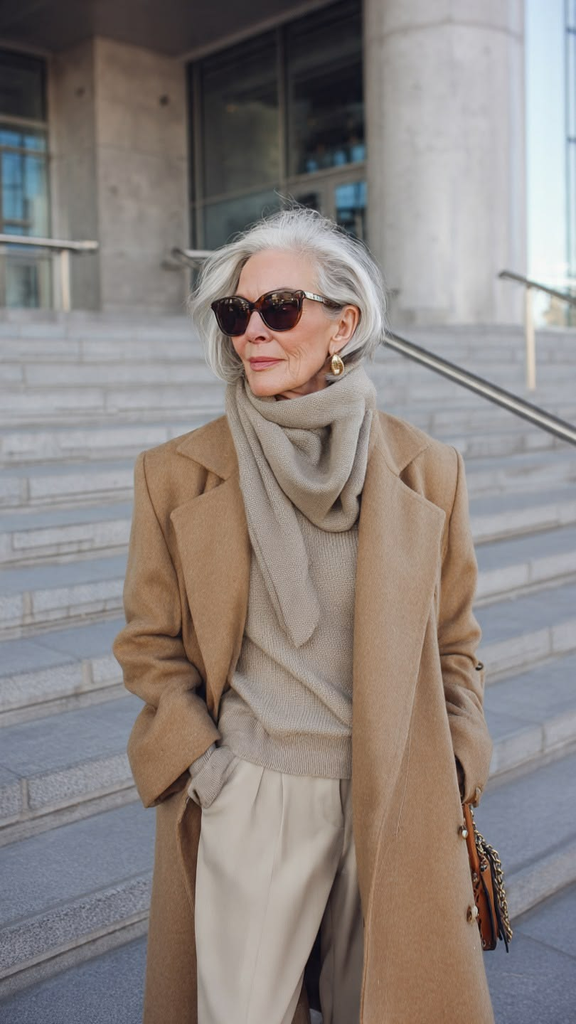
The final secret is to avoid copying French fashion so literally that your own personality disappears. Inspiration is useful, but the most interesting wardrobes have something distinctive about them.
Maybe you love red lipstick, colorful handbags, oversized sunglasses, patterned scarves, or beautiful brooches. Perhaps you prefer monochrome outfits and understated jewelry. Choose one or two details that feel like you and let them become recurring elements in your wardrobe.
A signature doesn’t have to be expensive or dramatic. It could be wearing a particular shade of blue, choosing a favorite style of earrings, or pairing dresses with ankle boots throughout the year.
If you enjoy experimenting, try one new combination at a time. Wear your favorite colorful blouse with neutral trousers, or style a classic blazer with contemporary sneakers. You can keep the structure of a timeless outfit while making it feel current and personal.
I think this is where style becomes genuinely enjoyable. Once you understand which shapes, colors, and combinations work for you, you no longer need to follow every trend to feel well dressed.
Frequently Asked Questions About French Style for Women Over 50
What are the basic French wardrobe essentials for women over 50?
Useful essentials include well-fitting jeans, tailored trousers, a white shirt, a striped top, fine-knit sweaters, a blazer, a versatile coat, comfortable shoes, and a few understated accessories. You can adjust the list according to your lifestyle, climate, and personal preferences.
How can I dress like a French woman over 50 on a budget?
Start with clothes you already own and build outfits around versatile basics. Shop secondhand for quality outerwear, look for well-constructed shoes during sales, and prioritize fit over labels. Avoid buying a complete wardrobe at once; replace missing pieces gradually.
What colors are best for French-inspired outfits?
Navy, cream, black, camel, gray, and brown provide versatile foundations. You can introduce red, burgundy, olive, or other favorite shades for personality. The best colors are those that coordinate with your wardrobe and make you feel comfortable wearing them.
Can women over 50 wear jeans and sneakers?
Absolutely. Straight-leg or wide-leg jeans paired with clean, comfortable sneakers can create a polished everyday outfit. Add a blazer, striped shirt, or structured bag if you want a more refined finish.
Does French style mean dressing conservatively after 50?
No. French-inspired style is not a set of age restrictions. You can wear contemporary silhouettes, bold colors, dresses, prints, and statement accessories. The useful principles are thoughtful styling, comfortable fit, and choosing pieces that reflect your personality.
How can I make inexpensive clothes look more elegant?
Pay attention to fit, fabric condition, clean hems, simple color combinations, and accessories. A well-fitting shirt, neat trousers, and comfortable shoes can look more polished than expensive clothing that doesn’t fit properly. Tailoring a garment you already own may also be more valuable than buying a replacement.
Final Thoughts
If I were rebuilding my wardrobe after 50, I wouldn’t start by buying a trench coat, designer handbag, or an entirely new set of basics. I’d start by looking at the clothes I already reach for, identifying what makes those pieces work, and building a few reliable outfits around them.
The French woman’s style secrets for dressing over 50 come down to making thoughtful choices rather than chasing perfection. Choose clothes that fit comfortably, combine colors that work together, invest where quality makes a difference, and leave room for the details that express your personality.
You don’t need to dress like anyone else to look elegant. Take the ideas that make sense for your life, ignore the rules that don’t, and build a wardrobe that makes getting dressed feel simpler and more enjoyable.