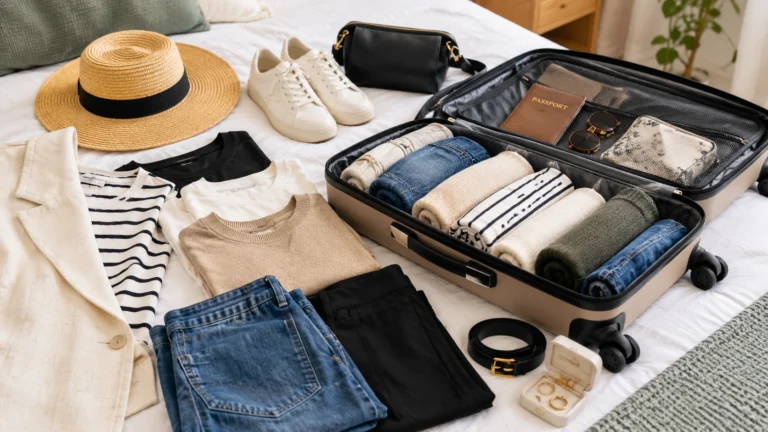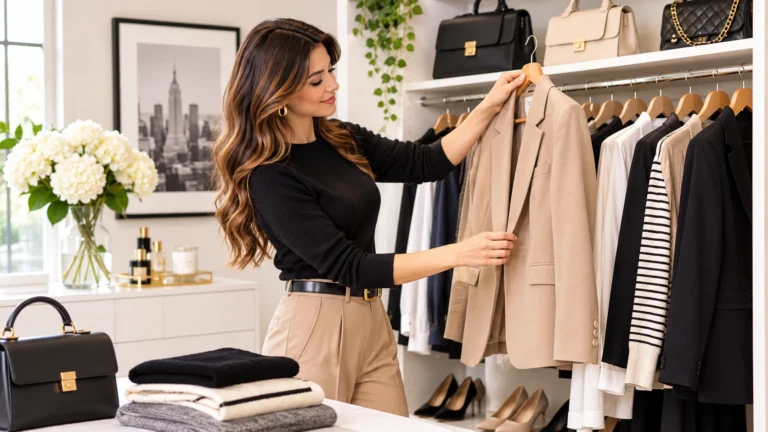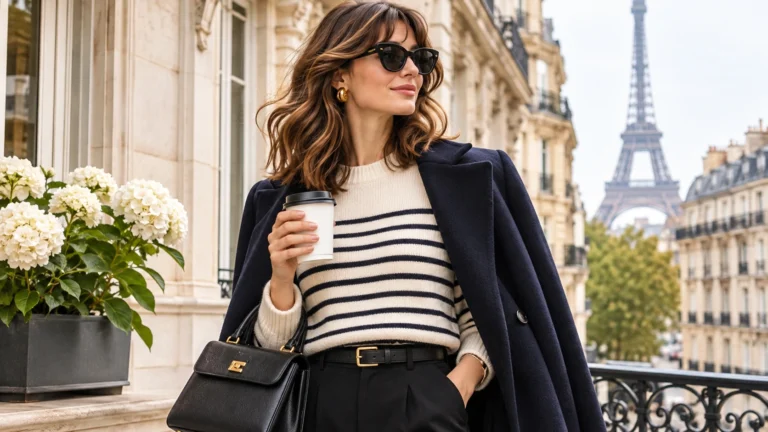


I think one of the easiest ways to make getting dressed less stressful is to stop buying clothes for imaginary versions of your life.
You know the ones: the dress you might wear to a fancy dinner, the bright top that only works with one pair of trousers, or the shoes that look lovely until you have to walk more than five minutes in them.
I’ve always thought a closet should work for your actual Tuesday morning, not just the occasional special occasion.
That’s exactly why a minimalist capsule wardrobe makes so much sense. Instead of filling your closet with pieces you rarely reach for, you build a smaller collection of versatile clothing that works together. You can create more outfits, spend less time deciding what to wear, and make smarter choices when shopping.
Here’s the thing, though: a minimalist wardrobe doesn’t have to mean wearing beige every day, throwing away half your clothes, or following a strict rule about owning only 30 items.
I prefer a more realistic approach, one that leaves room for your personality, changing seasons, and the clothes that make you feel genuinely good.
In this guide, I’ll walk you through the essential pieces, the colors that make mixing and matching easier, how to build a capsule wardrobe on a budget, and the practical details that can save you from buying things you’ll regret later.
1. What Is a Minimalist Capsule Wardrobe?

A minimalist capsule wardrobe is a carefully selected collection of clothing that works together to create multiple outfits without requiring an overflowing closet. Most pieces serve more than one purpose, and you choose them based on your lifestyle, preferred colors, climate, and personal style.
For example, a white button-down shirt might work with jeans for a casual afternoon, tailored trousers for work, or a midi skirt for dinner. Instead of buying a separate top for each occasion, you get several uses from one well-chosen piece.
I also think it’s important to distinguish a minimalist wardrobe from a boring one. You can absolutely include colorful knitwear, patterned scarves, statement jewelry, or a favorite pair of red shoes. The goal is to make your clothes work harder, not to remove everything that makes your style personal.
Why a Capsule Wardrobe Works
- Fewer difficult decisions: You have a clearer idea of which pieces work together.
- More outfit combinations: Versatile basics can be styled in several different ways.
- Smarter shopping: You can identify genuine gaps instead of buying duplicates.
- Better cost per wear: Frequently worn, durable clothing can offer better value over time.
- Less closet clutter: Clothing has a purpose, and getting dressed becomes more straightforward.
My favorite part is that you don’t need to replace your entire closet to get started. You can build a useful capsule wardrobe from what you already own and add new pieces gradually.
2. Start With Your Real Lifestyle, Not a Pinterest Fantasy
Before buying anything, think about what you actually do during an ordinary week. This step sounds simple, but it prevents one of the biggest capsule wardrobe mistakes: creating a beautiful collection of clothes that doesn’t suit your daily routine.
If you work from home, you might need comfortable knitwear, well-fitting jeans, and casual layers. If you commute to an office, tailored trousers, structured blazers, and comfortable work shoes may deserve more space. If you spend most weekends running errands or meeting friends, relaxed everyday outfits should make up the foundation.
I would start by looking at the clothes you reach for most often over a typical two-week period. Notice the colors, silhouettes, and fabrics you repeatedly choose. Those pieces reveal more about your actual style than any list of wardrobe essentials.
A Simple Lifestyle Breakdown
| Lifestyle | Capsule wardrobe priorities |
|---|---|
| Work from home | Knit tops, relaxed trousers, comfortable layers |
| Office or professional work | Tailored trousers, blazers, shirts, versatile flats |
| Busy everyday schedule | Jeans, T-shirts, sneakers, easy jackets |
| Social and dinner outings | Midi skirts, polished tops, a versatile dress |
| Travel frequently | Wrinkle-resistant basics, comfortable shoes, light layers |
| Warm climate | Linen, cotton, breathable shirts, lightweight trousers |
Pro tip: If you live somewhere with hot summers and mild winters, don’t copy a capsule wardrobe designed for a cold European climate. You may get far more use from breathable cotton shirts and lightweight trousers than from several wool sweaters.
3. Choose a Neutral Color Palette That Makes Getting Dressed Easier

A coordinated color palette is one of the most useful parts of a timeless capsule wardrobe. When your main clothing colors complement one another, you can combine pieces without having to think too hard about whether everything matches.
I would begin with two or three neutral colors and add one or two accent colors you genuinely enjoy wearing. You don’t need to follow a complicated color theory system to make this work.
The Best Neutral Colors for a Minimalist Wardrobe
- Black: Works particularly well for trousers, skirts, shoes, and outerwear.
- White and ivory: Useful for T-shirts, button-down shirts, and layering pieces.
- Navy: A softer alternative to black that still looks polished.
- Camel and beige: Bring warmth to coats, sweaters, and trousers.
- Gray: Works beautifully with black, white, navy, and muted accent colors.
- Chocolate brown: Adds depth and pairs especially well with cream, denim, and camel.
My personal recommendation is to choose your main neutrals based on what already looks good with your favorite jeans, shoes, and outerwear. If you rarely wear black, there is no reason to force it into your wardrobe just because it appears on every minimalist shopping list.
Add Accent Colors Without Losing the Minimalist Feel
Once your neutrals are established, introduce colors that make you happy. Burgundy, olive green, dusty blue, muted pink, and deep red can all work well in a capsule wardrobe.
For example, a burgundy sweater can pair with blue jeans, black trousers, or a cream skirt. One accent color repeated in a few pieces can make your outfits feel coordinated without looking overly uniform.
Pro tip: Before purchasing a new item, picture it with at least three pieces you already own. If you can only imagine one outfit, it might be harder to wear regularly than you expect.
4. Build Your Capsule Around the Essential Clothing Pieces

You don’t need dozens of items to create a useful wardrobe. What matters is choosing clothing that fits well, suits your daily activities, and works with multiple pieces.
The following essentials are a practical starting point. Treat the quantities as suggestions rather than rules; your ideal collection may be smaller or larger depending on how often you do laundry and how much variety you prefer.
1. A Well-Fitting White T-Shirt
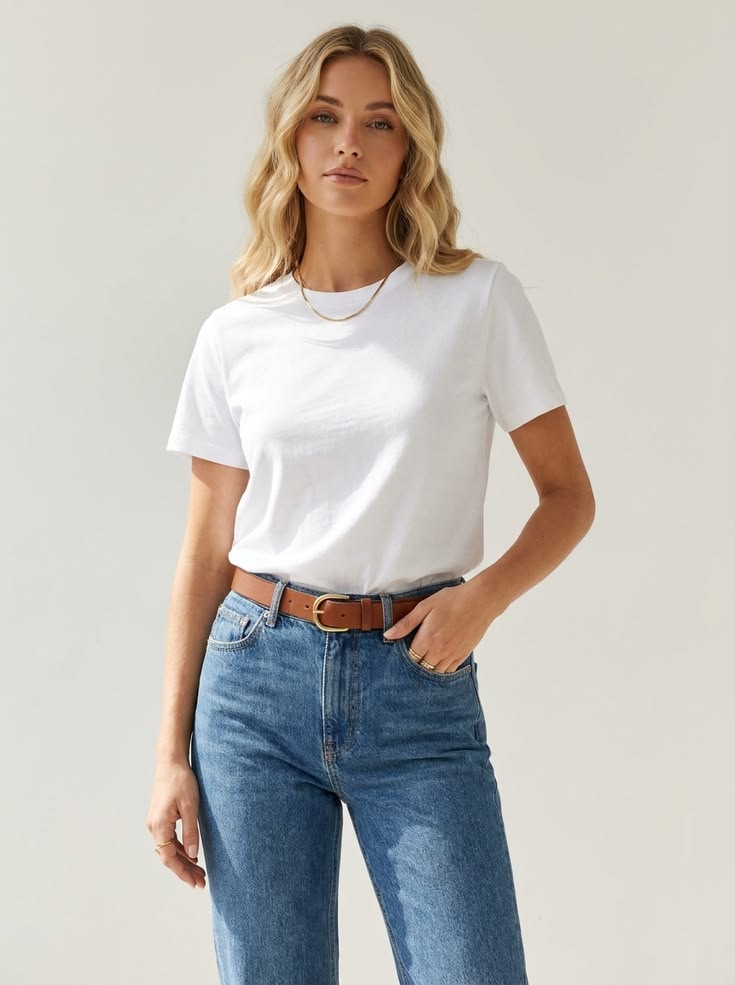
A white T-shirt is one of the easiest foundations for a minimalist outfit. You can wear it with jeans and sneakers, tuck it into tailored trousers, or layer it under a blazer.
I would look for an opaque fabric, a neckline you find flattering, and a fit that doesn’t pull across the shoulders. A slightly heavier cotton often looks more polished than a very thin shirt that becomes transparent or loses its shape.
You don’t necessarily need to spend a lot on this piece. What matters most is how it fits after washing and whether you enjoy wearing it.
2. A Classic White Button-Down Shirt
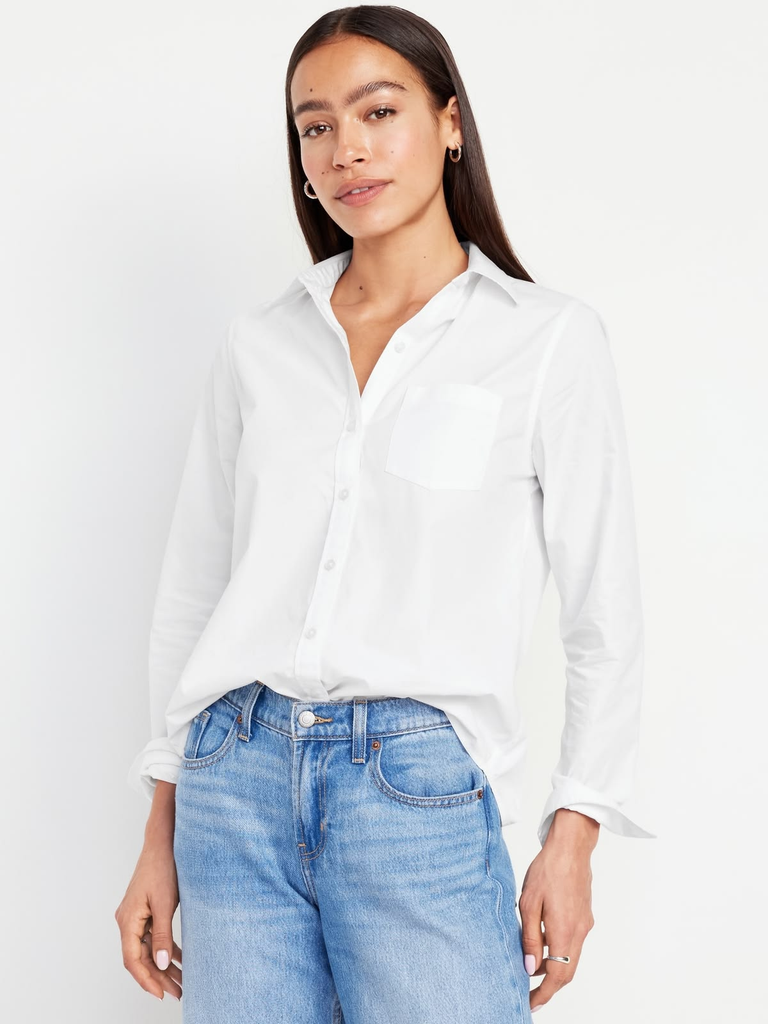
A white button-down shirt adds structure to casual outfits without making them feel formal. Wear it open over a tank top, tucked into denim, or paired with tailored trousers for a simple office look.
If you prefer a relaxed style, choose a slightly loose fit that allows comfortable movement. If you want to wear it under jackets, avoid excessive volume around the sleeves and shoulders.
I would prioritize a fabric that feels comfortable against your skin and is easy to care for. A shirt that needs constant ironing may not be the best choice if you prefer low-maintenance clothing.
3. Straight-Leg Jeans

Straight-leg jeans are a practical foundation because they work with sneakers, loafers, ankle boots, and many types of tops. A dark or medium wash is particularly versatile if you want denim that works for both casual and slightly dressier occasions.
Pay attention to the rise, inseam, and fit around your hips. A fashionable cut isn’t useful if you keep tugging at the waistband or avoid wearing the jeans because they’re uncomfortable.
For a first capsule, one excellent pair is more useful than several similar pairs that all serve the same purpose.
4. Tailored Trousers

A pair of tailored trousers can make a basic T-shirt look more intentional. They also work with button-down shirts, knitwear, blazers, and a range of shoes.
Black, navy, charcoal, and beige are all useful colors. Choose the shade that works with the rest of your closet rather than purchasing trousers simply because they’re considered a wardrobe essential.
Check the length with the shoes you wear most frequently. Trousers that bunch awkwardly at the ankle or drag on the floor can make even a lovely outfit feel unfinished.
5. A Neutral Sweater

A comfortable sweater provides warmth and texture while remaining easy to style. Cream, gray, navy, camel, and chocolate brown are useful starting points.
You can wear one with jeans on a casual day, layer it over a collared shirt, or pair it with tailored trousers for a polished outfit.
I would rather own one sweater that feels soft, holds its shape, and suits my lifestyle than several inexpensive versions that become scratchy or misshapen after a few washes.
6. A Versatile Blazer

A blazer is useful when you want a little structure without wearing a full suit. It can elevate jeans, complement tailored trousers, or add polish to a simple dress.
For maximum versatility, consider a neutral color and a comfortable fit through the shoulders. A slightly relaxed blazer may work particularly well if you want to layer it over sweaters.
However, a blazer isn’t essential for everyone. If you rarely wear structured clothing, spend your money on a jacket or cardigan you will actually reach for.
7. A Classic Cardigan

A cardigan is one of the most flexible layering pieces in a minimalist wardrobe. You can wear it over a T-shirt, button it up as a top, or drape it over your shoulders when the weather changes.
Look for a fabric weight that suits your climate. A lightweight cotton cardigan may be more useful than a thick wool one if you live somewhere warm for most of the year.
8. A Midi Skirt
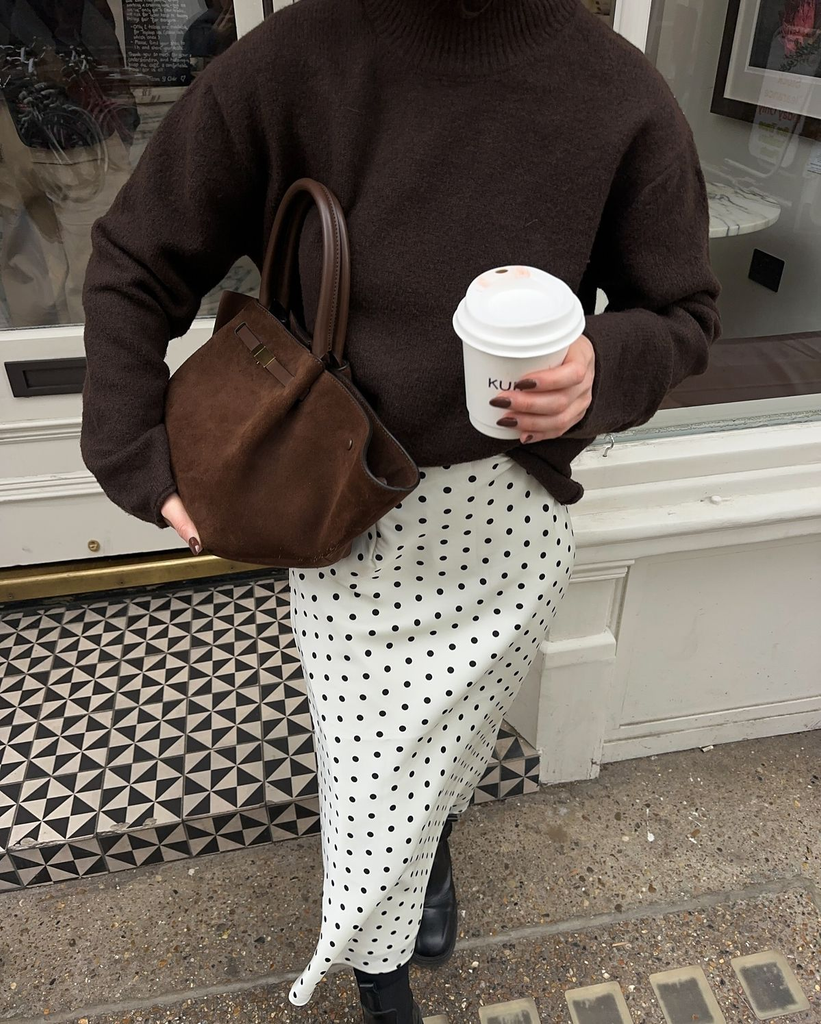
A midi skirt gives you an alternative to jeans and trousers while remaining easy to style. Pair it with a fitted T-shirt and sneakers for daytime or a knit top and flats for a more polished outfit.
A simple A-line or straight silhouette is often easier to combine with different tops than a heavily embellished skirt. That said, if prints are your signature, a patterned skirt can be a great capsule piece.
9. A Simple Everyday Dress

A versatile dress is useful for days when you want an outfit without coordinating several separate pieces. Depending on the cut and fabric, you can wear it with sneakers, sandals, flats, or boots.
A shirt dress, knit dress, or uncomplicated midi dress can work across different settings. You can also change the overall feel with a cardigan, blazer, belt, or jewelry.
Choose a style that feels comfortable when you sit, walk, and move around. A dress that looks wonderful on a hanger but requires constant adjustment won’t earn much space in your capsule.
10. A Timeless Outerwear Piece

Outerwear often takes up a larger part of your clothing budget, so I would choose carefully. A trench coat, simple wool coat, denim jacket, or lightweight utility jacket can work across many outfits.
Your best option depends on the climate where you live. A wool coat may be a smart investment in a cold region, while a breathable jacket or lightweight trench may be more useful in a warmer climate.
Think about the clothing you already own before choosing a color. Outerwear should work with your everyday shoes and trousers, not just one carefully styled outfit.
The Best Minimalist Capsule Wardrobe Checklist
If you’re looking for a practical starting point, here’s a flexible checklist you can use when reviewing your closet. You don’t need to purchase everything at once, and you can adjust the quantities to suit your routine.
| Clothing category | Suggested quantity | Why it helps |
|---|---|---|
| Basic T-shirts and tops | 4–6 | Everyday layering and casual outfits |
| Button-down shirts | 1–2 | Casual or polished styling |
| Jeans | 1–2 pairs | Reliable everyday bottoms |
| Tailored trousers | 1–2 pairs | Work and dressier occasions |
| Sweaters or cardigans | 2–3 | Layering and seasonal comfort |
| Blazer or structured jacket | 1 | Adds polish to simple outfits |
| Midi skirt | 1 | Provides an alternative to trousers |
| Everyday dress | 1–2 | Easy, coordinated outfits |
| Outerwear | 1–2 pieces | Weather-appropriate layering |
| Everyday shoes | 2–3 pairs | Comfort and outfit variety |
| Special-occasion shoes | 0–1 pair | Optional, based on your lifestyle |
This is a suggested core collection, not a strict 30-piece challenge. Underwear, sleepwear, gym clothes, uniforms, and specialized seasonal gear can be handled separately.
Pro tip: Don’t count your clothing before deciding what belongs in your everyday wardrobe. First identify what you wear, what you need, and what is missing. Otherwise, a capsule wardrobe checklist can turn into another reason to shop.
6. Create More Outfits With Fewer Clothes

The real benefit of a capsule wardrobe isn’t simply owning fewer clothes. It’s being able to combine those clothes in ways that feel different enough for your daily life.
For instance, a white shirt, jeans, tailored trousers, neutral sweater, and blazer can create several combinations without requiring additional shopping. Changing your shoes, bag, or accessories can make the same basic pieces feel appropriate for different occasions.
Here are a few easy outfit formulas I would keep in mind.
Casual Everyday Outfit
- White T-shirt
- Straight-leg jeans
- White or neutral sneakers
- Lightweight cardigan or denim jacket
This combination is comfortable for errands, casual lunches, and relaxed weekends. You can make it look more polished by choosing dark-wash denim and a structured bag.
Smart Casual Outfit
- Tailored trousers
- Simple fitted or relaxed T-shirt
- Blazer
- Loafers or minimalist sneakers
This is a useful option when you want to look put together without dressing formally. The fit of the trousers and blazer does most of the work, so you don’t need a complicated top.
Easy Transitional Outfit
- Midi skirt
- Neutral sweater
- Flats or ankle boots
- Simple shoulder bag
This formula works well when temperatures are changing. Adjust the sweater weight and footwear to suit the weather rather than buying an entirely new outfit for every season.
Polished Everyday Outfit
- Dark-wash jeans
- White button-down shirt
- Camel or navy jacket
- Loafers or ankle boots
I particularly like this type of combination because each item can be reused in several other outfits. You can replace the jeans with tailored trousers or swap the shirt for a knit top without changing the overall structure.
Choose Shoes That Work With Most of Your Wardrobe
Shoes can make a capsule wardrobe more versatile, but they’re also an easy category to overbuy. A closet full of beautiful shoes doesn’t help much if only one pair is comfortable enough for everyday use.
I would start with two or three pairs that cover your real needs rather than trying to own every classic style.
- Minimalist sneakers: Ideal for everyday walking, jeans, and casual dresses.
- Loafers or ballet flats: Useful for office outfits, tailored trousers, and skirts.
- Ankle boots or weather-appropriate footwear: Helpful for cooler seasons and outfits that need a little structure.
- Sandals: A sensible option if warm weather makes them a regular part of your routine.
You don’t have to own all four categories. If you live in a warm climate, sandals may be more useful than ankle boots. If you walk long distances, prioritize supportive footwear over a fashionable pair you can only tolerate for an hour.
One thing I would never compromise on is comfort. Shoes that pinch, rub, or require you to walk carefully aren’t a good investment just because they match your color palette.
8. Select Bags and Accessories That Make Simple Outfits Feel Personal

Accessories are where I think a minimalist wardrobe can become much more personal. Even if you wear the same jeans and sweater combination regularly, changing the bag, earrings, belt, or scarf can give the outfit a different feel.
You don’t need a large accessory collection. Start with pieces that work with your everyday clothing and suit the occasions you attend most often.
Everyday Handbag

A medium-sized handbag in black, brown, tan, or another frequently worn color can work with many outfits. Think about what you carry before deciding on a size: a beautiful miniature bag isn’t practical if you regularly need room for a wallet, phone, keys, and other essentials.
Simple Jewelry

Small hoops, a watch, a delicate necklace, or a pair of understated earrings can make basic clothing feel more finished. If you prefer statement jewelry, keep that in the mix too; minimalism doesn’t mean every accessory must be tiny.
Belts and Scarves
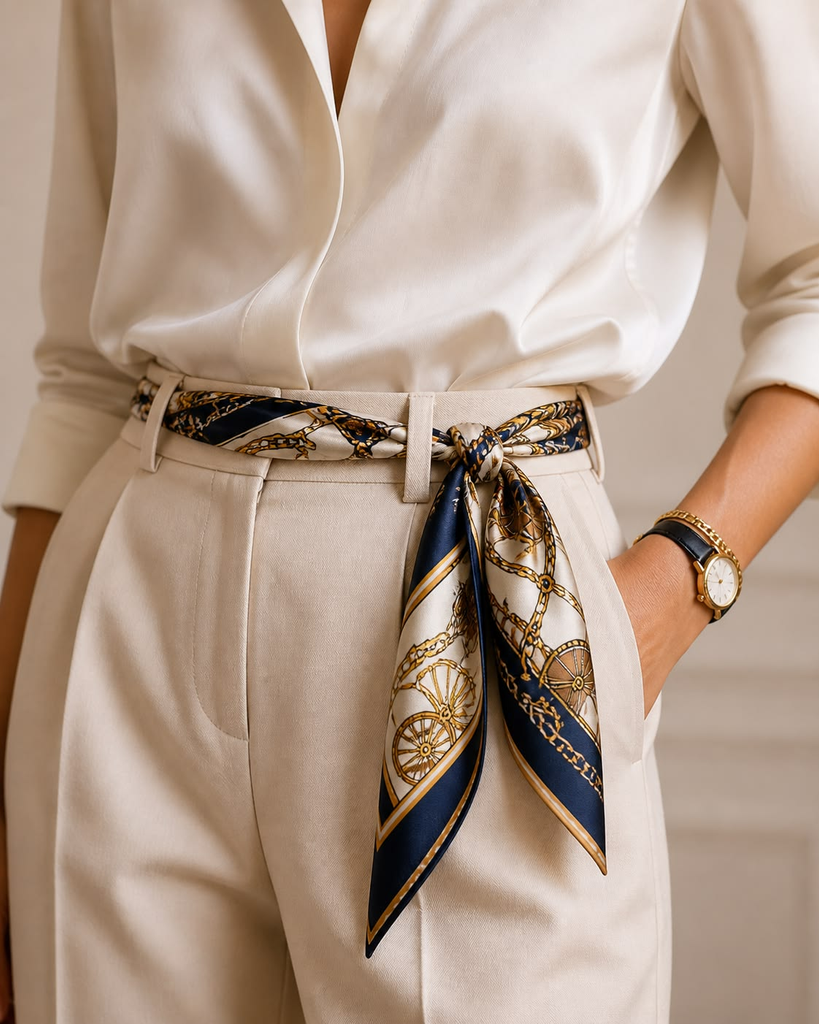
A belt can help define the waist of trousers or a dress, while a scarf adds color and texture. These are also useful ways to introduce a favorite accent shade without purchasing several new clothing pieces.
Pro tip: Before buying accessories, notice which ones you already wear repeatedly. Your favorite everyday bag and jewelry are usually better clues to your personal style than a list of supposedly essential accessories.
How to Build a Minimalist Capsule Wardrobe on a Budget
A minimalist wardrobe can reduce unnecessary spending, but only if you avoid treating it as a reason to replace everything you own. Buying an entirely new collection of basics can become expensive quickly, even when every individual item seems reasonably priced.
I would build your capsule in stages and set a realistic spending limit before you start browsing.
Step 1: Shop Your Closet First
Take out the clothing you wear regularly and identify the pieces that already work together. You may discover that you own several useful basics but have overlooked them because they’re buried behind clothes you rarely wear.
Try creating outfits with your existing clothes before deciding that you need something new. Sometimes a different combination is all it takes to make an old piece feel useful again.
Step 2: Identify Your Genuine Gaps
Write down the specific items that would make your existing wardrobe more versatile. For example, if you own several tops but no comfortable everyday trousers, trousers may be a more useful purchase than another shirt.
Keep your list short and practical. A capsule wardrobe is supposed to solve a problem, not create a never-ending shopping checklist.
Step 3: Set a Price Range for Each Category
Not every item needs the same budget. You might choose to spend more on jeans that fit exceptionally well or shoes you wear several times a week, while buying basic T-shirts at a lower price point.
The important thing is to evaluate the cost alongside quality, comfort, maintenance, and how frequently you’ll wear the item.
Step 4: Consider Secondhand Clothing
Thrift stores, resale websites, and clothing swaps can be useful places to find blazers, denim, coats, and other wardrobe staples. Secondhand shopping is especially appealing when you’re looking for a particular fabric or style without paying full retail prices.
Check seams, zippers, lining, fabric wear, and any stains before purchasing. A low price isn’t a bargain if the garment needs costly repairs or is uncomfortable to wear.
Step 5: Calculate Cost Per Wear
Cost per wear is a simple way to think about clothing value.
For example, if you spend $60 on trousers and wear them 60 times, their cost per wear is $1. If a $25 top is worn only five times, its cost per wear is $5.
These figures are examples rather than promises about how long any garment will last. They simply show why the cheapest item isn’t always the most economical choice.
Where to Spend and Where to Save
| Item | Where I would focus the budget | Why |
|---|---|---|
| Jeans | Fit and durability | Poor fit can make them uncomfortable |
| Everyday shoes | Comfort and construction | You’ll notice discomfort with frequent wear |
| Outerwear | Fabric, fit, and versatility | It often costs more and gets repeated use |
| Basic T-shirts | Fit and washability | Affordable options can work well |
| Trend-led accessories | Lower-cost options | Your preferences may change |
| Special-occasion clothing | Borrowing or secondhand options | You may wear it infrequently |
My approach would be to buy fewer pieces, but only when they solve an actual wardrobe problem. That is much more sustainable for your budget than buying a new collection because a particular aesthetic looks good online.
Choose Fabrics That Match Your Climate and Routine
The fabric of a garment affects how comfortable it feels, how it drapes, and how much care it requires. This is especially important in a minimalist wardrobe because you expect to wear each piece regularly.
Cotton is a versatile choice for T-shirts and shirts, while linen is useful in hot weather because it feels light and breathable. Wool can provide warmth in colder climates, and some synthetic or blended fabrics may offer wrinkle resistance and easier maintenance.
There isn’t one perfect fabric for every item. A delicate natural fabric that requires special washing may be less practical for someone with a busy routine than a durable blend that can be machine-washed.
| Fabric | Common uses | What to consider |
|---|---|---|
| Cotton | T-shirts, shirts, casual dresses | May shrink or wrinkle depending on construction |
| Linen | Summer shirts, trousers, dresses | Wrinkles easily, which is part of its natural look |
| Wool | Sweaters, coats, cold-weather layers | May need careful washing or dry cleaning |
| Denim | Jeans, jackets, skirts | Heavier fabrics may feel warm in hot weather |
| Viscose or rayon | Blouses, dresses, lightweight trousers | Care instructions vary by construction |
| Polyester blends | Travel clothing, wrinkle-resistant pieces | Breathability and texture vary by fabric quality |
Always read the care label before purchasing. If you dislike hand-washing or dry-cleaning, an item that requires those steps may spend more time in your laundry basket than in your outfits.
Build a Seasonal Capsule Wardrobe Without Starting Over
You don’t need a completely separate wardrobe for every season. A flexible capsule wardrobe can stay largely the same throughout the year, with a few changes to fabrics, layers, and footwear.
The easiest approach is to keep your most versatile pieces in rotation and store only the items that are genuinely unsuitable for the current weather.
Spring Capsule Wardrobe

Focus on lightweight layers, cotton shirts, straight-leg jeans, cardigans, and comfortable flats or sneakers. A trench coat or light jacket can help on cooler mornings without requiring a heavy winter wardrobe.
Summer Capsule Wardrobe
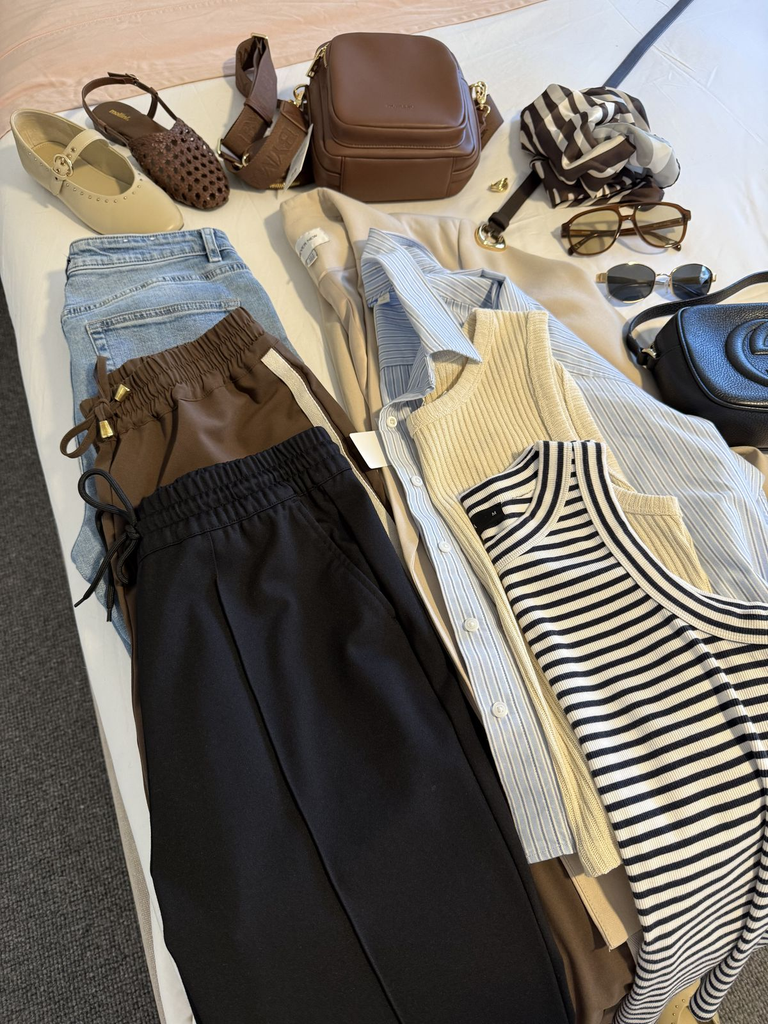
Choose breathable shirts, lightweight trousers, simple dresses, skirts, and sandals. Linen and cotton can be particularly useful, although the right choice depends on how much ironing and maintenance you’re willing to do.
Fall Capsule Wardrobe
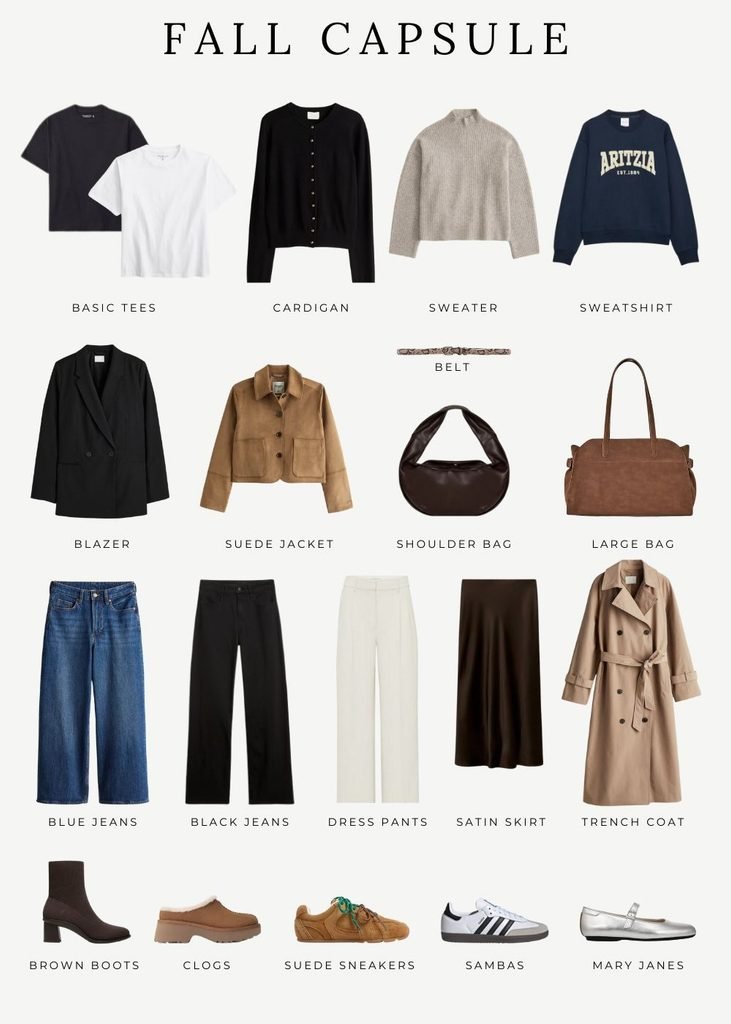
Bring in knitwear, darker denim, tailored trousers, and transitional jackets. You can also introduce deeper colors such as burgundy, olive, chocolate brown, and navy if they suit your preferences.
Winter Capsule Wardrobe
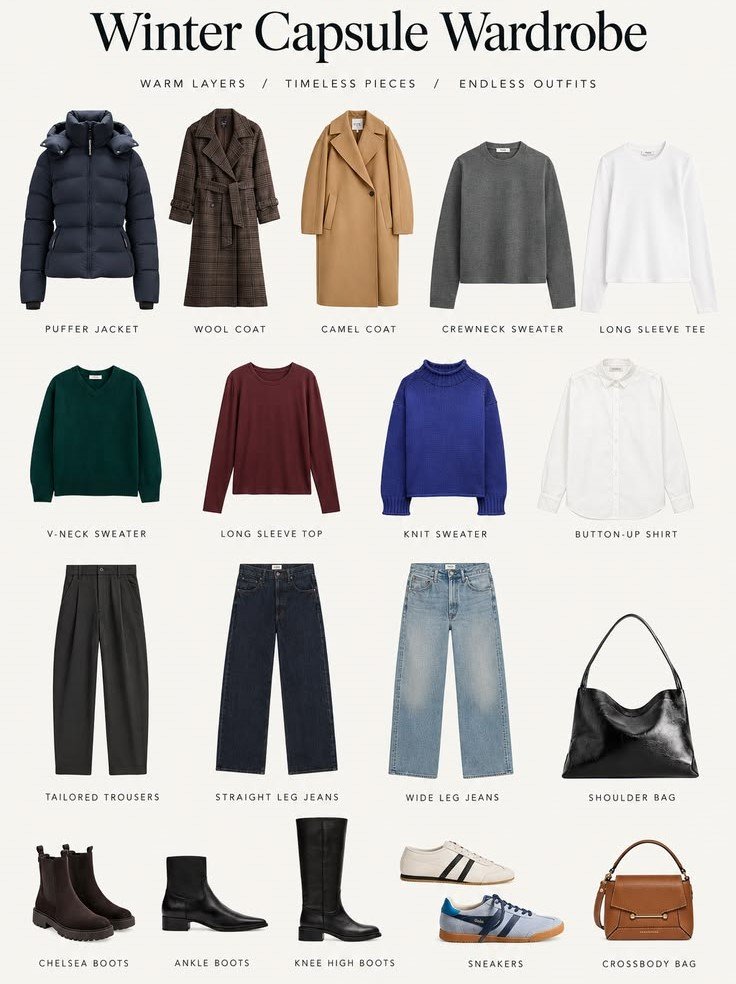
If your climate calls for it, add warm sweaters, coats, weather-appropriate footwear, and insulating layers. In milder winters, a cardigan and lightweight jacket may be enough, so don’t buy heavy outerwear you rarely need.
Pro tip: Store seasonal clothes only after checking that they’re clean, comfortable, and still fit. There’s little benefit in keeping a sweater for next winter if you already know you dislike its fabric or shape.
Avoid These Common Capsule Wardrobe Mistakes
Even a well-intentioned minimalist wardrobe can become frustrating when you follow rules that don’t fit your life. I would watch out for these common mistakes before buying anything new.
Buying Everything in the Same Color
Neutral colors are useful, but a wardrobe filled with nearly identical shades can feel repetitive if you enjoy variety. Keep a coordinated base while allowing room for colors and patterns that reflect your personality.
Choosing Trends Over Comfort
A particular trouser cut or shoe style might look wonderful in photographs, but that doesn’t mean it will suit your body, routine, or preferences. Try new silhouettes when you genuinely want to, rather than feeling obligated to follow a trend.
Getting Rid of Too Much Too Quickly
You don’t have to declutter your entire closet in one afternoon. Set aside questionable pieces and see whether you reach for them over the next month or season before making a final decision.
Buying Cheap Replacements for Everything
A low price can be appealing, but garments that lose their shape quickly may need replacing more often. Look at construction and care requirements instead of judging an item by price alone.
Forgetting Your Actual Activities
A wardrobe full of elegant office clothing won’t help much if you spend most of your week working from home or taking care of everyday errands. Build around your real schedule first, then add occasional-use pieces where they’re needed.
Treating Minimalism as a Strict Number
Some people enjoy a 30-piece capsule; others need more clothing because of their work, climate, hobbies, or laundry routine. There is no universal number that makes a wardrobe successful.
How to Maintain Your Minimalist Wardrobe
Once you’ve created a collection that works, a little maintenance can prevent it from becoming cluttered again.
I would review my wardrobe at the start of each season rather than constantly reorganizing it. Check which pieces you wore, which ones need repairs, and whether anything no longer fits your routine.
Before purchasing a replacement, check whether the original garment can be repaired. A loose button, small seam issue, or missing trouser hem may be an easy fix, while worn-out fabric or a damaged zipper might make replacement more reasonable.
It’s also helpful to keep a short shopping list on your phone. When you notice that you genuinely need a replacement white T-shirt or a comfortable pair of everyday shoes, record it instead of buying the first option you see.
Finally, give yourself permission to change your mind about your style. A minimalist wardrobe should support your life as it is now, not lock you into a particular aesthetic forever.
Frequently Asked Questions About a Minimalist Capsule Wardrobe
How many pieces should a minimalist capsule wardrobe have?
There is no fixed number. Some people prefer around 25–35 core pieces, while others need more because of their climate, work requirements, hobbies, or laundry schedule. I would focus on versatility and how often you wear each item rather than trying to reach an arbitrary total.
What are the most important capsule wardrobe essentials?
For a practical starting point, consider a white T-shirt, button-down shirt, well-fitting jeans, tailored trousers, a neutral sweater, a versatile jacket, comfortable everyday shoes, and a few pieces that reflect your personal style. Your priorities may change depending on your lifestyle and local weather.
Can I build a minimalist capsule wardrobe on a small budget?
Yes. Start with clothing you already own, identify genuine gaps, and buy replacements gradually. Secondhand clothing, seasonal sales, and affordable basics can help, while a cost-per-wear approach can make it easier to decide where spending more is worthwhile.
Does a minimalist capsule wardrobe have to be neutral?
No. Neutral colors make mixing and matching easier, but you can include bright colors, prints, and statement accessories. The goal is to choose pieces that work together and that you enjoy wearing, not to follow a beige-only rule.
Is a capsule wardrobe suitable for every season?
Yes, although the exact pieces depend on your climate. Keep versatile basics in rotation and adjust your layers, fabrics, and footwear as the weather changes. If you experience extreme seasonal differences, separate seasonal capsules may be more practical.
How often should I update my capsule wardrobe?
Review it every season or whenever your lifestyle changes significantly. Replace worn-out essentials when necessary, repair items where practical, and add new pieces only when they serve a clear purpose. You don’t need to refresh your wardrobe every year just because fashion trends change.
Conclusion: Build a Wardrobe That Works for You
A minimalist capsule wardrobe isn’t about owning the fewest clothes possible. It’s about making your closet easier to use, choosing pieces that work together, and spending your money on clothing that fits your real life.
If I were starting from scratch, I’d begin with my favorite jeans, a white shirt, a comfortable everyday top, and shoes I could wear for hours. I’d build a few outfits around those pieces before buying anything else, then fill the gaps slowly.
Start with what you own, pay attention to what you actually wear, and let your wardrobe develop naturally. The best capsule wardrobe isn’t the one that looks perfect in a photograph. It’s the one that makes getting dressed easier on an ordinary morning.