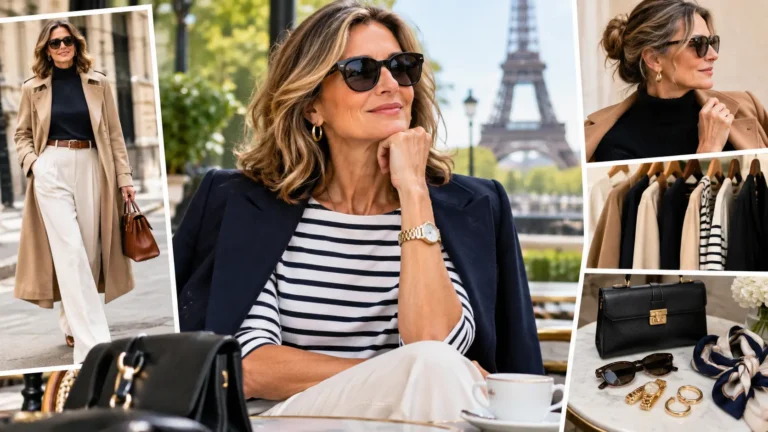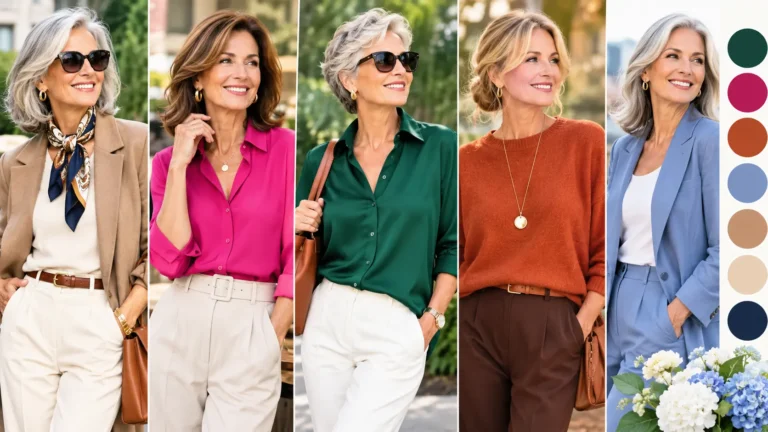
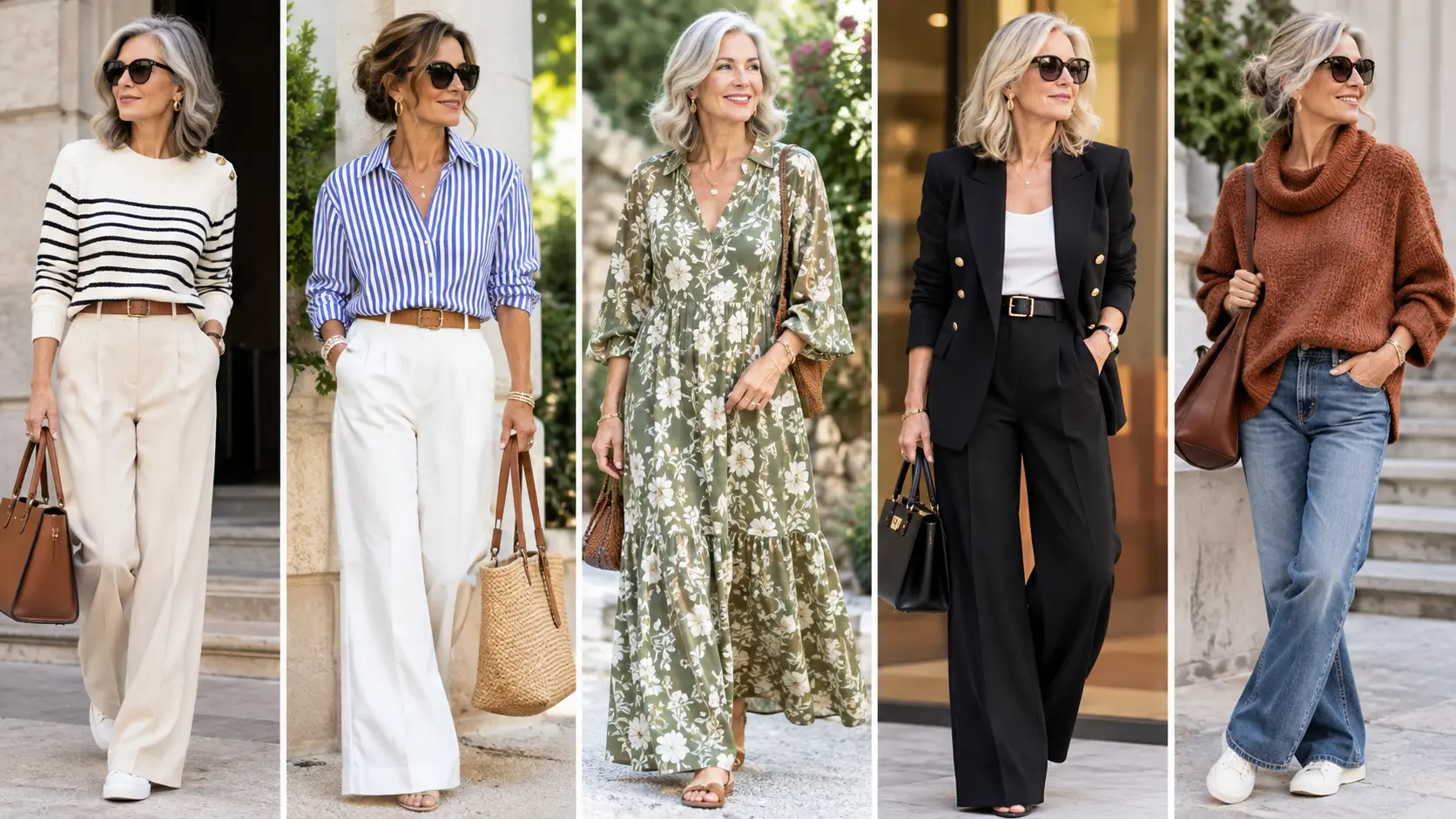

Finding outfits that feel modern, comfortable, and genuinely flattering after 50 doesn’t mean replacing your entire wardrobe every season. I think the best style comes from knowing which pieces work for your body, your lifestyle, and the way you actually like to dress.
A great pair of jeans, a well-cut blazer, or a soft knit sweater can do more for your wardrobe than a closet full of things you only wear once.
When I look at the kinds of outfit combinations worth saving on Pinterest, I pay attention to the details that make them practical: the proportions, the colors, the shoes, and whether you could recreate the look with clothes you already own. I also think it’s important to separate a pretty outfit photo from something you would feel comfortable wearing for a full day.
In this guide, I’m focusing on trending outfit formulas for women over 50, from relaxed denim and polished everyday basics to elegant monochrome looks, modern workwear, and seasonal layers.
These are style combinations you can adapt to your own taste and budget, rather than strict rules about what women should or shouldn’t wear at a certain age.
One quick note: Pinterest trends change constantly, and I can’t verify a live ranking of its most-saved outfits here. Instead, I’m covering Pinterest-friendly looks built around enduring wardrobe staples and contemporary styling details.
1. Straight-Leg Jeans With a Relaxed Blazer

If I were building a modern wardrobe from scratch, I’d start with straight-leg jeans and a blazer. This combination works because it balances casual denim with a structured layer, so you look put together without feeling as though you’re dressed for a formal meeting.
I like medium-wash or dark-wash jeans with a straight leg, a simple white or cream T-shirt, and a blazer that skims the hips. Add loafers, clean white sneakers, or low block heels depending on where you’re going. If your jeans are ankle-length, check where the hem sits with your chosen shoes; a small difference in length can change the entire proportion of the outfit.
For a more contemporary look, try a slightly relaxed blazer rather than an extremely fitted one. You can also replace the T-shirt with a fine-knit sweater when the weather cools down. I would avoid buying a blazer that feels restrictive across the shoulders just because it looks sharp on the hanger.
Pro tip: If you already own dark jeans and a neutral jacket, try changing your shoes and bag before shopping for another outfit. Those accessories can make familiar basics feel surprisingly different.
2. Wide-Leg Trousers With a Fitted Knit Top

Wide-leg trousers are a strong option when you want an outfit that feels polished but doesn’t cling to your legs. The secret is balancing the volume. I find that a fitted or softly shaped top usually works better than a long, oversized sweater worn loose over everything.
Start with black, navy, charcoal, or camel trousers. Pair them with a fine-knit top, a tucked-in blouse, or a lightweight sweater that ends around the hip. If you prefer more coverage around your middle, try a top that gently follows your shape and use a partial front tuck only if it feels comfortable.
Shoes matter here more than many people realize. A full-length wide-leg trouser can overwhelm a petite frame if the hem pools on the floor, while a cropped version can look intentional with loafers or ankle boots. I recommend trying trousers with the actual shoes you plan to wear before deciding on the hem length.
Pro tip: Look for trousers with a comfortable waistband and enough room through the hips. A beautiful drape is more important than choosing the widest leg available.
3. A Monochrome Outfit in Cream, Beige, or Camel

Tonal dressing is one of my favorite outfit formulas because it creates a cohesive look without requiring complicated styling. Instead of matching every piece exactly, combine related shades such as ivory, oatmeal, sand, and camel.
For example, wear cream trousers with an oatmeal sweater and a camel coat. Or pair beige jeans with an ivory blouse and tan loafers. Mixing textures keeps the outfit from looking flat: think denim with knitwear, wool with cotton, or a smooth leather bag alongside a soft cardigan.
If you find that beige washes you out, you don’t need to abandon neutral outfits. Move the lighter shade away from your face, choose a warmer or cooler version of the color, or introduce navy, chocolate brown, or a flattering scarf near your neckline.
Pro tip: When shopping for neutral clothing, compare undertones in natural daylight. Two pieces labeled “cream” can look noticeably different when worn together.
4. Dark Jeans With a Crisp White Shirt

There is a reason this outfit formula keeps returning: it is easy to wear, easy to personalize, and suitable for far more occasions than you might expect. Dark denim makes the outfit feel a little more refined, while a white button-down shirt adds structure around the shoulders and neckline.
I would choose a shirt with enough room to move comfortably rather than one that pulls across the buttons. You can wear it fully tucked into high-rise jeans, half-tucked for a relaxed finish, or open over a simple tank top as a lightweight third layer.
A brown or black leather belt gives the outfit definition, while loafers and a structured handbag make it feel polished. For a casual weekend, switch to white sneakers and roll the sleeves. In cooler weather, layer a cardigan or trench coat over the shirt.
The main trade-off is fabric maintenance. Crisp cotton can wrinkle throughout the day, so a cotton blend or a softer drapey shirt may be more practical if you’re traveling or sitting for long periods.
Pro tip: Check the shirt length before buying. If you want to wear it untucked, the hem should look intentional rather than falling awkwardly at the widest part of your hips.
5. A Midi Dress With Sneakers or Low Heels

When I want an outfit that doesn’t require much coordination, a midi dress is an easy starting point. You have one main piece to work with, and the shoes and accessories can determine whether the final look feels casual, professional, or dressy.
A shirt dress with a waist tie is a useful choice if you like adjustable shaping. A softly gathered or A-line midi dress can offer movement without feeling restrictive, while a knit midi dress creates a cleaner silhouette. You don’t have to choose a dress that defines your waist if that isn’t your preference.
For daytime, try a solid-colored dress with clean sneakers and a denim jacket. For lunch or a casual event, switch to ballet flats or low block heels and add a structured bag. In autumn, a lightweight cardigan or trench coat makes the dress easier to wear across changing temperatures.
Pay attention to the hem. Depending on your height and the dress cut, a midi length can fall at different points on the calf, so trying several lengths is worth the effort.
Pro tip: If a dress feels too plain, change the accessories before adding another layer. A belt, earrings, or a different shoe can make a bigger difference than a complicated jacket.
6. A Long Cardigan With a Simple Everyday Outfit

A long cardigan is practical when you want an extra layer without the structure of a blazer. It works especially well for cool offices, travel days, and transitional weather when a heavy coat feels like too much.
I would start with a cardigan in charcoal, navy, oatmeal, or chocolate brown. Wear it over a simple T-shirt with straight-leg jeans, or combine it with slim trousers and a lightweight blouse. If you prefer a more streamlined look, keep the base outfit relatively simple and let the cardigan provide the movement.
Length is worth considering. A cardigan that falls around the mid-thigh can work well with many outfits, but an overly bulky knit paired with wide-leg trousers may create more volume than you want. You can keep the look balanced with a more fitted base layer or a cardigan with a clean vertical line.
Pro tip: Before buying a new cardigan, check the weight of the knit. A lightweight style is more versatile for layering, while a chunky version is better treated as the main feature of an outfit.
7. A Tailored Vest With Trousers or Jeans

A tailored vest offers a modern alternative to a blazer, especially when you want something structured without an extra sleeve layer. The result can look polished while still feeling light enough for spring and summer.
For a coordinated outfit, pair a matching vest and trousers with simple flats or loafers. If you prefer a casual interpretation, wear a neutral vest over a plain top with dark jeans. Linen blends can work nicely in warm weather, while a more structured fabric is useful for office outfits and dinners.
Fit is the deciding factor. The vest should sit comfortably across the chest, close without pulling, and allow you to move your arms freely. If you plan to wear it over another top, leave enough room for that layer rather than buying the smallest size that fastens.
Pro tip: A vest and matching trousers create the impression of a suit, but you can get more wardrobe value by choosing pieces that also work separately.
8. A Striped Sweater With Classic Denim

Stripes are an easy way to introduce pattern without committing to a bold print. A navy-and-white striped sweater, for example, works with blue jeans, white denim, black trousers, and even a simple midi skirt.
I’d keep the rest of the outfit uncomplicated. Pair the sweater with straight-leg jeans and loafers, then add a trench coat when you need another layer. If you prefer a more fitted look, choose a fine-gauge knit; if comfort is the priority, a relaxed sweater can work just as well with a cleaner-cut bottom.
The important thing is choosing stripes you genuinely like rather than worrying about rigid fashion rules. Horizontal stripes aren’t automatically unflattering, and vertical stripes aren’t automatically better. The scale of the pattern, fabric, fit, and overall outfit all affect the final result.
Pro tip: If your striped sweater is oversized, try it with straight or slim-straight trousers first. You can always experiment with wider bottoms once you find proportions that feel right.
9. A Trench Coat Over Everyday Basics

A trench coat can make an ordinary outfit feel finished, even when you’re wearing jeans and a basic top underneath. I consider it one of the more useful wardrobe investments because it can work across multiple seasons and occasions.
For a classic combination, layer a beige trench over dark denim, a white shirt, and loafers. For a more contemporary feel, wear it open over wide-leg trousers and a lightweight knit. Navy and olive are also good alternatives if traditional beige doesn’t suit your wardrobe.
Before investing in one, check the shoulder fit, sleeve length, and weight of the fabric. A very heavy trench can feel awkward in mild weather, while a thin one may not provide enough warmth for colder days. If you live somewhere with frequent rain, a water-resistant finish may matter more than decorative details.
Pro tip: Try the coat over the thickest sweater you expect to wear beneath it. A trench that fits beautifully over a T-shirt may feel restrictive once autumn layering begins.
10. A Soft Sweater With a Midi Skirt

If jeans are your default outfit, a midi skirt is a simple way to introduce variety without making your wardrobe feel unfamiliar. Pairing a soft sweater with a flowing skirt creates a useful balance between structure and movement.
A pleated skirt gives the outfit texture, while a satin-finish skirt creates a smoother, dressier effect. For everyday wear, I like the idea of a fine-knit sweater with a skirt that moves comfortably when you walk. Finish with ankle boots, loafers, or ballet flats depending on the weather.
Think about how the two pieces work together. A bulky sweater can overwhelm a very full skirt, so you may prefer a lighter knit or a slightly more fitted shape. If you want a longer silhouette, keep the colors similar from top to bottom; if you like contrast, let the skirt become the focal point.
Pro tip: Sit down and walk around in the skirt before deciding it works for you. Fabric that looks beautiful standing still can twist, cling, or ride up during an ordinary day.
11. Modern Workwear With a Relaxed Suit

Modern workwear doesn’t have to mean a stiff suit and uncomfortable shoes. A relaxed matching set can give you the same polished impression while allowing more freedom of movement.
I’d look for a blazer with enough room through the shoulders, trousers that drape rather than cling, and a fabric that doesn’t wrinkle excessively during the day. Navy, charcoal, taupe, and black are practical choices because you can mix the jacket and trousers with other items in your wardrobe.
For a more casual office, wear the blazer with dark jeans and a knit top. For meetings, coordinate it with matching trousers and loafers or low heels. You can also soften the outfit with a simple necklace or a bag in a complementary shade rather than relying on a full set of matching accessories.
The main consideration is cost per wear. A suit you can separate into four or five different combinations may be a better purchase than a more expensive set that only looks right when worn together.
Pro tip: Check whether the blazer works with at least two pairs of trousers and whether the trousers work with several tops you already own. That simple test helps prevent expensive wardrobe pieces from sitting unused.
12. White Jeans With Neutral Layers

White jeans can make familiar outfits feel fresh, particularly in spring and summer. You don’t need to build a special wardrobe around them; you can style them with many of the same pieces you already wear with blue denim.
Try white straight-leg jeans with a navy sweater, a striped shirt, or a beige cardigan. For a more polished combination, add a blazer and loafers. In cooler weather, a camel coat or dark knit creates contrast without making the outfit feel overly formal.
Fabric opacity is especially important with white denim. Check the jeans in natural light and make sure the pockets and seams don’t show more than you’re comfortable with. A slightly heavier fabric can offer better coverage, although it may feel warmer in hot weather.
Pro tip: If you are unsure about bright white, try ivory or ecru denim. These shades can be easier to coordinate with warm neutrals and often feel less stark against other wardrobe basics.
13. A Knit Dress With a Structured Jacket

A knit dress can be a practical choice when you want the ease of a one-piece outfit but prefer something a little more substantial than a summer dress. Adding a structured jacket creates contrast and makes the combination suitable for a wider range of settings.
Choose a knit dress that skims your body comfortably rather than stretching tightly across areas you would rather not emphasize. A blazer adds definition, while a cropped jacket changes the proportions and can work well with certain midi lengths.
For everyday wear, ankle boots or loafers are easy options. If you are dressing for dinner, a low heel and a small structured bag can make the outfit feel more deliberate without requiring a complete change of clothes.
Be mindful of knit weight and lining. Lightweight ribbed fabrics can cling, while thicker knits may feel warmer than expected indoors. Trying the dress while seated as well as standing will help you judge whether it works for your day.
Pro tip: If the dress already has an interesting neckline or texture, keep the jacket and jewelry simple. You don’t need every element of an outfit to compete for attention.
14. A Denim Jacket With a Floral or Solid Midi Dress

A denim jacket is a useful layering piece because it makes dresses feel more casual and can extend their wear into cooler months. It also gives you a way to reuse dresses that might otherwise seem too dressy for everyday errands.
For a softer look, pair a medium-wash jacket with a floral midi dress and sneakers. If prints aren’t your thing, a solid navy, black, olive, or burgundy dress works just as well. You can switch to ankle boots and add a scarf when the weather cools down.
The jacket’s length matters. A shorter denim jacket can work nicely with a fuller dress, while a longer jacket may create a more relaxed silhouette. Neither is universally better; the right choice depends on the dress and the proportions you prefer.
Pro tip: If the denim jacket feels too stiff, try a softer denim blend or wear it open over a lightweight top. Comfort should not be the price of a polished outfit.
15. A Statement Blouse With Simple Trousers

Sometimes a wardrobe doesn’t need another pair of trousers or another neutral sweater. It needs one interesting top. A statement blouse can add color, pattern, or texture to basics you already wear regularly.
Look for details you enjoy, whether that’s a subtle print, a soft tie neckline, a rich jewel tone, or gently gathered sleeves. Pair the blouse with black trousers, dark jeans, or a simple midi skirt so the outfit remains easy to coordinate.
Fabric is worth considering here. A blouse that looks beautiful but requires constant ironing may not be the most practical choice for your lifestyle. If you want an everyday option, consider washable fabrics with a comfortable drape and enough room through the shoulders.
Pro tip: Before buying a statement blouse, identify three items in your wardrobe that would work with it. If you can only imagine wearing it with one specific outfit, it may not be as versatile as it first appears.
16. A Casual Elevated Outfit With Matching Knitwear

Coordinated knitwear is useful when you want to feel comfortable without looking as though you simply threw on whatever was closest. A matching top and trousers create a deliberate look with very little styling effort.
For a neutral version, try a taupe, charcoal, or navy knit set with clean sneakers or loafers. You can wear the pieces together or separate them, pairing the top with jeans and the trousers with a different sweater.
I would pay attention to the fabric’s recovery and weight. Thin knits can lose their shape, while heavier materials may be too warm for indoor settings. If you plan to travel in a matching set, check whether the fabric creases easily and whether the waistband remains comfortable after sitting for several hours.
Pro tip: Buy a matching set only if both pieces work independently. That gives you more outfits without increasing the number of items in your closet.
17. A Long Coat With Straight-Leg Jeans and Ankle Boots

When temperatures drop, a long coat can become the main element of an outfit. Even simple jeans and a sweater look more intentional when the outer layer has a clean shape and fits well.
For a classic combination, try a camel or charcoal coat over dark denim, a fine-knit sweater, and ankle boots. If you prefer a more casual look, swap the boots for sneakers and use a softer scarf for extra warmth.
Pay attention to the coat’s shoulder line, sleeve length, and overall weight. A coat that is too narrow may pull when you layer it over knitwear, while one that is too large can feel cumbersome. If you are petite, trying several lengths is particularly helpful because a few inches can change the balance of the outfit.
Pro tip: Test the coat with the bag you normally carry. Some shoulder bags slip off under a bulky coat, making an otherwise comfortable outfit frustrating to wear.
18. A Simple Black Outfit With Interesting Accessories

Black can make getting dressed easier because so many pieces coordinate naturally. The trick is adding enough texture and variation that the outfit doesn’t feel flat.
Try black straight-leg trousers with a black knit top, or wear a simple black midi dress with ankle boots. A textured handbag, gold-tone earrings, a belt, or a contrasting jacket can give the outfit more dimension without making it complicated.
If you prefer a softer look near your face, introduce ivory, camel, or a flattering color through a scarf or jacket. You can also use different fabrics, such as knitwear with tailored trousers or matte cotton with leather accessories.
The main trade-off is practicality: black can show lint and pet hair, and some fabrics fade with frequent washing. Choosing quality basics that are easy to care for is more useful than buying every item in the same color.
Pro tip: Keep one accessory as the focal point. A bold bag or statement earrings are often enough; you don’t need to combine every standout accessory at once.
19. A Relaxed Button-Down With Linen Trousers

For warm weather, linen trousers and a relaxed button-down offer an alternative to jeans without requiring a completely different wardrobe. The natural texture of linen also gives a simple outfit some visual interest.
Pair beige or white linen trousers with a blue shirt, a striped top, or a lightweight knit. Flat sandals work for casual days, while loafers or low wedges create a more polished finish. If you like definition at the waist, try a partial tuck or a narrow belt.
Linen wrinkles, and that is part of its character. If you prefer a smoother appearance, look for a linen blend or a fabric with a little more structure. Also check the trouser lining and opacity, especially with lighter colors.
Pro tip: Choose linen trousers with a hem that works with flat shoes if those are your usual choice. A pair that drags on the ground will quickly become impractical.
20. A Colorful Sweater With Neutral Bottoms

If your wardrobe consists mostly of black, white, gray, and beige, adding one colorful sweater can make your everyday outfits feel different without a major shopping trip.
Burgundy, forest green, cobalt blue, plum, and rust are worth trying if they appeal to you. Pair a colorful knit with neutral trousers or jeans and keep the rest of the outfit fairly simple. The result is easy to wear but still feels intentional.
I wouldn’t choose a color just because someone labels it a seasonal trend. Consider which shades you already reach for and whether they work with your skin tone, outerwear, and accessories. A sweater that matches three pairs of trousers is likely to be more useful than a trendy color you struggle to style.
Pro tip: When trying a new color, hold it near your face in daylight. You can learn more from that simple test than from a list of colors supposedly suitable for every woman over 50.
How to Choose the Best Trending Outfits for Women Over 50 for Your Lifestyle
Not every outfit that photographs beautifully will suit your daily routine. I would start by deciding where you need the most help: casual weekends, work, travel, special occasions, or comfortable everyday dressing.
The table below compares the outfit formulas by practicality, styling effort, and likely investment. The costs are broad estimates in US dollars for new clothing, not live retailer quotes; local prices, fabric quality, and brands can vary significantly.
| Outfit formula | Best for | Styling effort | Approximate cost |
|---|---|---|---|
| Jeans and blazer | Everyday polish | Low | $80–$250 |
| Wide-leg trousers and knit | Work or dinner | Low | $60–$200 |
| Monochrome neutrals | Versatile occasions | Low | $70–$250 |
| Midi dress and sneakers | Daytime and travel | Very low | $40–$160 |
| Cardigan and jeans | Casual layering | Very low | $50–$180 |
| Tailored vest and trousers | Modern smart-casual | Medium | $80–$250 |
| Trench coat and basics | Transitional weather | Low | $100–$350 |
| Sweater and midi skirt | Casual or dressy days | Medium | $60–$200 |
| Relaxed matching suit | Office and events | Medium | $120–$400 |
| Linen trousers and shirt | Warm weather | Low | $60–$220 |
These estimates cover the main clothing pieces for each outfit formula, not necessarily shoes, handbags, or jewelry. If you already own a suitable pair of jeans, trousers, or shoes, your actual cost can be much lower.
What should you buy first?
If you’re working with a limited budget, I’d prioritize pieces that can be combined in several ways rather than buying a complete outfit at once.
- Start with bottoms: One pair of well-fitting straight-leg jeans and one pair of comfortable tailored trousers can anchor many combinations.
- Add versatile tops: A white shirt, a fine-knit sweater, and one top in a color you love provide useful variety.
- Choose one structured layer: A blazer, cardigan, or trench coat can change the feel of your existing basics.
- Finish with practical shoes: Loafers, clean sneakers, or comfortable ankle boots will depend on your climate and routine.
- Add personality last: A scarf, belt, earrings, or interesting handbag can help repeat outfits feel different.
Pro tip: Before purchasing anything, photograph five outfits you already own. Identify what’s missing from those combinations rather than shopping for an entirely new wardrobe.
How to Recreate Pinterest-Worthy Outfits Without Overspending
I think the most useful way to approach Pinterest outfit inspiration is to treat each image as a styling lesson, not a shopping list. You might like the proportions of an outfit but not the color, or love the shoes while preferring a different type of trousers.
Here is how I’d break down an outfit I wanted to recreate.
- Identify the main silhouette. Is it a fitted top with wide-leg trousers, a straight dress with a structured coat, or relaxed denim with a blazer?
- Choose a similar color palette. You don’t need the exact shades shown in the photo. Work with colors already present in your wardrobe.
- Look at the proportions. Notice where the top ends, where the trousers fall, and how the shoes relate to the hem.
- Check the finishing details. A belt, tucked shirt, rolled sleeve, or structured bag may be what makes the outfit look complete.
- Adapt it to your comfort. If the original outfit uses heels but you prefer flats, keep the overall styling and change the shoes.
When saving outfits on Pinterest, I would also create separate boards or sections for everyday casual looks, workwear, seasonal outfits, and special occasions. That makes the inspiration easier to use when you are actually getting dressed.
Avoid treating a saved outfit as proof that a particular item is worth buying. Photos don’t tell you whether the fabric is comfortable, the trousers stay in place when you sit, or the shoes are suitable for walking.
Common Styling Mistakes I Would Avoid
There are no universal rules that women over 50 must follow. Still, a few practical mistakes can make getting dressed harder than it needs to be.
Buying clothes that only work in one outfit
A statement piece can be worth buying, but most of your wardrobe should work together. Before purchasing something new, think about whether you can wear it with at least two or three items you already own.
Choosing fit based on the size label
Sizing varies by brand and garment. I would pay more attention to how the shoulders sit, whether the waistband digs in, whether the fabric pulls, and whether you can move comfortably.
Wearing every trend at once
Wide-leg trousers, oversized blazers, chunky shoes, and bold accessories can all work, but you don’t need to combine them in a single outfit. Choose one or two features you genuinely enjoy and let the rest of the look support them.
Ignoring fabric care
A blouse that needs constant ironing or trousers that require special cleaning may not fit your lifestyle. Read the care label before buying, particularly if you’re building a wardrobe for frequent everyday wear.
Keeping uncomfortable shoes for the sake of the outfit
Shoes affect both comfort and the way clothes hang. If a particular outfit only works with footwear you can’t comfortably wear, try a different hem length, a lower heel, or another shoe style.
Frequently Asked Questions
What are the most popular outfit styles for women over 50 right now?
Modern outfit formulas worth exploring include straight-leg jeans with blazers, wide-leg trousers with knit tops, monochrome neutrals, midi dresses with sneakers, relaxed tailoring, and coordinated knitwear. Actual Pinterest rankings change, so these should be treated as versatile style ideas rather than a verified list of the platform’s top-performing pins.
How can I dress stylishly over 50 without looking too formal?
Combine one polished item with comfortable basics. A blazer with jeans, tailored trousers with a simple T-shirt, or a midi dress with sneakers can create a balanced look without feeling overly dressy.
Which clothes are most versatile for women over 50?
Straight-leg jeans, tailored trousers, neutral knitwear, a white shirt, a blazer or cardigan, a comfortable midi dress, and practical everyday shoes are useful starting points. The best choices depend on your climate, lifestyle, and preferred fit.
Can women over 50 wear wide-leg jeans and oversized clothing?
Absolutely. The key is choosing proportions that you enjoy wearing. If both pieces are oversized, you may prefer a more defined hemline, a shorter top, or a structured shoe to give the outfit a deliberate shape, but there is no requirement to follow one silhouette.
How much should I spend on a stylish wardrobe after 50?
There is no single amount you need to spend. You can begin with existing basics and add a few versatile pieces over time. Prioritize fit, fabric, comfort, and how often you’ll wear an item rather than assuming a higher price automatically means better quality.
How do I find outfit inspiration on Pinterest?
Search for specific combinations such as “women over 50 casual fall outfits,” “wide-leg trousers outfit ideas,” “mature women capsule wardrobe,” or “elegant everyday outfits over 50.” Save outfits that match your real lifestyle, and look for repeated pieces and styling techniques instead of copying every item.
Final Thoughts
If I were refreshing a wardrobe today, I wouldn’t start by chasing every new trend.
I’d begin with one pair of jeans that fits beautifully, comfortable trousers, a few tops I genuinely like, and a layer that makes my everyday outfits feel more finished.
The best trending outfits for women over 50 are the ones you can adapt to your own life. Use Pinterest for ideas, experiment with color and proportion, and don’t be afraid to repeat an outfit that works.
You don’t need a bigger wardrobe to dress well; you need clothes that make getting dressed easier and help you feel like yourself.