
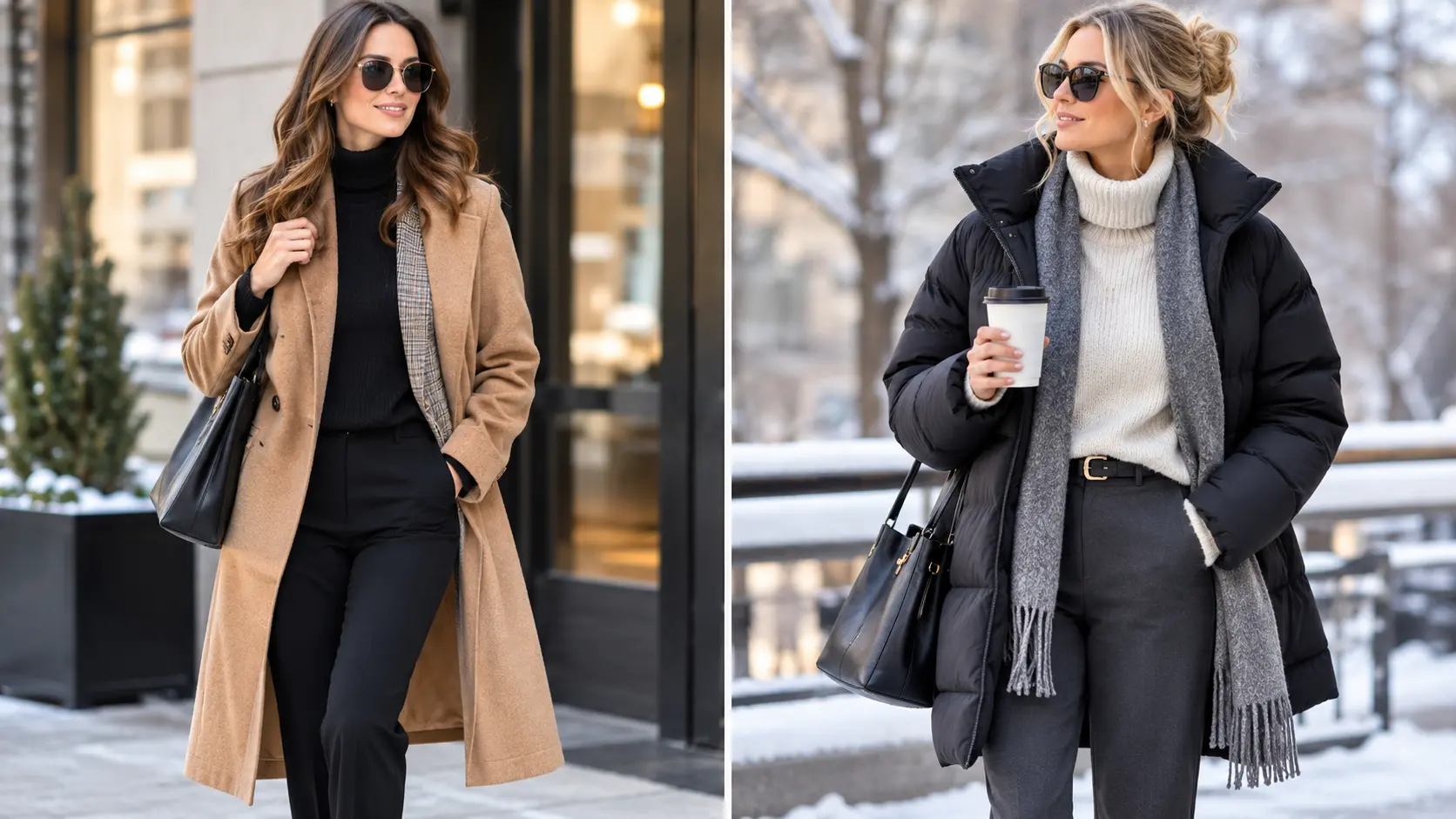

Winter workwear gets tricky when you need to look professional at 8 a.m. but the office is either freezing cold or overheated by lunchtime.
You want a warm outfit for the commute, something comfortable enough to sit in for hours, and layers you can remove without ruining the whole look.
I’ve always thought the secret to good winter work outfits isn’t buying a completely new wardrobe every season. It’s learning how to layer the pieces you already own.
The best winter work outfits layering ideas combine lightweight base layers, structured blazers, cozy knitwear, tailored trousers, and practical outerwear. When you choose the right fabrics and proportions, even a simple sweater and trousers can look intentional rather than thrown together.
I’m focusing on outfits that work for different office dress codes, from relaxed business casual to more formal workplaces.
You’ll find easy outfit formulas, budget-friendly layering tips, ideas for cold commutes, and advice on choosing winter workwear essentials that you can wear in several different combinations.
1. Start With a Thin Thermal Top Under Your Workwear

One of the easiest winter work outfits layering ideas is to add a thin thermal top underneath your regular clothes. The extra layer helps you stay warm without forcing you to wear a bulky sweater that makes your blazer feel tight.
Look for lightweight thermal tops with a smooth finish. Neutral shades such as black, cream, beige, and gray work particularly well because they disappear under most office clothing. If you wear button-down shirts frequently, choose a close-fitting thermal layer that doesn’t bunch around your waist or sleeves.
I would start with one or two good-quality thermal tops rather than buying a whole collection immediately. You can wear them beneath dresses, knit tops, blouses, and lightweight sweaters throughout winter.
How to style it:
- Wear a black thermal top under a white button-down shirt.
- Add charcoal tailored trousers and loafers.
- Finish with a wool-blend coat for your commute.
Pro tip: Pay attention to the neckline. A high-neck thermal top works beautifully under crew-neck sweaters, while a scoop-neck version is often easier to hide beneath open-collar shirts.
2. Layer a Turtleneck Under a Blazer

A fitted turtleneck under a blazer is one of my favorite outfit formulas because it looks polished without requiring much thought. It gives you the warmth of knitwear and the structure of traditional office clothing.
Choose a fine-knit turtleneck rather than a thick, chunky one if you plan to wear it beneath a tailored jacket. A slim knit allows the blazer to sit properly across your shoulders and prevents the sleeves from feeling restrictive.
For a timeless combination, pair a black turtleneck with a camel blazer and black trousers. If you prefer lighter colors, try an ivory turtleneck with a gray blazer and navy pants.
This combination is particularly useful for meetings, presentations, and days when you want to look professional without wearing a button-down shirt.
My styling rule: If your blazer has a strong shoulder or a fitted waist, keep the knit underneath relatively streamlined. Oversized knitwear can work, but it needs a roomier jacket to avoid looking bulky.
3. Wear a Button-Down Shirt Under a Crew-Neck Sweater
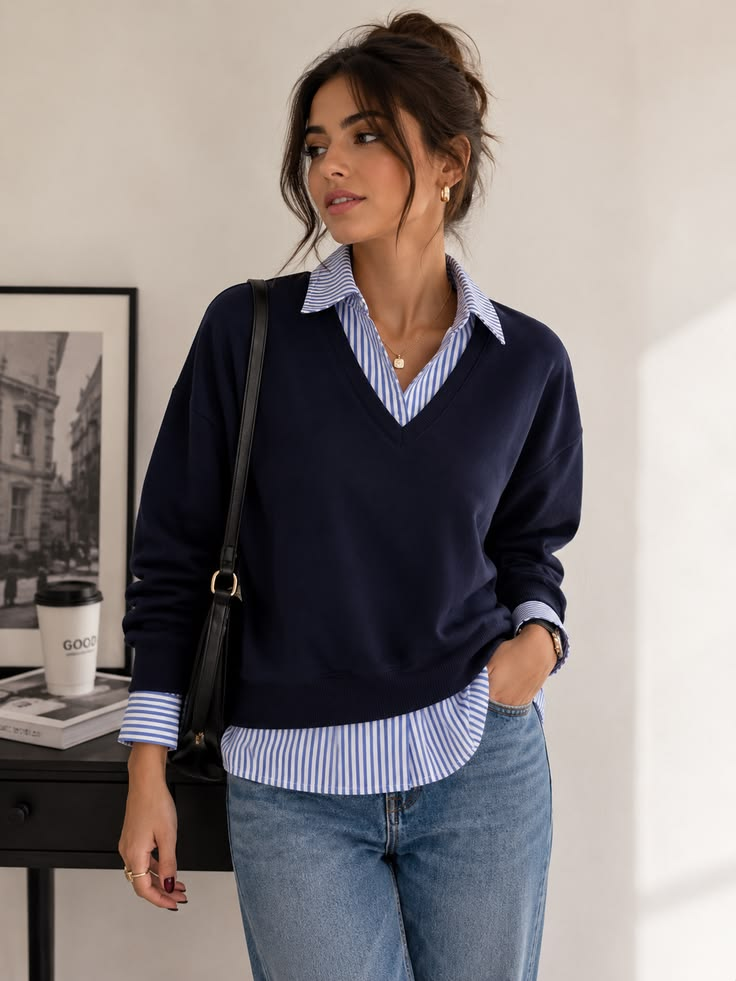
This classic layering combination is ideal when you want an outfit that feels professional but not overly formal. The collar peeking out from beneath a sweater adds detail, while the knit keeps the outfit warm enough for chilly mornings.
A white or pale-blue shirt is an especially useful starting point. Pair it with a navy, burgundy, gray, or chocolate-brown sweater and straight-leg trousers.
You can leave the collar visible, allow the cuffs to peek out slightly, or tuck the shirt neatly into your trousers. Each option gives the outfit a different feel without requiring additional accessories.
If you work in a business-casual office, this combination is easy to repeat throughout the week with different sweater colors.
Pro tip: Choose a shirt with a relatively smooth fabric. Thick shirts can bunch beneath lightweight sweaters, creating uncomfortable folds around the waist and underarms.
4. Build an Outfit Around a Long Wool Coat

A long wool or wool-blend coat can make even a simple work outfit look finished. More importantly, it provides an additional layer of warmth when you’re walking to work, waiting for transportation, or spending time outside between meetings.
For a versatile winter wardrobe, consider a coat in camel, charcoal, navy, or black. These colors work with most office basics and don’t require you to coordinate every accessory.
Wear your coat over a fine-knit sweater, tailored trousers, and ankle boots. For a softer look, combine a cream sweater with dark-brown trousers and a camel coat.
When shopping, check the shoulder fit and sleeve length carefully. You should be able to wear a blazer or medium-weight sweater underneath without feeling restricted.
Remember that wool-blend coats vary considerably in warmth. Check the fabric composition, lining, construction, and care instructions rather than assuming every coat labeled wool will perform the same way.
5. Try a Cardigan Over a Work Blouse
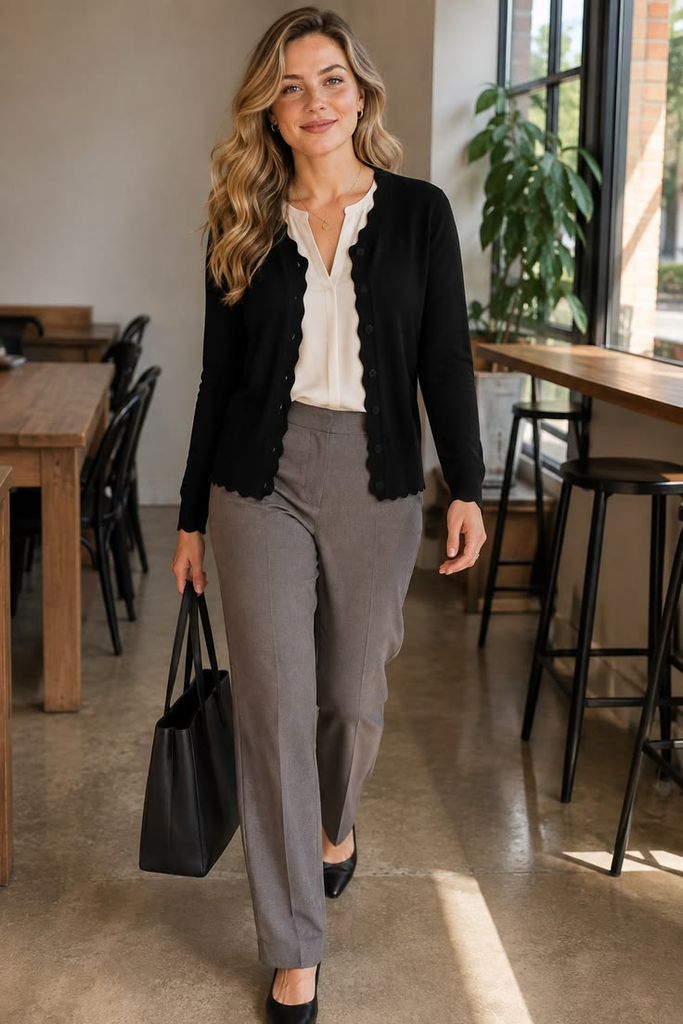
Cardigans are useful for offices where temperatures change throughout the day. You can wear one during your morning commute, remove it when the heating becomes uncomfortable, and put it back on later.
A fine-knit cardigan in black, cream, gray, or navy works well over a blouse or simple top. For a more structured appearance, choose a cardigan with a defined shoulder line or a slightly fitted shape.
If you prefer a relaxed office wardrobe, an open-front cardigan can look lovely with a tucked-in blouse and straight-leg trousers. For a more formal setting, try a shorter cardigan buttoned over a simple top with a midi skirt.
I would avoid combining a very oversized cardigan with loose trousers and a long coat unless you deliberately want a voluminous silhouette. Keeping at least one part of the outfit fitted makes the overall look feel balanced.
Pro tip: Keep a neutral cardigan at your desk if your office tends to get cold. It is a practical wardrobe backup that doesn’t require carrying another bulky coat.
6. Combine a Sweater Vest With a Crisp Shirt

A sweater vest is a clever middle layer because it adds warmth to your torso without making your arms feel restricted. It’s especially useful when you need to move between typing, writing, and other desk tasks throughout the day.
Start with a white or pale-blue button-down shirt, add a fine-knit sweater vest, and finish with tailored trousers. A charcoal vest with gray trousers creates a sophisticated tonal outfit, while a burgundy vest adds color to a neutral wardrobe.
For a more relaxed look, try a slightly oversized vest with straight-leg jeans if your workplace permits denim.
The main consideration is length. A vest that ends around the hip or just above it often works well with high-waisted trousers. If the vest is longer, tuck or partially tuck the shirt only if the fabrics allow it to sit smoothly.
7. Wear a Fine-Knit Sweater With Tailored Trousers

You don’t need several layers on top of each other every day. Sometimes the most practical winter work outfit is a warm, fine-knit sweater paired with well-fitting trousers.
Choose a sweater made from merino wool, cashmere, a wool blend, or another comfortable knit suited to your climate and budget. Merino is often useful for layering because it can provide warmth without the thickness of a chunky sweater.
For a classic office outfit, wear a cream sweater with charcoal trousers and black loafers. For something richer, try a chocolate-brown knit with beige trousers and a matching belt.
If your office is especially cold, add a thin thermal top underneath. If the commute is the coldest part of your day, finish the outfit with a long coat and a warm scarf.
Pro tip: Check the sweater’s care label before buying. A delicate knit that needs constant special care may not be the most practical choice for a busy workweek.
8. Layer a Blazer Over a Lightweight Knit Dress

A knit dress can make getting dressed for work much easier because it creates a complete outfit with one main piece. Adding a blazer provides structure and gives the look a more professional finish.
Choose a dress that allows comfortable movement when you sit down. Ribbed midi dresses, simple sweater dresses, and straight-cut knit dresses can all work, depending on your workplace dress code.
For an office-ready combination, wear a charcoal knit dress with a black blazer and ankle boots. Alternatively, style a navy dress with a camel coat and understated jewelry.
If you need extra warmth, wear opaque tights and a thin base layer underneath. Make sure the blazer sleeves and dress fabric don’t bunch together, especially around the arms.
A belt can help define the waist, but it isn’t essential. If the dress already fits well, adding a belt may create unnecessary bulk beneath your blazer.
9. Try Tonal Layering for an Expensive-Looking Office Outfit
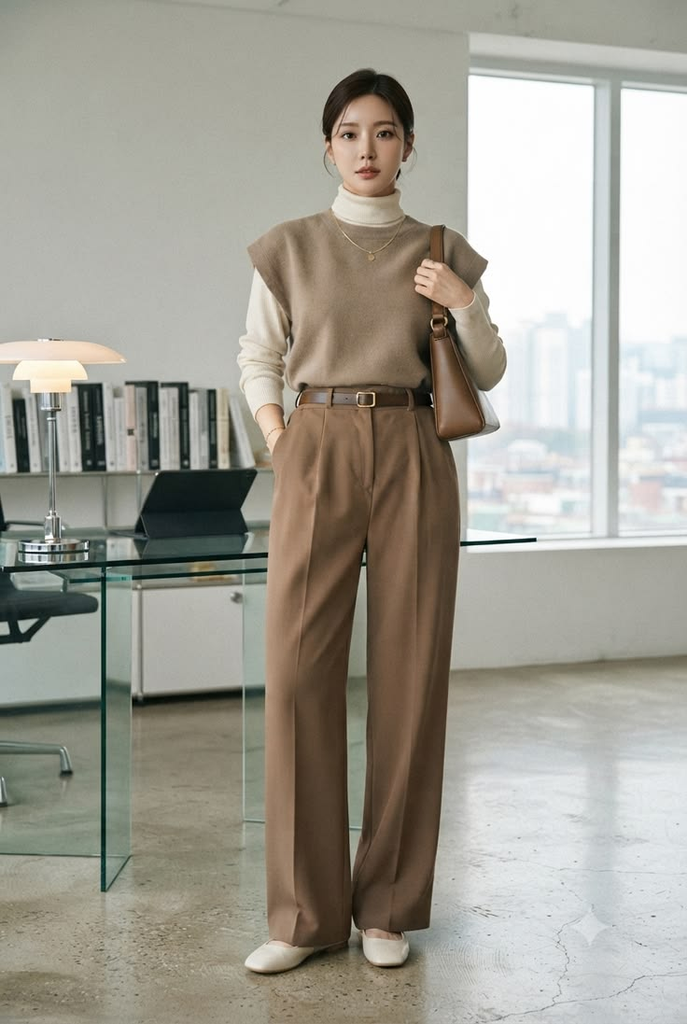
Tonal dressing means wearing different shades of the same color family. It is one of the easiest ways to make winter workwear look coordinated without relying on bold patterns or statement accessories.
For example, combine a cream top, beige trousers, and a camel coat. Another option is a charcoal sweater with gray trousers and a darker gray blazer.
The secret is to vary the textures. A smooth cotton shirt, a soft knit, and a structured wool-blend coat create visual interest even when the colors are similar.
You don’t need every shade to match perfectly. In fact, slightly different tones often make the outfit look more natural.
My favorite approach: Start with two neutral colors you already wear regularly, then introduce a third shade through your coat, bag, or shoes. It keeps the outfit cohesive without making your wardrobe feel repetitive.
10. Use a Thin Base Layer Under a Shirt Dress
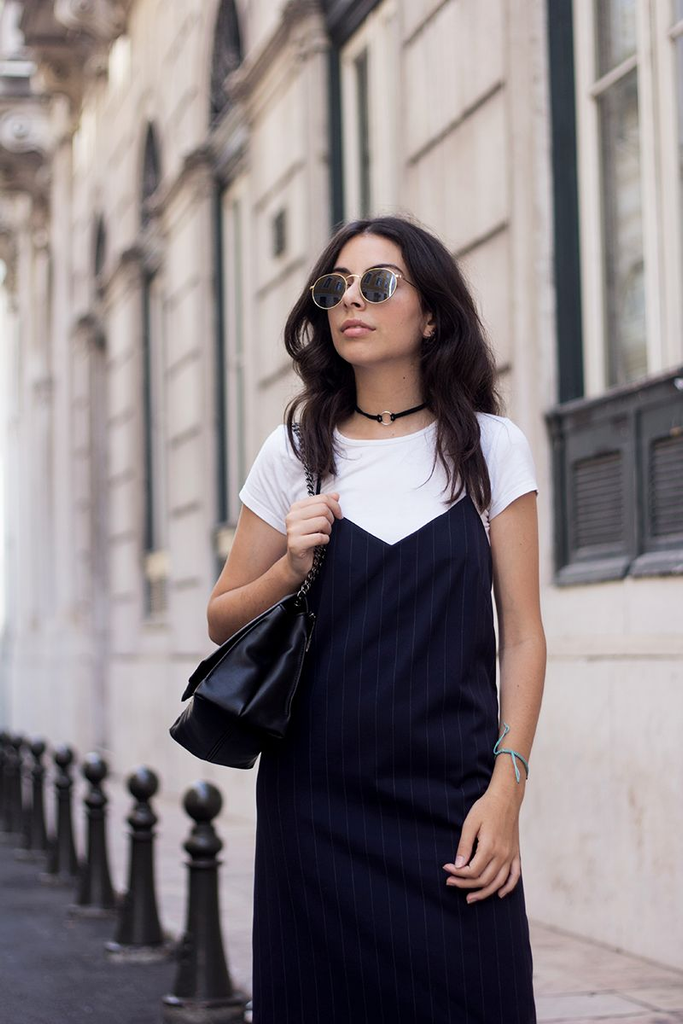
Shirt dresses are versatile office staples, but lightweight versions can feel too cold during winter. A thin base layer helps extend their usefulness into colder months.
Choose a fitted thermal top in a shade that works underneath the dress. If the dress has a collar and buttons, check whether the base layer is visible at the neckline before leaving home.
Add opaque tights, ankle boots, and a long coat for a practical winter combination. If the dress has a belt, adjust it so the extra layer underneath doesn’t pull the fabric awkwardly around your waist.
For a more formal office, choose a structured shirt dress in a solid color. In a relaxed workplace, a softer fabric or subtle pattern may be appropriate.
One thing to remember: not every shirt dress is designed for winter. If the material is extremely thin or transparent, adding layers may not provide enough warmth to make it comfortable.
11. Add a Lightweight Puffer Under or Over Your Outer Layers
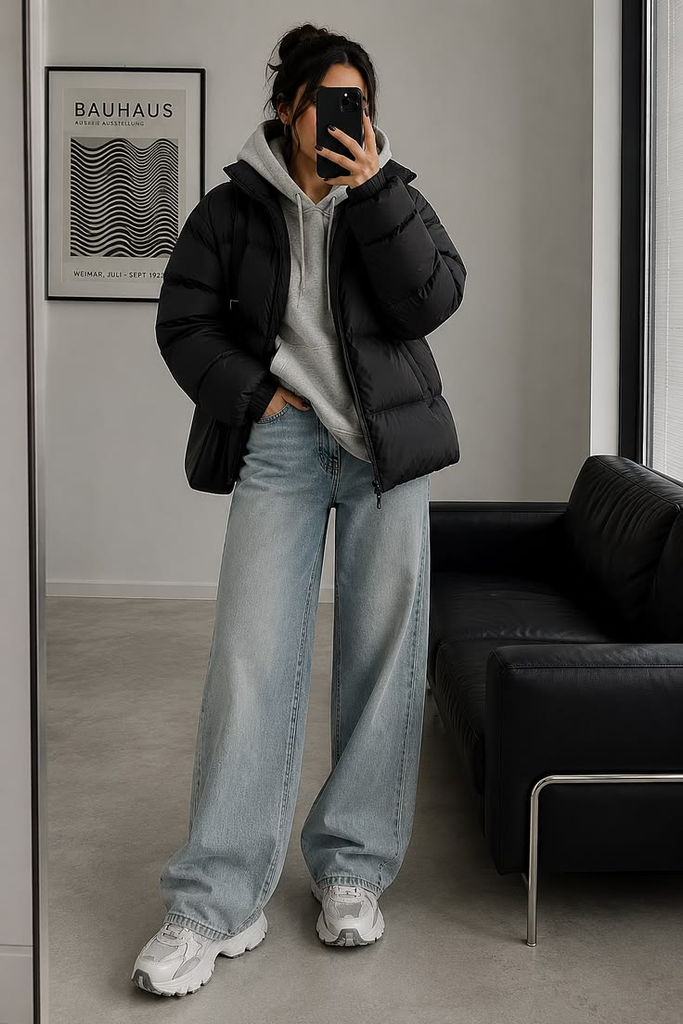
A puffer jacket is practical for a cold commute, especially when wind or rain makes a regular coat feel inadequate. However, the right styling depends on your workplace and the weather.
For casual offices, a streamlined puffer worn over a sweater and tailored trousers can look neat and modern. Choose a simple shape without excessive quilting or bulky decorative details if you want a more polished finish.
In extremely cold conditions, some lightweight insulated jackets can fit beneath a larger coat, but this only works when both pieces have enough room. Never force a tight combination that restricts movement or compresses the insulating layer.
For formal offices, I generally prefer a tailored wool-blend coat over a blazer, with a separate insulated layer reserved for the commute when necessary.
Pro tip: Think about your full journey rather than just the office. A jacket that works for a heated car ride may not provide enough protection if you’re walking outdoors for twenty minutes.
12. Wear a Blouse Under a Sleeveless Knit Dress

A sleeveless knit dress creates an additional layer without the bulk of a full sweater. It’s a useful option if you like dresses but want more coverage during winter.
Choose a fitted blouse or fine-knit top to wear underneath. A cream blouse beneath a black dress is a classic combination, while a striped shirt can introduce a subtle pattern.
Finish the outfit with opaque tights, ankle boots, and a tailored coat. If your workplace is formal, keep the dress shape relatively structured and choose understated accessories.
Make sure the armholes fit comfortably over your blouse. If the dress pulls across the shoulders or creates folds beneath the arms, try a different cut rather than adding more layers.
13. Choose Wide-Leg Trousers With a Fitted Base Layer
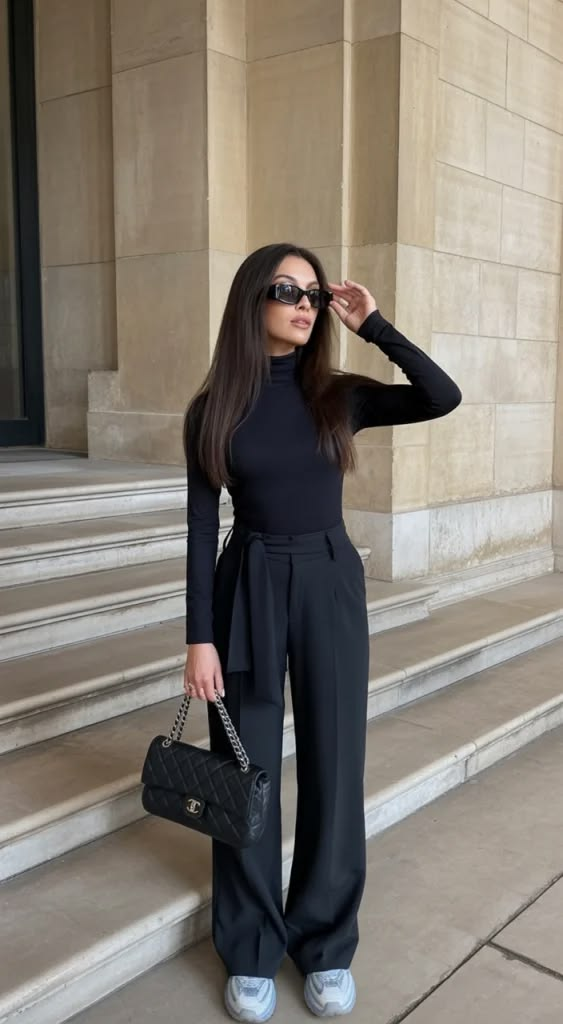
Wide-leg trousers can look elegant in winter, especially when paired with a fitted top that balances their shape. They also provide room for comfortable movement, although the actual warmth depends on the fabric.
For a simple outfit, wear a fitted black turtleneck with high-waisted gray wide-leg trousers and a tailored coat. Add loafers or low-heeled boots, depending on the trouser length.
If you want to wear a longer cardigan or oversized blazer, choose trousers with a clean drape so the outfit doesn’t become too bulky.
Pay attention to the hem. Trousers that drag across wet pavement or snow can become uncomfortable quickly. A hem that sits just above the ground with your usual work shoes is generally more practical.
14. Layer a Blouse Under a V-Neck Sweater

A V-neck sweater is particularly useful if you like layering but don’t want a bulky neckline. The open shape leaves room for a blouse collar and creates a clean line around the face.
Wear a white blouse beneath a navy V-neck sweater, then add black or gray tailored trousers. For a softer palette, combine a pale-blue blouse with a beige knit and dark-brown trousers.
You can keep the collar tucked neatly inside the neckline or allow a small amount of it to show. Both options work; the important thing is that the fabric lies flat.
If you have a particularly deep V-neck, a camisole or modesty panel can provide extra coverage without adding much warmth or bulk.
15. Try a Longline Cardigan With Slim-Fitting Workwear

A longline cardigan is useful when you want another layer without wearing a structured blazer. It can work well in creative offices, relaxed workplaces, and home-office environments.
Pair it with a fitted top, slim-straight trousers, and ankle boots. If you prefer leggings, check your workplace dress code and choose a substantial, tailored-looking fabric rather than a thin athletic material.
The proportions matter. A long cardigan over very wide trousers may feel overwhelming, particularly if both pieces are oversized. A slimmer bottom half usually creates a more balanced silhouette.
Choose a cardigan with enough weight to hang smoothly. Very thin, clingy fabrics can bunch around the hips and may need frequent adjustment throughout the day.
16. Build a Winter Outfit Around a Midi Skirt

Midi skirts can be comfortable winter workwear when you pair them with suitable tights, warm layers, and weather-appropriate shoes.
A wool-blend or heavier woven skirt can be a useful choice for colder days. Style it with a fitted turtleneck, a tailored blazer, and knee-high boots if your office dress code allows them.
For a more relaxed look, combine a pleated midi skirt with a fine-knit sweater and ankle boots. Keep the sweater tucked or partially tucked if you want to define the waist.
If you commute in wet weather, consider the skirt’s length and fabric. A very long hem can collect water, dirt, or snow, so a slightly shorter midi may be more practical.
Pro tip: Don’t assume thick tights will work with every skirt and boot combination. Test the outfit while sitting and walking to make sure the fabric doesn’t cling or pull uncomfortably.
17. Combine a Knit Top With a Structured Waistcoat
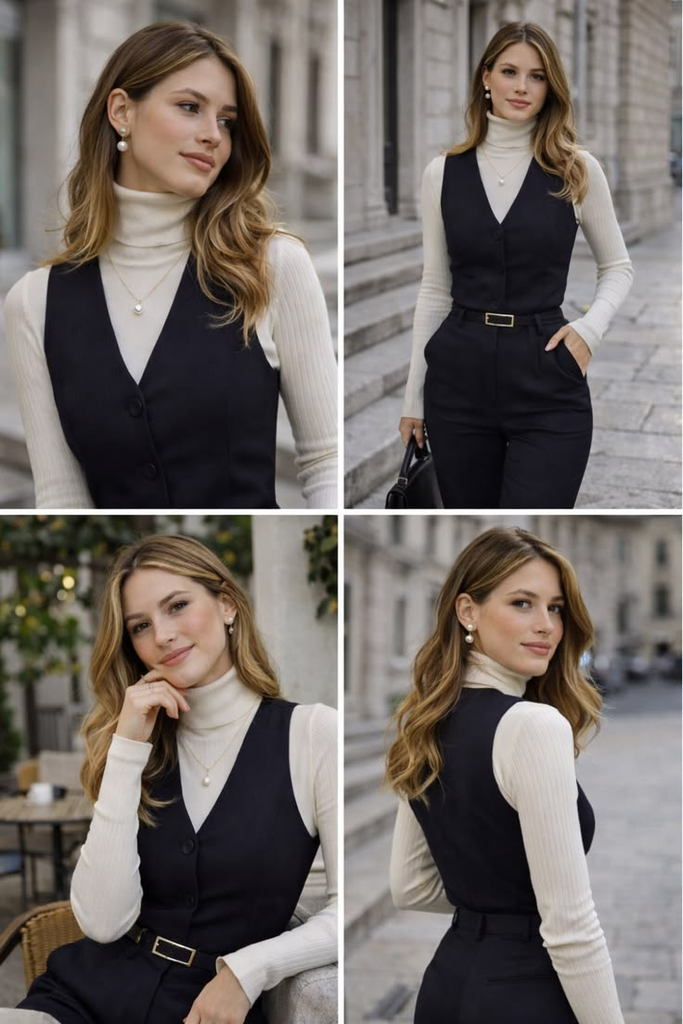
A tailored waistcoat can add structure to a winter work outfit without the full weight of a blazer. It’s especially useful in offices where smart-casual clothing is acceptable.
Wear a thin long-sleeved top underneath, add tailored trousers, and finish with loafers or ankle boots. Neutral colors create a classic outfit, while a burgundy or deep-green waistcoat adds color without dominating the look.
If you need more warmth outdoors, layer a coat over the entire outfit. A waistcoat is not a replacement for proper outerwear in genuinely cold conditions.
Look for a cut that allows your arms to move freely. The waistcoat should lie flat over your base layer and button comfortably without pulling across the chest.
18. Use a Scarf as a Practical Finishing Layer

A scarf is more than an accessory when temperatures drop. It adds warmth around your neck and can make a simple coat-and-trousers outfit look more considered.
For everyday office wear, choose a scarf in wool, cashmere, or a soft blend that feels comfortable against your skin. Neutral colors are easy to coordinate, while a patterned scarf can add interest to a plain coat.
Try a camel scarf with a black coat, or a burgundy scarf with a charcoal outfit. Keep the wrapping relatively simple if you plan to wear a blazer underneath, because an overly bulky scarf can make the neckline feel crowded.
If you work at a desk for most of the day, remove your scarf when you arrive and store it somewhere clean and dry. Wet winter accessories are not pleasant to put back on later.
19. Wear Warm Tights Under Office Dresses and Skirts

Warm tights can make a major difference when you want to keep wearing dresses and skirts through winter. They provide extra coverage without adding visible layers around the waist or hips.
Opaque black tights are an easy starting point because they work with many office dresses, skirts, and boots. If your outfit uses lighter colors, you can also consider coordinating tights, provided the combination suits your dress code.
Look at the denier rating when shopping. Higher-denier tights are generally more opaque, although thickness alone doesn’t guarantee warmth; fabric composition and construction matter too.
Check the waistband and fit before wearing them for a full workday. Tights that roll down or feel restrictive can make an otherwise lovely outfit uncomfortable.
20. Choose Winter Work Shoes That Accommodate Your Layers

Shoes are easy to overlook when planning winter outfits, but they affect both comfort and practicality. Thick socks, tights, and insulated insoles can change how your usual shoes fit.
Loafers work well for mild winter days, while ankle boots and knee-high boots can provide more coverage in colder weather. For wet commutes, look for suitable traction and weather-resistant materials.
If your workplace requires formal footwear, consider keeping a pair of office shoes at your desk and commuting in more weather-appropriate boots. This can help protect leather shoes from rain and road salt.
Don’t buy winter shoes based only on appearance. Walk around in them before committing to a full day of wear, and make sure there is enough room for the socks you intend to use.
21. Use a Three-Layer Formula for Especially Cold Days
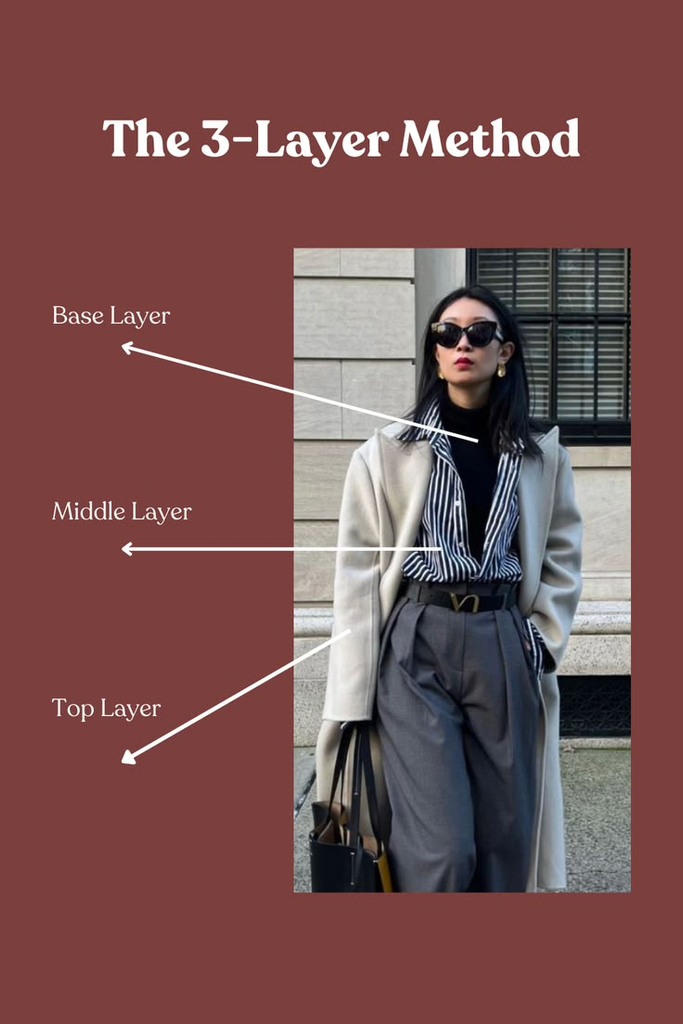
When temperatures drop significantly, a three-layer system can be more effective than wearing one very thick sweater. Each layer has a purpose, and you can adjust the combination depending on your commute and office temperature.
Here’s a simple formula:
- Base layer: A lightweight thermal top that sits comfortably against your skin.
- Middle layer: A fine-knit sweater, cardigan, or blouse-and-sweater combination.
- Outer layer: A tailored coat or insulated jacket suited to the weather.
For the office, you might wear a thermal top beneath a merino sweater, tailored trousers, and a long wool-blend coat. Once you arrive, remove the coat and, if necessary, the sweater to stay comfortable indoors.
Avoid wearing so many layers that your shoulders, arms, or waist feel restricted. Good layering should make you warmer without making everyday movement difficult.
22. Create a Small Winter Work Capsule Wardrobe
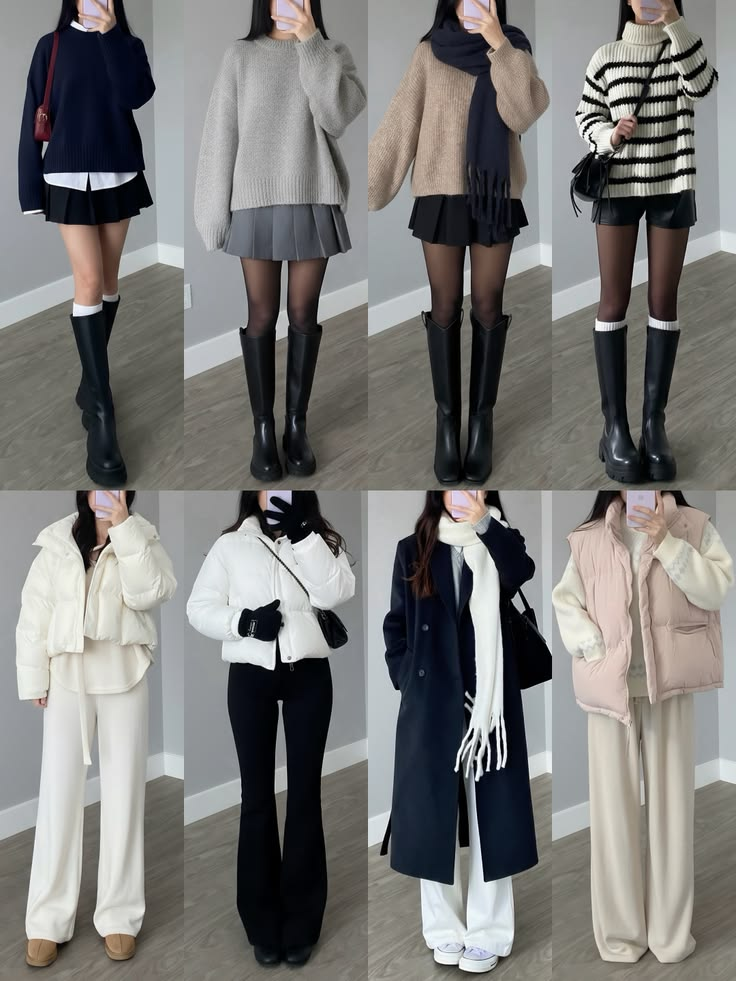
If you find yourself buying new clothes every time winter arrives, a small workwear capsule can make dressing easier and help control costs. The idea is to choose a limited number of pieces that coordinate with one another.
A practical starting point might include:
- Two fine-knit sweaters in neutral colors.
- One fitted turtleneck.
- One white or pale-blue button-down shirt.
- One blazer.
- One cardigan.
- Two pairs of tailored trousers.
- One work-appropriate dress or midi skirt.
- One warm coat.
- One pair of comfortable office shoes and one pair of weather-ready boots.
You don’t need to buy everything at once. Start by identifying the gaps in your existing wardrobe and choose pieces that work with at least three outfits.
For example, a charcoal blazer can go over a turtleneck, a button-down shirt, or a knit dress. That flexibility is more useful than owning three similar blazers that all work with the same single outfit.
Which Winter Workwear Layers Are Worth Buying?
The best pieces depend on your climate, office temperature, and budget. This comparison can help you decide what to prioritize.
| Layer | Best for | What to look for |
|---|---|---|
| Lightweight thermal top | Extra warmth under shirts and dresses | Smooth fabric and comfortable fit |
| Merino or fine-knit sweater | Everyday office layering | Breathability and easy care |
| Tailored blazer | Meetings and formal outfits | Room for a thin sweater underneath |
| Wool-blend coat | Cold commutes and polished outfits | Good shoulder fit and suitable lining |
| Cardigan | Offices with changing temperatures | Comfortable sleeves and versatile color |
| Warm tights | Winter dresses and skirts | Comfortable waistband and appropriate opacity |
| Weather-resistant boots | Rainy or cold commutes | Traction, fit, and practical materials |
How Much Should You Spend on Winter Workwear?
Your budget should reflect how often you will wear each piece, not simply the price tag.
If you’re shopping on a tight budget, start with a thermal top, a versatile sweater, and a warm outer layer. You can often use trousers, shirts, and shoes you already own.
If you have more room in your budget, consider investing in a coat and work shoes that you expect to wear frequently. Check construction, fabric composition, comfort, and care requirements before deciding that an expensive item is automatically better.
For knitwear, calculate the cost per wear. A sweater you wear twice a week for several winters may offer better value than a trendy piece you wear only once or twice.
Common Winter Work Outfit Layering Mistakes to Avoid
Even good clothing can become uncomfortable when the layers don’t work together. A few small adjustments can make your outfits more practical.
Wearing Too Many Bulky Layers
A thick sweater beneath a fitted blazer can restrict movement and create awkward folds. Choose a lightweight knit for the middle layer, or replace the blazer with a roomier coat.
Ignoring the Office Temperature
An outfit that feels perfect outside may become uncomfortable in a heated office. Build flexibility into your wardrobe with cardigans, removable scarves, and lightweight layers.
Choosing Style Over Weather Protection
A beautiful coat won’t necessarily keep you comfortable in wind, heavy rain, or snow. Match your outerwear to the conditions, and consider changing into office shoes after your commute.
Forgetting About Fabric Care
Some delicate knits require handwashing or careful drying. If you don’t have time for special laundry routines, choose machine-washable pieces where possible and follow the care label.
Buying Pieces That Only Match One Outfit
Before buying a new sweater, blazer, or pair of trousers, think about what you already own. If the item works with only one combination, it may not be the best addition to a practical work wardrobe.
Frequently Asked Questions About Winter Work Outfits Layering Ideas
1. What should I wear to work in winter to stay warm?
Start with a lightweight base layer, add a fine-knit sweater or blouse, and finish with a suitable coat for your commute. Tailored trousers, warm tights, and weather-appropriate shoes can help you stay comfortable without sacrificing a professional appearance.
2. How can I layer clothes without looking bulky?
Choose thin layers that fit comfortably together. A thermal top beneath a fine-knit sweater and a properly sized blazer usually looks neater than several thick garments. Balance oversized pieces with more streamlined items.
3. What are the best winter work outfits for a business-casual office?
A turtleneck with tailored trousers, a shirt under a crew-neck sweater, or a cardigan with a blouse are reliable options. Add loafers or ankle boots and a warm coat for a polished finish.
4. How can I dress professionally in extremely cold weather?
Use a base layer, a warm middle layer, and insulated outerwear suited to the conditions. Add suitable tights or socks, gloves, and a scarf when needed. If you commute outdoors for a long time, prioritize practical weather protection over a coat’s appearance alone.
5. What winter workwear essentials should I buy first?
Start with a versatile warm coat, one or two comfortable knitwear pieces, a lightweight thermal top, and well-fitting work trousers. Add other items gradually based on your existing wardrobe and workplace dress code.
6. Can I wear jeans as part of a winter work outfit?
Yes, if your workplace permits them. Choose dark, well-fitting jeans without excessive distressing and pair them with a fine-knit sweater, blazer, and polished shoes. For more formal offices, tailored trousers are usually the safer option.
Conclusion
The best winter work outfits layering ideas are the ones that make your mornings easier and help you feel comfortable throughout the day. You don’t need a completely new wardrobe or a complicated styling routine. A few versatile layers, a coat suited to your climate, and workwear pieces that fit properly can give you plenty of combinations.
If I were building a winter work wardrobe from scratch, I’d start with a good thermal top, a fine-knit sweater, tailored trousers, and a coat that works with almost everything I own. Then I’d add a blazer or cardigan depending on my office dress code. The goal is simple: stay warm on the way to work, feel comfortable at your desk, and still look like yourself when you walk into the room.