


I think a trench coat is one of those pieces that can make an ordinary outfit look thoughtfully put together without requiring much effort. You can wear jeans, a simple sweater, and comfortable flats, throw on a well-cut trench, and suddenly the whole outfit looks more polished.
That’s the kind of dressing I appreciate, especially when I want to look stylish without spending half my morning deciding what to wear.
When I think about Parisian style, I don’t picture a closet full of expensive designer clothes. I picture classic pieces, beautiful neutrals, clothes that fit properly, and women who know how to make a simple outfit work.
A trench coat fits that philosophy perfectly, and I think it becomes an especially useful wardrobe staple after 50 because it adds structure without feeling stiff or overly formal.
The secret isn’t finding the youngest-looking trench coat or following every fashion trend. It’s choosing the right length, getting the proportions right, and wearing it with pieces that make you feel comfortable and confident.
Whether you prefer jeans, tailored trousers, dresses, or relaxed weekend outfits, there are plenty of ways to wear a trench coat over 50 like a Parisian woman.
1. Pair a Classic Beige Trench Coat With Straight-Leg Jeans
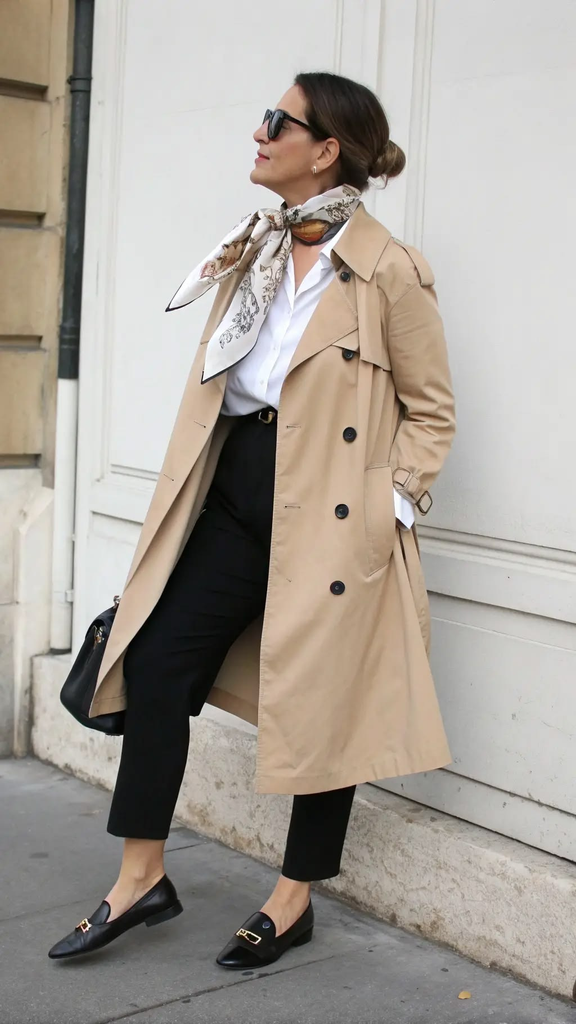
If I were starting with just one trench coat outfit, this would be it. Straight-leg jeans and a beige trench coat create that effortless combination I associate with Parisian street style. The jeans keep the outfit relaxed, while the coat adds enough structure to make everything look intentional.
I would choose medium-blue or dark-indigo denim with a clean finish. You don’t need distressed knees, oversized patches, or complicated details. A pair of straight-leg jeans that fits comfortably through the hips and falls neatly over your shoes is usually all you need.
Underneath, try a white cotton T-shirt, a fine-knit navy sweater, or a lightweight striped top. Add leather loafers, ballet flats, or simple white sneakers, depending on how much walking you expect to do. A structured handbag and small gold earrings finish the outfit without making it feel overdone.
My styling tip: Pay attention to where the jeans end in relation to your shoes. If your trench is long and your jeans bunch heavily at the ankles, the outfit can look crowded. A clean hem creates a more balanced silhouette.
2. Wear Your Trench Coat With Black Trousers for an Elegant Look
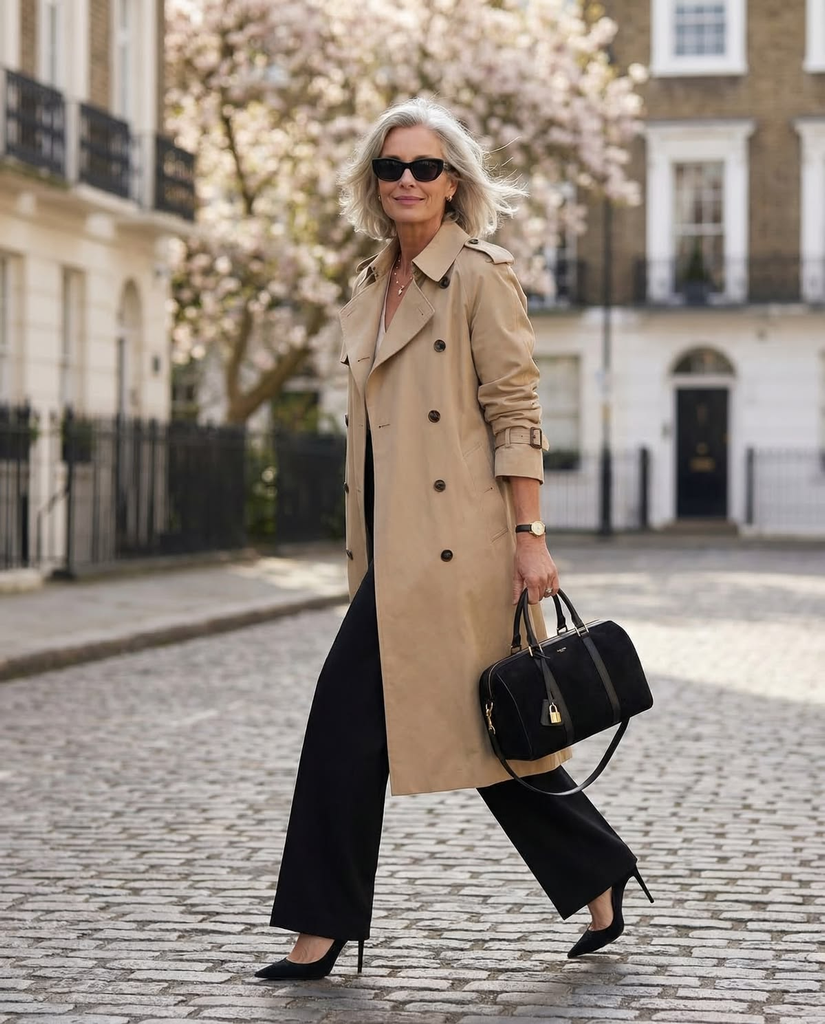
There are days when jeans feel too casual, but I still don’t want to wear anything that looks overly dressed up. That’s when I would reach for black tailored trousers and a classic trench coat.
This combination works beautifully because black and beige create a timeless contrast. You can wear a black crew-neck sweater, a simple white blouse, or a lightweight cashmere-style knit underneath. The trench softens the darker outfit, while the trousers add a refined finish.
For women over 50, I particularly like straight-leg or gently wide-leg trousers with a mid-rise or high-rise waist. They can create a long, clean line without requiring a tight fit. If you prefer a more relaxed silhouette, choose trousers that skim your body rather than cling to it.
For footwear, try pointed-toe flats, loafers, low block heels, or sleek ankle boots. The best choice is the one that lets you move comfortably throughout the day.
Pro tip: If your trousers are wide-leg, check the length with the shoes you actually plan to wear. A hem that works with heels may drag on the ground when you switch to flats.
3. Choose a Striped Shirt for Classic Parisian Style

A striped shirt is one of the easiest ways to give a trench coat outfit a distinctly French-inspired feel. I like the combination of a navy-and-white Breton-style top, blue jeans, and a camel or beige trench because it looks classic without feeling like a costume.
You can wear the shirt tucked loosely into jeans, leave it untucked over slim-straight trousers, or layer it beneath a lightweight cardigan when the weather is cooler. The trench ties everything together and gives the outfit a little more structure.
The trick is keeping the rest of the look simple. A striped shirt already provides a pattern, so I would avoid adding a busy scarf, patterned trousers, and statement jewelry all at once. A pair of loafers and a simple leather bag are more than enough.
If traditional navy stripes aren’t your preference, consider black-and-white, chocolate-and-cream, or soft blue-and-white stripes. The overall effect matters more than choosing one supposedly correct French fashion color.
My favorite detail: Slightly push up the sleeves of your trench when the weather allows. Showing a little of the striped cuff makes the layers feel relaxed rather than overly coordinated.
4. Wear a Trench Coat Over a Simple Knit Dress
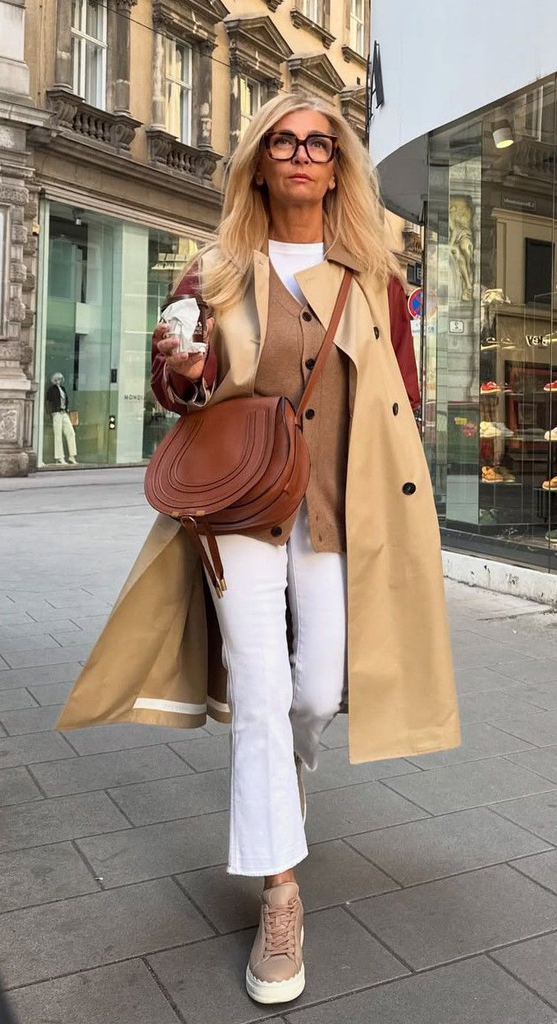
A trench coat can be especially useful when you want to wear a dress but need an extra layer for unpredictable weather. Instead of reaching for a bulky jacket, I would choose a lightweight knit dress and a trench that falls at a similar length or slightly below the dress hem.
A midi dress in black, navy, chocolate brown, or charcoal makes a particularly versatile base. You can add a beige trench, comfortable ankle boots, and a small crossbody bag for a polished daytime outfit.
I would look for a dress that skims the body rather than clings tightly. A ribbed knit, a softly shaped A-line dress, or a simple long-sleeved jersey style can all work, depending on your preferences and the season.
There is one proportion detail I wouldn’t ignore: the relationship between the dress and the coat. If the dress ends just a couple of inches below the trench, the layers often look cohesive. A dress that extends much farther below the coat can still work, but I would make that longer hem look intentional rather than accidental.
Pro tip: If your dress is already fitted or has a defined waist, leave the trench open for a relaxed line. If the dress is loose, gently tying the trench belt can add definition without needing a separate belt.
5. Try a White Shirt and Dark Jeans for an Everyday Outfit
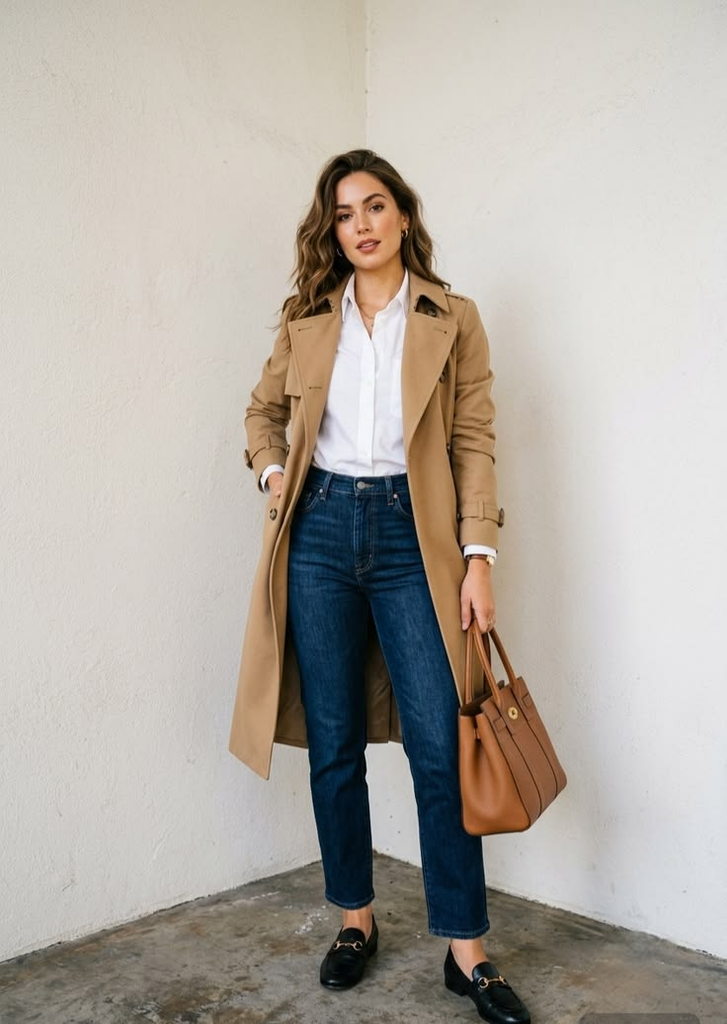
Some of the most wearable trench coat outfits are also the simplest. A crisp white shirt, dark jeans, and a neutral trench are pieces you can combine without buying anything new.
I would start with a white button-down that fits comfortably across the shoulders. You can tuck the front into your jeans, leave the shirt untucked, or wear it open over a white or cream tank top. Each version gives the same basic outfit a slightly different feel.
Dark-wash denim makes the combination look a little more refined, especially when paired with brown loafers or black ballet flats. If you want a more casual result, white leather sneakers are an easy alternative.
This outfit is also practical for travel. You can wear the same jeans and shirt with a cardigan one day and the trench the next, which means fewer clothes to pack. I would choose wrinkle-resistant or easy-care fabrics if I planned to spend several hours sitting on a train or plane.
Styling tip: A shirt that is too long can bunch awkwardly beneath a belted trench. If you prefer wearing it untucked, choose a length that falls neatly around the hip rather than halfway down your thighs.
6. Belt Your Trench Coat Without Making It Look Too Formal
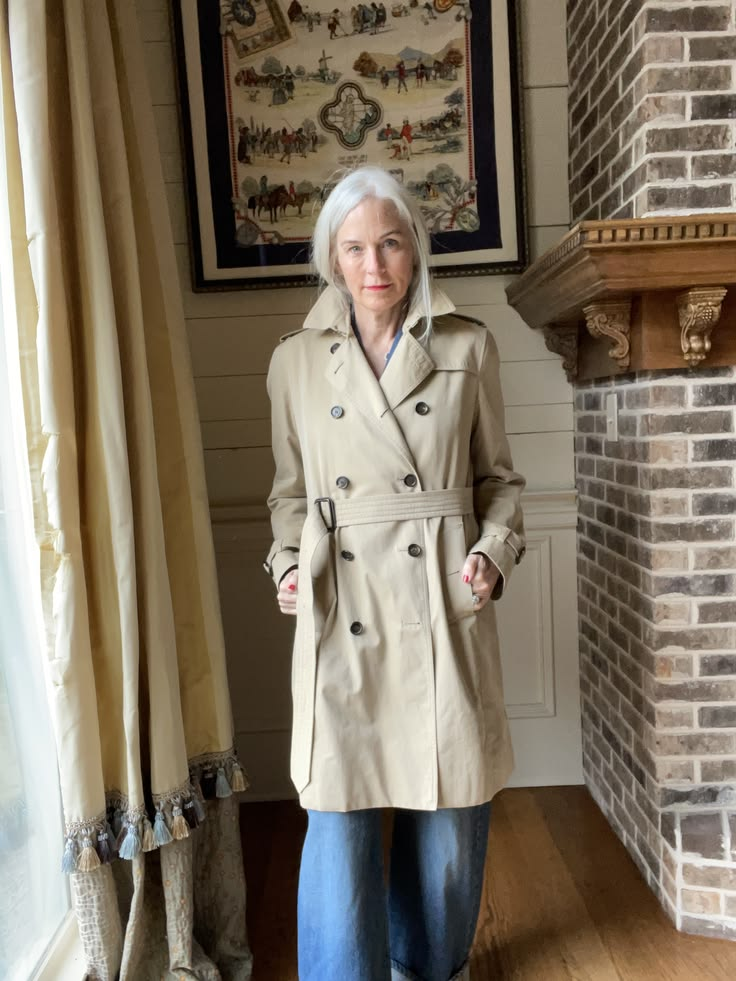
The belt is one of the defining features of a trench coat, but you don’t have to wear it the same way every time. Sometimes I prefer the coat open and flowing; other times, fastening the belt makes the outfit look more finished.
For a classic look, tie the belt loosely at the front. You should still be able to move comfortably, and the fabric shouldn’t pull tightly across your waist. A relaxed knot generally looks more natural than an overly precise bow.
Another option is to fasten the belt behind your back when wearing the coat open. This keeps the belt ends from swinging around and allows the front panels to fall neatly. Just make sure the belt isn’t so tight at the back that it distorts the coat.
If you prefer a straight silhouette, leave the belt untied and let it hang naturally through the loops. This works particularly well over jeans, wide-leg trousers, and relaxed knitwear.
I wouldn’t automatically assume that cinching the waist is the most flattering option for every woman over 50. The best approach depends on the coat’s cut, your outfit underneath, and how you like clothes to feel.
Pro tip: If your trench has a stiff belt that creates too much bulk, try a looser knot or wear the coat open. A belt is a styling option, not a rule you have to follow.
7. Pair a Trench Coat With Wide-Leg Trousers

Wide-leg trousers can look wonderfully elegant with a trench coat, but the proportions need a little attention. When both pieces have plenty of fabric, I would keep the top underneath relatively simple so the outfit doesn’t become visually overwhelming.
Start with high-waisted or mid-rise trousers in black, navy, cream, or charcoal. Add a fitted knit, a tucked-in blouse, or a fine-gauge sweater. The top doesn’t need to be tight; it simply needs to sit neatly beneath the trousers and coat.
A trench that falls around the knee or mid-calf can work well, depending on your height and the trousers’ volume. If you’re petite, you might prefer a shorter trench or a lighter fabric that doesn’t overwhelm your frame. Taller women may enjoy the dramatic effect of a longer coat.
For shoes, loafers, low heels, and streamlined ankle boots are practical options. I would avoid choosing trousers so long that they pool heavily around the shoes, especially on rainy days when the hem can become wet and dirty.
My styling rule: When the trousers are wide, pay attention to the shoulder fit of your trench. A coat that fits properly across the shoulders helps keep the whole outfit looking intentional.
8. Wear a Trench Coat With White Jeans in Spring

White jeans are a lovely option when you want your trench coat outfit to feel lighter. The combination of cream, beige, and white creates a soft neutral palette that looks especially good in spring.
I would pair straight-leg white jeans with a cream sweater, a pale-blue shirt, or a simple navy top. A beige trench adds warmth without making the outfit feel too dark.
If you’re concerned about white jeans looking too stark, try ecru or ivory denim instead. These softer shades are easy to combine with camel, taupe, chocolate, and navy.
Footwear can change the entire mood. Brown loafers create a classic look, while white sneakers make the outfit more casual. Ballet flats are another option if you want something lightweight and easy to wear.
The practical consideration is fabric thickness. Very thin white denim may show pocket linings or underwear more than you expect, so I would check the jeans in natural light before wearing them out.
Pro tip: If your trench is a warm camel shade, ivory denim often creates a softer combination than bright white. Both work, but the undertones can make a noticeable difference.
9. Style a Navy Trench Coat for a Different Take on Parisian Chic

Beige is the obvious trench coat choice, but I wouldn’t overlook navy. A navy trench can feel slightly more understated, and it works particularly well if most of your wardrobe is already built around dark neutrals.
Pair it with a white shirt, medium-blue jeans, and brown loafers for a relaxed daytime look. Alternatively, wear it over black trousers and a gray sweater for a more minimal outfit.
Navy also pairs beautifully with cream, burgundy, pale blue, and camel. You don’t need to introduce all these colors at once. One lighter piece underneath the coat is often enough to prevent the outfit from looking too dark.
When shopping, compare the coat’s buttons, lining, and belt as well as its color. A navy trench with simple buttons and a clean silhouette may be easier to style across several seasons than one with lots of decorative hardware.
Styling tip: If navy and black are your usual wardrobe colors, you can absolutely wear them together. Varying the textures, such as a matte trench with a soft knit and tailored trousers, helps the combination feel deliberate.
10. Add a Silk Scarf for a Polished French-Inspired Finish

A scarf can add personality to a trench coat without requiring a completely new outfit. I especially like the idea of wearing a small silk or silk-look scarf with a simple shirt, jeans, and a classic trench.
You can tie it loosely around your neck, knot it beneath an open shirt collar, or attach it to your handbag for a small accent. If you prefer understated outfits, choose a scarf with one or two colors that already appear in your wardrobe.
For example, a navy-and-cream scarf works naturally with a beige trench and dark denim. A burgundy scarf can add a richer accent to a black outfit, while a soft green print can make a neutral combination feel less predictable.
I would avoid buying a scarf simply because it looks beautiful on its own. The best purchase is one you can wear with at least three or four existing outfits.
Pro tip: If your trench has a wide collar and prominent lapels, a bulky scarf can make the neckline feel crowded. A lightweight square scarf is often easier to style than a thick winter scarf.
11. Wear a Trench Coat With Comfortable Loafers

Shoes can make a familiar trench coat outfit feel completely different. Loafers are one of my favorite styles to consider because they sit comfortably between casual sneakers and more formal shoes.
Black leather loafers look classic with black trousers and a beige trench. Brown loafers work beautifully with blue jeans, cream knitwear, and camel tones. If you prefer a softer look, suede loafers can add texture without introducing another color.
You don’t need a high heel to make the outfit look elegant. A flat or low-heeled loafer can be just as polished, provided it fits properly and works with the trouser hem.
When shopping for loafers, pay attention to the toe shape and sole thickness. A very chunky sole creates a different look from a slim, traditional loafer, and neither is automatically better. I would choose the shape that balances your trousers and feels comfortable after several hours of walking.
Styling tip: If you’re wearing cropped jeans, check how much ankle shows above the shoe. A small, intentional gap can look great, but jeans that end at an awkward point may make the proportions feel off.
12. Make a Trench Coat Work With Sneakers
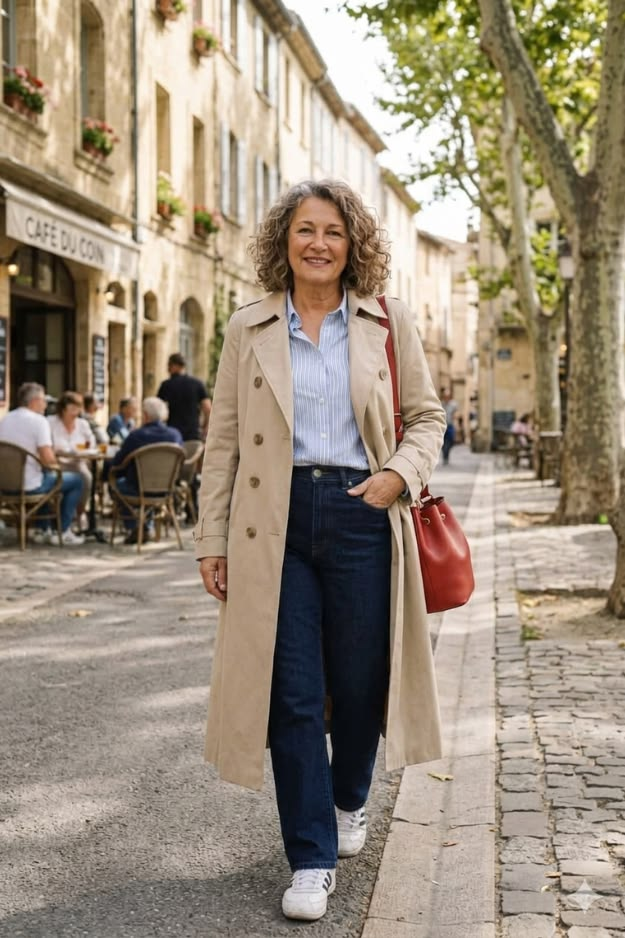
Parisian-inspired style doesn’t have to mean uncomfortable shoes. If you’re walking around town, running errands, or sightseeing, clean sneakers are an easy way to keep a trench coat outfit practical.
I would start with simple white, cream, or neutral sneakers rather than a pair with lots of contrasting colors. Wear them with straight-leg jeans, a white T-shirt, and a trench for an outfit that feels relaxed but still put together.
You can also wear sneakers with tailored trousers. A fine-knit sweater and a structured bag help bridge the gap between sporty shoes and more formal clothing.
The main thing I would watch is the relationship between the sneaker and the trouser width. A very slim sneaker can look delicate beneath wide trousers, while a chunkier style may balance them better. Try the complete outfit in front of a mirror rather than judging the shoes on their own.
For wet weather, choose shoes with suitable traction and a material that can handle the conditions. White canvas sneakers are fine on dry days, but leather or other easy-clean materials may be more practical when the pavement is damp.
Pro tip: If your sneakers look too sporty with a trench, switch to a simpler colorway before replacing the entire outfit. Often, the rest of the styling is already working.
13. Choose the Right Trench Coat Length for Your Height

Length makes a bigger difference than many people realize. A trench coat can look elegant on the hanger but feel awkward when the hem falls at an inconvenient point on your body.
I would consider three main lengths: hip-length, knee-length, and mid-calf. Each has its own advantages, and the best choice depends on your height, proportions, and the clothes you wear underneath.
| Trench coat length | Best for | What to consider |
|---|---|---|
| Hip-length | Petite frames, casual outfits, mild weather | Easy to layer over jeans, but offers less coverage |
| Knee-length | Everyday versatility and classic styling | Works with jeans, trousers, and many dresses |
| Mid-calf | Longer silhouettes and statement outfits | Can feel heavier if the fabric is stiff or bulky |
If you’re petite, don’t assume that a long trench is automatically off-limits. A well-fitted mid-calf coat can look beautiful, particularly when worn open with a simple outfit underneath. The challenge is finding one with the right shoulder fit and manageable volume.
If you’re taller, you may have more flexibility with longer styles, but I would still check the sleeve length and where the belt sits. A coat designed with a very short torso can feel uncomfortable even when the overall length looks right.
Pro tip: Take the shoes you wear most often when trying on a trench coat. A hem that looks balanced with heels may look completely different with flats or sneakers.
14. Find a Trench Coat That Fits Comfortably Over 50

I think the fit matters more than the label. A beautifully made trench won’t be useful if you can’t comfortably wear a sweater underneath or move your arms without the fabric pulling.
Start with the shoulders. The seams should sit where they are intended to sit for that particular cut, and the coat shouldn’t feel restrictive when you reach forward. Try it over a medium-weight sweater rather than only over a thin T-shirt.
Next, check the sleeves. You want enough length to cover your wrists comfortably, but the cuffs shouldn’t swallow your hands. If the sleeves are too long, alterations may be worthwhile, especially if you plan to wear the coat for several years.
Look at the overall shape, too. A classic trench usually has a structured collar, a belt, and enough room for layering. If you prefer a softer silhouette, an unlined or lightweight version may feel easier to wear.
I would also check the weight of the fabric. A stiff, heavy coat may hold its shape beautifully, but it can be less comfortable for everyday errands. A lighter fabric can drape more naturally and is often easier to pack for travel.
My advice: Don’t size down simply because you want a neat silhouette. If the coat pulls across your back or chest when buttoned, you may need a different cut rather than a smaller or tighter style.
15. What Color Trench Coat Should You Buy After 50?
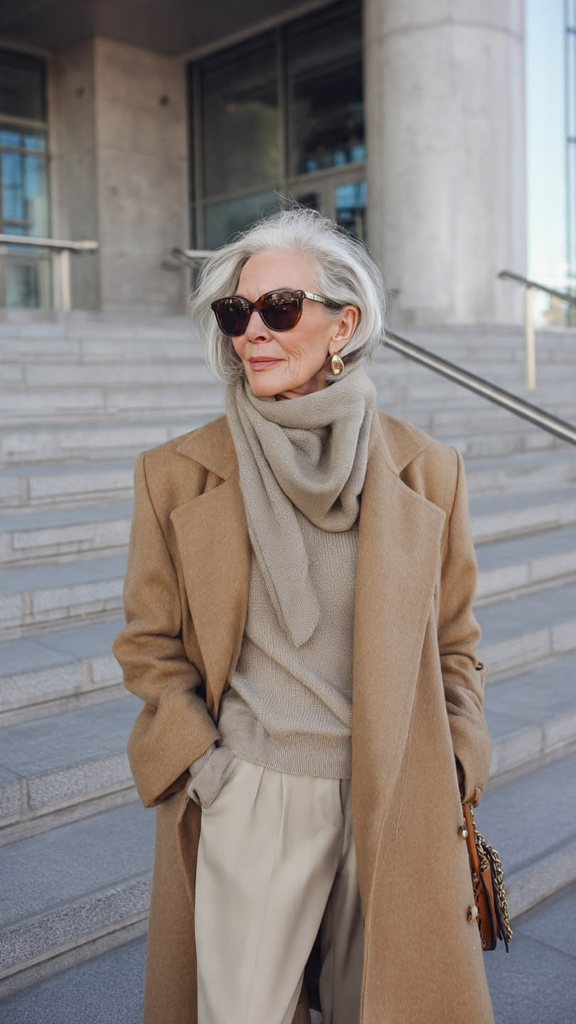
If you’re buying your first trench coat, I would begin with a color that works with most of your existing wardrobe. You don’t need several coats to create a variety of outfits.
Beige and camel are classic choices because they work with denim, white shirts, black trousers, navy sweaters, and many printed scarves. However, the exact shade matters. A warm camel can look very different from a cool stone beige, so compare the color against the clothes you already own.
Navy is a strong alternative if you wear lots of blue, gray, and white. Black can be useful for a more minimal wardrobe, while olive or khaki offers a casual, slightly outdoorsy feel.
| Color | Pairs well with | Overall effect |
|---|---|---|
| Beige | Blue denim, black, white, navy | Classic and versatile |
| Camel | Cream, chocolate, denim, burgundy | Warm and rich |
| Navy | White, gray, denim, camel | Understated and polished |
| Black | Gray, cream, denim, monochrome outfits | Sleek and modern |
| Olive | Cream, tan, denim, black | Relaxed and practical |
Before purchasing, look at your most-worn trousers and shoes. If nearly everything you own is black and gray, a camel trench may introduce useful warmth. If your wardrobe is full of cream, navy, and blue denim, beige or navy may be the easier choice.
Pro tip: Hold the coat near your face in natural daylight if possible. The undertone can affect how the color looks with your skin, hair, and usual makeup.
16. Layer a Trench Coat for Cooler Weather
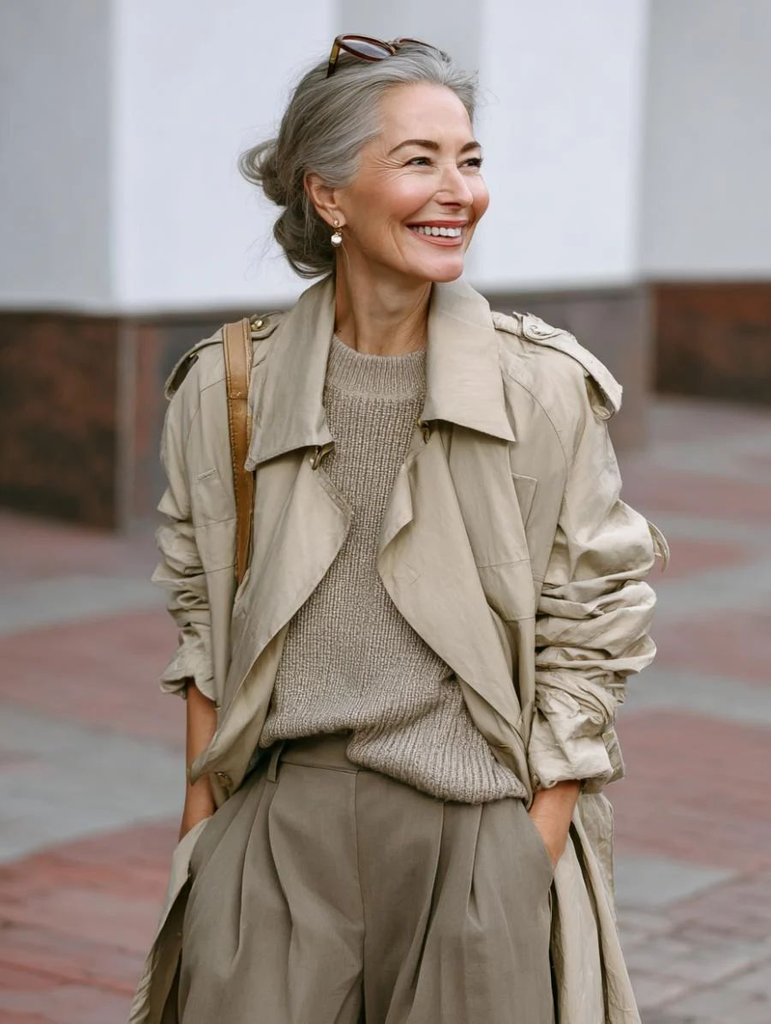
A trench coat is useful during transitional weather, but it isn’t automatically warm enough for every cold day. I would think of it as a layering piece rather than a replacement for a properly insulated winter coat.
For cool mornings, wear a fine-knit sweater or cardigan beneath it. A cotton shirt with a lightweight wool sweater can provide extra warmth without creating too much bulk around the shoulders.
If you live somewhere with frequent rain, look for a trench with suitable water-resistant fabric and check the manufacturer’s care instructions. Traditional cotton trench coats vary in how well they handle prolonged rain, so I wouldn’t assume that every classic-looking style is fully waterproof.
You can also layer a thin quilted vest or warm base layer underneath some roomier trench coats. The key is trying the combination before you leave the house. If the arms feel tight or the buttons pull, the layers may be too bulky.
For genuinely cold or snowy conditions, I would choose a warmer coat instead of forcing the trench to do a job it wasn’t designed for.
Pro tip: A thin wool or thermal layer can add more warmth with less bulk than a thick sweatshirt. That helps the trench keep its shape.
17. Style a Trench Coat for Travel Without Overpacking

A trench coat is a practical travel piece because it can work with several different outfits. When packing for a city break, I would choose one neutral coat and build the rest of the clothing around it.
For a three-day trip, you might pack straight-leg jeans, tailored trousers, two tops, one sweater, comfortable sneakers, and loafers. The trench can go over most of these combinations, giving you different outfits without needing a separate jacket for every day.
I would prioritize fabrics that resist creasing and shoes that can handle long walks. You may love the look of a delicate flat, but if it becomes uncomfortable after an hour, it probably isn’t the best choice for a sightseeing day.
A crossbody bag is useful for keeping essentials close while leaving your hands free. A compact scarf can also serve as a light layer on a cool flight or add a different accent to the same trench coat outfit.
The one trade-off is packing space. A traditional lined trench can take up a surprising amount of room in a small suitcase. If you’re traveling with only a carry-on, a lighter unlined style may be easier to manage.
Pro tip: Wear your trench during travel if the weather allows. It can free up suitcase space, and you won’t have to squeeze a bulky coat into your bag.
How Much Should You Spend on a Trench Coat?
A trench coat is a wardrobe piece that can be worth spending a little more on, but I wouldn’t automatically pay a premium for a designer label. Fit, fabric, construction, and how often you’ll wear the coat matter more than the name on the tag.
A budget-friendly coat can be a good choice if you’re still figuring out which length or color suits you. A mid-range option may offer better fabric, lining, buttons, and finishing. A premium coat can make sense if you love the cut and expect to wear it regularly for years.
Here is how I would approach the decision:
| Budget level | What I would look for | Best approach |
|---|---|---|
| Budget | A comfortable fit, useful pockets, simple design | Choose a versatile color and check the fabric carefully |
| Mid-range | Better construction, a good lining, durable buttons | Compare fit and finishing across several brands |
| Premium | Excellent fabric, thoughtful details, a cut you love | Buy only if the coat fills a real gap in your wardrobe |
Prices vary widely by country, brand, fabric, and season, so I would compare current prices rather than rely on a fixed price range. End-of-season sales and secondhand shops can be particularly useful for classic outerwear.
Before buying, inspect the seams, button attachments, belt loops, and lining. Try the coat over the thickest layer you expect to wear beneath it. If possible, sit down, reach forward, and walk around the store to make sure the fit remains comfortable.
My shopping rule: I would rather own one well-fitting trench in a versatile color than a closet full of coats that look good online but never feel right when I put them on.
Common Trench Coat Styling Mistakes to Avoid
A trench coat is relatively easy to style, but a few small mistakes can make the outfit feel less polished than you intended.
Choosing the wrong shoulder fit. If the coat pulls across your back, it may restrict movement and make the fabric bunch. If the shoulders are excessively wide, the coat may look oversized in a way you didn’t intend.
Ignoring the hem. A long coat can look elegant, but it needs to work with your height and shoes. Check the hem while wearing the footwear you use most often.
Overcomplicating the outfit. A trench already adds structure and visual interest. You usually don’t need a statement necklace, a dramatic scarf, a patterned blouse, and embellished shoes all at once.
Buying a color that doesn’t work with your wardrobe. Beige may be classic, but it isn’t the only option. If you rarely wear warm neutrals, navy or olive might be a more practical purchase.
Assuming every trench is suitable for heavy rain. Fabric and construction vary. Check whether the coat is water-resistant or waterproof before relying on it in wet conditions.
Wearing too many bulky layers. If you struggle to button the coat over your sweater, try a finer knit or a roomier cut instead of forcing the outfit to work.
Treating age as a set of fashion rules. I wouldn’t avoid white jeans, sneakers, long coats, or modern trousers simply because I’m dressing a woman over 50. The more useful questions are whether the pieces fit, feel comfortable, and suit your personal style.
Frequently Asked Questions About Wearing a Trench Coat Over 50
Can women over 50 wear long trench coats?
Absolutely. A long trench can create an elegant, uninterrupted line, particularly when worn over simple trousers or a dress. I would pay attention to shoulder fit, fabric weight, and hem length rather than assuming that a particular age or height rules out a longer coat.
What should I wear under a trench coat?
I would start with pieces you already wear regularly: a white shirt, a striped top, a lightweight sweater, straight-leg jeans, tailored trousers, or a simple dress. Choose the layers according to the weather and make sure they fit comfortably beneath the coat.
Is a beige trench coat better than a black one?
Neither is automatically better. Beige is a classic choice that pairs easily with denim, navy, white, and black. Black works well if your wardrobe is mostly monochrome or if you prefer a sharper look. I would choose the shade that coordinates with the majority of your clothes.
Can I wear a trench coat with sneakers after 50?
Yes. Simple sneakers can make a trench coat outfit comfortable and modern. I would pair them with straight-leg jeans or tailored trousers and keep the rest of the outfit relatively streamlined.
Should I tie the belt on my trench coat?
You can tie it, fasten it behind your back, or leave it loose. A relaxed front knot gives a classic appearance, while wearing the coat open creates a more casual silhouette. Choose the option that feels comfortable and works with your outfit.
What shoes look best with a trench coat?
Loafers, ballet flats, clean sneakers, ankle boots, and low heels can all work well. The best choice depends on the trousers or dress you’re wearing, the weather, and how much walking you plan to do.
Is a trench coat suitable for petite women over 50?
Yes. Petite women can wear hip-length, knee-length, and longer trench coats. A shorter style may be easier for everyday wear, but a longer coat can also work if the shoulders, sleeves, and overall proportions fit well.
Can I wear a trench coat in winter?
That depends on your climate and the coat’s construction. A trench can work on mild winter days with warm layers underneath, but an uninsulated coat may not provide enough warmth in freezing weather. For snow and very cold temperatures, a properly insulated coat is often the more practical choice.
Final Thoughts: Wearing a Trench Coat Over 50 Like a Parisian Woman
If I were building a trench coat wardrobe from scratch, I would start with a classic neutral coat, straight-leg jeans, a white shirt, a lightweight sweater, and comfortable loafers or sneakers. Those few pieces would give me several outfits without requiring a big shopping trip.
After that, I would experiment with a striped shirt, a knit dress, tailored trousers, or a silk scarf. Small changes can make the same trench feel different without buying an entirely new wardrobe.
For me, the appeal of Parisian-inspired style is that it doesn’t need to be complicated. You don’t have to dress younger, follow every trend, or spend a fortune on designer clothing. Find a trench that fits well, wear it with clothes you genuinely enjoy, and give yourself permission to make the look your own.
The most stylish trench coat outfit is the one you feel comfortable walking, sitting, traveling, and living your actual life in. That’s the kind of timeless style worth investing in.