


I used to think wearing white meant checking every single detail before leaving the house. Was the fabric see-through? Did the top make my bra lines obvious?
Would one tiny coffee spill ruin the entire outfit? White always seemed like one of those colors that looked effortless on other women but somehow required extra planning in real life.
The thing is, learning how to wear white after 50 isn’t about following stricter fashion rules. It’s about choosing the right fabrics, flattering cuts, and combinations that make you feel comfortable in your clothes.
You don’t need an entirely new wardrobe or expensive designer pieces to make white work beautifully.
Whether you prefer classic white jeans, a crisp button-down shirt, a flowing summer dress, or a simple white sweater, there are plenty of ways to wear this timeless color without worrying about every little detail.
I’ve put together the styling tips I would focus on first, including what to look for when shopping, which pieces are easiest to wear, and a few common mistakes worth avoiding.
1. Choose the Right Shade of White for Your Wardrobe
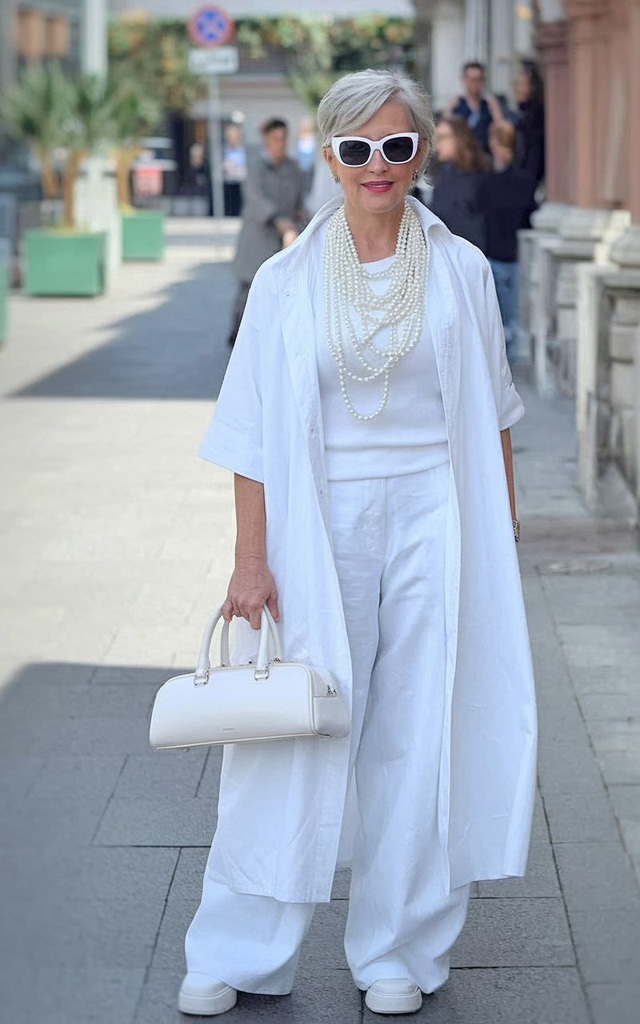
One thing I would never suggest is assuming that every shade of white looks exactly the same. Bright, icy white can feel quite different from ivory, cream, or soft white, especially when you hold the fabric near your face.
If you usually wear warm neutrals such as camel, tan, chocolate brown, or olive green, creamy whites often blend beautifully with the rest of your wardrobe. If your favorite clothes lean toward navy, charcoal, black, or cool blue, a cleaner white may feel more natural.
You also don’t have to choose just one shade. I like the idea of keeping a few whites in your wardrobe and using them for different purposes. A bright white shirt can look sharp with dark denim, while an ivory knit can soften a tailored outfit without making it feel too formal.
My practical tip: When shopping, hold the garment near your face in natural daylight. Store lighting can make a white top look warmer or cooler than it really is, so checking it near a window can save you from buying something that never quite works with your other clothes.
2. Find White Tops That Don’t Feel Too Sheer
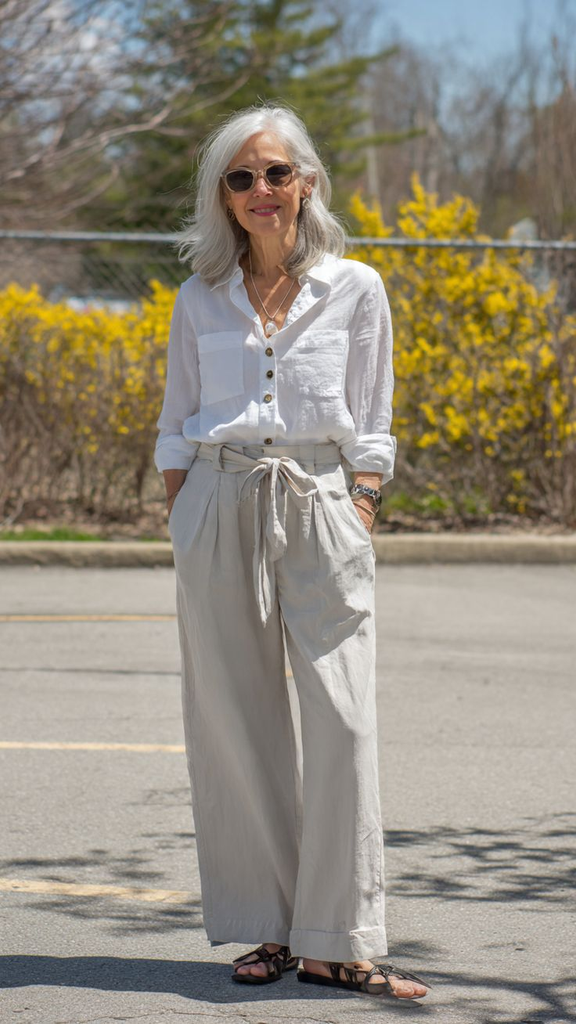
A see-through white shirt is one of the most common reasons women avoid wearing white, and honestly, it is a reasonable concern. Some lightweight fabrics look lovely on a hanger but become much less appealing once you put them on.
The solution isn’t necessarily buying a thicker or heavier shirt. Instead, pay attention to the fabric construction, how closely it fits your body, and how much light passes through it.
For everyday wear, I would look for cotton poplin, substantial cotton jersey, linen blends with a little structure, or a medium-weight knit. These materials can provide better coverage without making you feel as though you’re wearing several layers in warm weather.
A relaxed white button-down is especially useful because you can wear it tucked into trousers, open over a tank top, or loosely buttoned with jeans. If you prefer a more polished look, choose a shirt with enough room across the bust and shoulders that the buttons lie flat.
What to look for when buying a white top
- Cotton poplin: Crisp and structured, making it a good choice for office outfits and smart-casual dressing.
- Medium-weight cotton jersey: Comfortable for everyday T-shirts, although the thickness and weave still matter.
- Linen blends: Airy and relaxed for warmer weather, but check the fabric against the light before purchasing.
- Fine knit cotton or merino blends: Useful for layering under jackets and cardigans without adding too much bulk.
Pro tip: Don’t judge coverage by thickness alone. Hold the garment up toward a window and check it from several angles. A tightly woven fabric may provide better coverage than a heavier-looking material with a loose weave.
3. Wear the Right Undergarments Under White Clothing
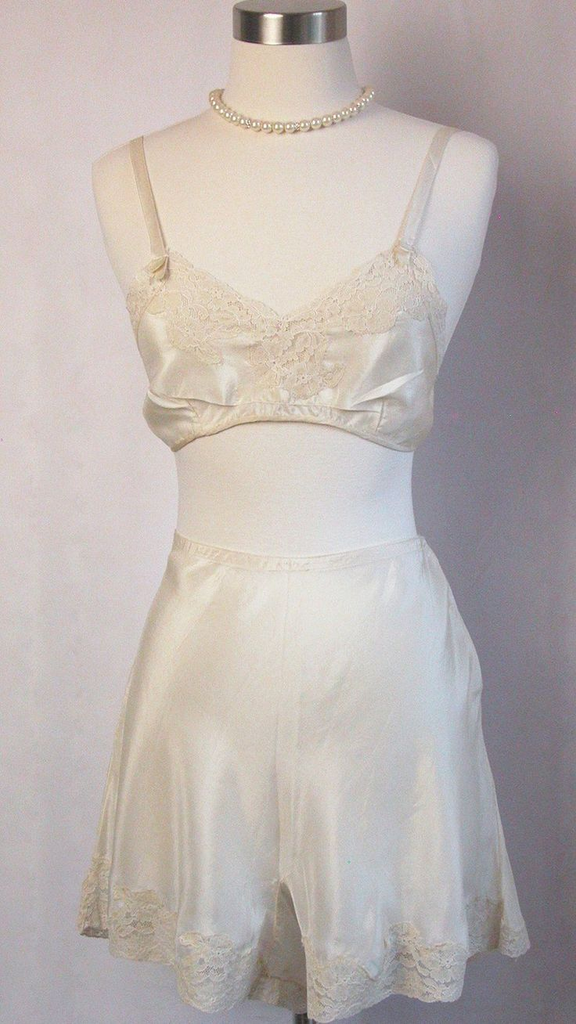
If there is one practical detail that makes wearing white less stressful, it is choosing the right undergarments. The goal isn’t to find something that matches the white fabric perfectly. In many cases, a close-to-skin-tone bra or camisole is less visible beneath white clothing than a bright white one.
For a smooth finish, look for undergarments that fit properly and don’t create obvious lines beneath the fabric. If you prefer additional coverage, a lightweight camisole can help, especially under a slightly transparent blouse.
You also don’t need to wear shapewear just because you’re wearing white. A comfortable bra and well-fitting underwear are often enough. If you enjoy smoothing layers, choose breathable pieces that let you move comfortably rather than anything that feels restrictive.
The best choice depends on the garment. A thick white sweater might require no extra layer at all, while a lightweight linen blouse may benefit from a camisole underneath.
Pro tip: Try the complete outfit on at home in daylight before wearing it out. Check the front, back, and sides in a mirror. This is a much more reliable test than inspecting the garment under the warm lighting in your bedroom.
4. Choose White Jeans That Feel Comfortable and Flattering

White jeans can look sophisticated at almost any age, but the fit makes a noticeable difference in how comfortable you feel wearing them.
I would start with straight-leg, slim-straight, or gently wide-leg styles rather than assuming you need a very tight cut to look put together. These shapes can balance proportions nicely and leave enough room for comfortable movement.
A mid-rise or high-rise waistband may feel supportive if you like more coverage around your middle, but the right rise depends on your torso length and personal preference. What matters most is that the waistband sits comfortably without digging in or gaping at the back.
Fabric is equally important. Look for denim with enough weight to provide coverage, a little stretch if you prefer flexibility, and pockets that lie relatively flat. Very thin white denim can emphasize underwear lines and may lose its shape more quickly throughout the day.
White jeans: Which style should you choose?
| Style | Best for | What to check |
|---|---|---|
| Straight-leg white jeans | Everyday outfits and classic styling | Make sure the knees and hips aren’t overly tight |
| Slim-straight jeans | A neat silhouette without a skinny fit | Check that the fabric doesn’t pull across the thighs |
| Wide-leg white jeans | Relaxed outfits and balancing fitted tops | Choose a length that works with your usual shoes |
| White ankle jeans | Warm weather and casual dressing | Check the hem placement with flats and sneakers |
| White denim trousers | A slightly dressier alternative to jeans | Look for a comfortable waistband and opaque fabric |
For an easy outfit, pair straight-leg white jeans with a navy knit top, tan loafers, and a brown leather belt. You get contrast, texture, and a classic combination without needing accessories that compete for attention.
If you prefer softer colors, try white jeans with a dusty blue shirt or a sage-green cardigan. These combinations feel fresh without relying on bright colors or complicated styling.
Pro tip: Sit down, bend your knees, and walk around in white jeans before removing the tags. Some denim looks perfectly opaque while standing but stretches enough when seated to reveal more than you intended.
5. Use Layers to Make White Outfits Feel More Secure
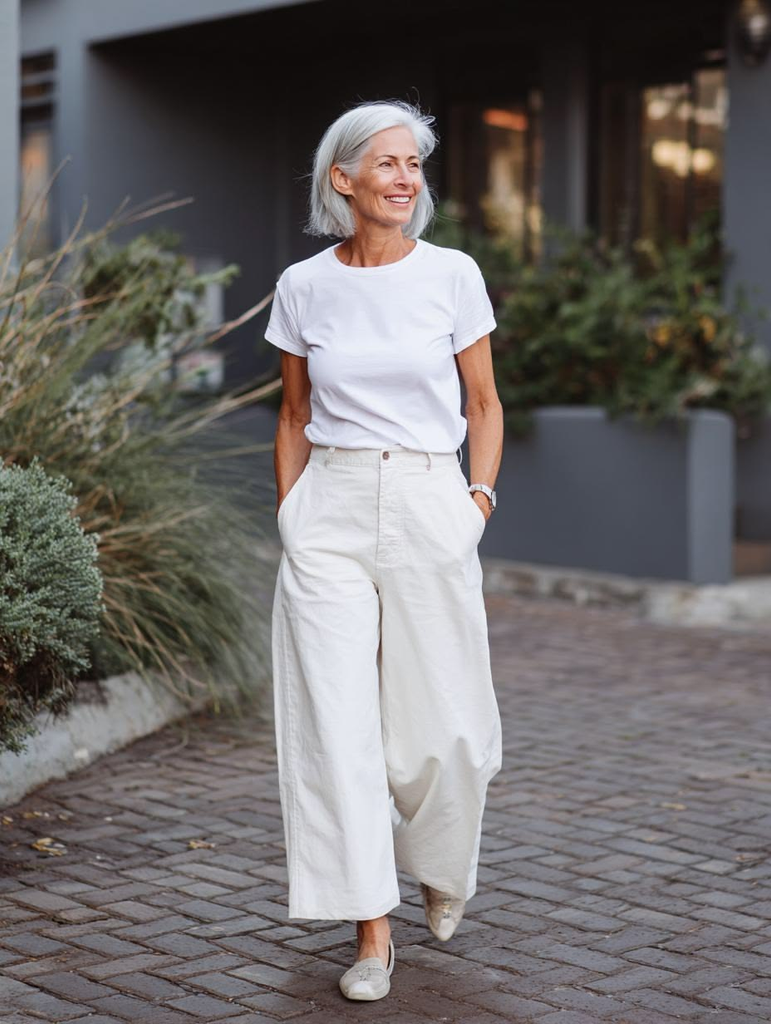
Layering is useful when you want extra coverage, but it shouldn’t mean wearing so many clothes that you’re uncomfortable all day.
A lightweight cardigan, an unlined blazer, a denim jacket, or an open button-down can add structure to a white outfit while giving you options throughout the day. The trick is choosing a layer that complements the garment underneath instead of hiding it completely.
For example, a white sleeveless top with a soft linen blazer creates an easy outfit for lunch, shopping, or a casual workday. A white T-shirt under a denim jacket works for errands, while a cream sweater layered over a longer white shirt creates a relaxed combination for cooler weather.
You can also use layers to introduce color. Navy, camel, olive, chocolate brown, and soft gray all work well with white and are easy to repeat across different outfits.
If you live somewhere warm, don’t feel obligated to add a jacket simply because you want more coverage. A white blouse with elbow-length sleeves or a loose short-sleeved shirt may provide all the coverage you want without an additional layer.
Pro tip: Pay attention to the weight of each layer. A thick cardigan over a heavy white shirt can make the outfit feel bulky. Pair a structured top with a lighter layer, or wear a fine knit under a more substantial jacket.
6. Wear White Dresses Without Feeling Overdressed
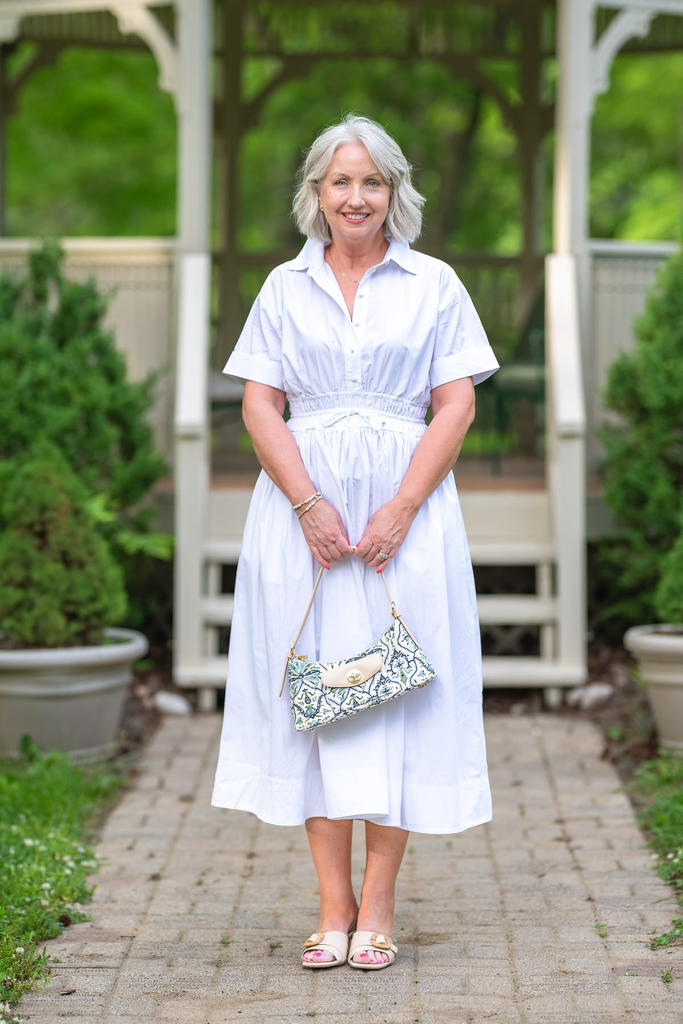
White dresses aren’t reserved for weddings, holidays, or special occasions. A simple white dress can be one of the easiest pieces to style when you choose a shape that suits your everyday routine.
For casual wear, look at shirt dresses, cotton midi dresses, softly structured A-line dresses, or relaxed linen-blend styles. These shapes can feel comfortable while still looking intentional.
If you like defining your waist, a dress with a removable belt gives you flexibility. You can wear it loosely for a relaxed afternoon or add the belt when you want a more tailored silhouette. If you prefer a straighter shape, look for a dress that skims your body instead of clinging to it.
The fabric deserves just as much attention as the cut. Lightweight white dresses can be unexpectedly transparent, particularly in strong sunlight. Check whether the skirt has a lining and whether the bodice provides enough coverage for your comfort.
For an everyday outfit, pair a white cotton midi dress with tan sandals and a woven bag. For a more polished look, swap the sandals for loafers or low block heels and add a structured handbag.
Pro tip: Before buying a white dress online, check the product description for lining information and look closely at customer photos when available. A beautiful silhouette isn’t worth much if you need to spend extra money figuring out how to make the fabric wearable.
7. Try an All-White Outfit Without Making It Complicated

An all-white outfit can look elegant, but it doesn’t have to be perfectly coordinated to work. In fact, mixing slightly different shades and textures often makes the combination look more interesting.
Start with two pieces you already like, such as white jeans and an ivory sweater or cream trousers and a white blouse. The difference between the shades can add depth instead of making the outfit look mismatched.
Texture helps, too. Combine smooth cotton with linen, denim with a fine knit, or tailored trousers with a softly textured blouse. These small differences give the outfit dimension without requiring bright accessories.
If you want to break up the white, add a tan belt, brown sandals, or a simple neutral handbag. You can also introduce a little navy or black through your shoes or accessories if a head-to-toe white look feels too stark.
One thing I would avoid is buying several pieces in slightly different whites without checking how they look together. Some combinations appear intentional, while others can make one item look dingy next to another. There is no need for every shade to match exactly, but the undertones should work together.
Pro tip: Try your complete outfit in daylight before deciding whether the whites clash. Warm indoor lighting can make an ivory top look yellow beside bright white trousers, even when the combination looks harmonious outdoors.
8. Use Color to Make White Easier to Wear

If head-to-toe white feels like too much, use it as a neutral foundation instead. This is often the easiest way to make white a regular part of your wardrobe without changing your personal style.
White works especially well with navy because the contrast feels classic and clean. Pair a white shirt with navy trousers, or wear white jeans with a navy cardigan and simple flats.
Camel and tan create a softer combination. I like the idea of a white knit with camel trousers or white denim with tan sandals and a matching belt. These colors add warmth without making the outfit look overly formal.
For something quieter, combine white with sage green, dusty blue, or soft gray. These shades are easy to wear and work well in both casual and smart-casual outfits.
Black is another reliable option. A white blouse with black trousers creates a simple outfit that can work for a casual office, dinner, or an appointment. Add a belt or understated jewelry if you want a little more definition.
Easy white outfit combinations
- Classic: White button-down, dark straight-leg jeans, brown loafers.
- Casual: White cotton T-shirt, blue denim, white sneakers.
- Polished: White blouse, navy trousers, tan handbag.
- Soft and relaxed: Ivory sweater, white jeans, beige flats.
- Warm-weather: White linen-blend shirt, olive trousers, flat sandals.
- Evening: White blouse, black tailored trousers, low heels.
Pro tip: When you’re unsure how to style a white piece, repeat one other color at least twice. For example, use brown in both your shoes and belt. It creates a more cohesive outfit without requiring extra accessories.
9. Wear White T-Shirts That Look Polished, Not Sloppy

A white T-shirt is one of the most versatile items you can own, but the wrong fit can make it look more like sleepwear than an intentional outfit.
The best everyday T-shirt usually has enough structure to hold its shape without feeling stiff. Look for a neckline you enjoy, sleeves that sit comfortably on your upper arms, and a length that works with the trousers or skirts you wear most often.
A crew neck is a classic option, while a V-neck can create a more open neckline if that’s your preference. Neither is automatically more flattering; the important thing is choosing the shape you feel comfortable wearing.
You can wear a white T-shirt with jeans and sneakers for a simple weekend outfit, or tuck it into tailored trousers and add a blazer for a more polished result. A half-tuck can work with relaxed denim, but a full tuck often looks neater with higher-rise trousers.
Pay attention to fabric care, too. White shirts can become grayish or yellow over time, especially around the neckline and underarms. Following the care label, treating stains promptly, and avoiding excessive detergent can help them stay looking fresher.
Pro tip: Buy the T-shirt for the outfit you actually wear, not the outfit you imagine wearing. If you rarely tuck in your tops, choose a length that looks good untucked rather than purchasing an oversized shirt you’ll constantly adjust.
10. Choose White Shoes That Work With Your Lifestyle

White shoes can brighten an outfit, but they don’t have to be pristine to look good. A clean pair of white sneakers, for example, can make jeans and a simple top look more intentional without requiring much effort.
If you spend a lot of time walking, prioritize cushioning, a supportive fit, and a sole that suits the surfaces you use most often. Style matters, but uncomfortable shoes tend to stay in the closet regardless of how attractive they look.
White leather or coated sneakers can be relatively easy to wipe clean, while canvas styles often need more careful cleaning. The best option depends on how frequently you wear them and whether you mind a little visible wear.
If sneakers aren’t your style, white or cream loafers, ballet flats, and low-heeled sandals offer other ways to incorporate lighter footwear. Cream shoes can be particularly useful if you want a softer contrast with ivory or off-white clothing.
You don’t need white shoes to match every white garment perfectly. A cream shoe with white jeans can look just as intentional as a bright white sneaker, particularly when the rest of the outfit includes warm neutral shades.
Pro tip: Before buying white shoes, think about maintenance. If you don’t enjoy cleaning footwear, choose a finish that can be wiped down easily and avoid delicate materials that require frequent specialist care.
11. Wear White in Cooler Weather, Too

White is often associated with summer, but there is no reason to pack it away once the temperature drops.
A white sweater with dark denim, ankle boots, and a camel coat creates a practical cold-weather outfit. White jeans can also work with a charcoal cardigan, a navy wool coat, or a warm brown jacket.
For a softer look, try cream trousers with a gray sweater and matching neutral shoes. You don’t need to wear bright white from head to toe; ivory and winter white can feel especially natural alongside autumn and winter colors.
Fabric weight becomes more important in cooler weather. Choose denim, substantial cotton, wool blends, or heavier knits that provide the warmth you need. A lightweight summer blouse may still work under a sweater, but you might prefer a sturdier shirt when wearing white as the main layer.
I would also think about the weather and where you’ll be spending your day. White trousers may not be the most practical choice for a muddy walk or a rainy commute, but they can work beautifully for indoor plans or dry winter days.
Pro tip: Build your cold-weather white outfits around shoes and coats you already own. That way, you can wear white regularly without buying an entirely separate collection of accessories.
12. Avoid the Most Common White-Clothing Mistakes

You don’t need a long list of fashion rules to wear white well, but a few practical mistakes can make getting dressed more frustrating than it needs to be.
Buying fabric that’s too thin
A lightweight garment isn’t automatically a bad purchase, but it should provide the coverage you want. Check it in natural light, move around in it, and consider whether an extra layer will be comfortable in the weather you expect to wear it in.
Choosing a fit that pulls or clings
White doesn’t require a loose fit, and it doesn’t require a tight one either. The garment should fit comfortably across the areas where you need movement, especially the shoulders, bust, hips, and thighs.
Wearing the wrong undergarments
Bright white underwear can sometimes show through white clothing more than a shade close to your skin tone. Try a few options with the actual garment rather than assuming one color will work with everything.
Ignoring the care label
Some white garments tolerate warm washing, while others need cooler water or delicate handling. Follow the care instructions and check stain-treatment recommendations before using bleach or other strong products.
Saving white for special occasions
If you love white, wear it. A white T-shirt, cardigan, or pair of jeans can be part of your everyday wardrobe rather than something you reserve for a perfectly planned outfit.
Pro tip: Before removing the tags from a new white garment, wear it around the house for a few minutes. Sit, bend, walk, and check how the fabric behaves. It’s much easier to return something that doesn’t work before you’ve worn it outside.
How Much Should You Spend on White Wardrobe Essentials?
You don’t need to spend a fortune to build a useful collection of white clothing. In fact, I would rather own a few well-fitting basics than several inexpensive pieces that become transparent, lose their shape, or feel uncomfortable after washing.
Your budget should depend on how frequently you wear each item. A white T-shirt that you wear several times a week may deserve a little more attention than a white occasion dress that comes out once or twice a year.
| Item | Budget-friendly approach | What deserves attention |
|---|---|---|
| White T-shirt | Start with a simple cotton basic | Fabric opacity, neckline, and wash durability |
| White button-down | Look for cotton or a cotton blend | Button placement, shoulder fit, and transparency |
| White jeans | Compare several cuts before choosing | Denim weight, stretch recovery, and pocket placement |
| White dress | Choose a versatile everyday silhouette | Lining, fabric quality, and ease of movement |
| White cardigan | Look for a comfortable, easy-care knit | Pilling resistance, weight, and sleeve length |
| White sneakers | Choose a practical everyday design | Fit, comfort, and ease of cleaning |
Prices vary widely by brand, country, and retailer, so I wouldn’t use a single price range as a guarantee of quality. Instead, check fabric composition, care instructions, return policies, and reviews that mention transparency or shrinkage.
If you’re shopping on a budget, start with one white top and one bottom that work with clothes you already own. You can add a dress, cardigan, or shoes later if you find yourself reaching for white regularly.
Pro tip: Cost per wear is more useful than the original price alone. If you wear a comfortable white shirt twice a week for a year, it may offer much better value than a cheaper shirt that loses its shape after a few washes.
Build a Small White Capsule Wardrobe After 50
If you want to make getting dressed easier, a small white capsule wardrobe is a practical place to start. You don’t need every item on this list; choose the pieces that match your lifestyle and the clothes already hanging in your closet.
I would begin with these essentials:
- One white or ivory T-shirt that fits comfortably.
- One white button-down shirt for casual and polished outfits.
- One pair of white jeans or trousers in a flattering, comfortable cut.
- One white or cream knit for layering.
- One versatile white dress if you enjoy wearing dresses.
- One pair of neutral shoes that work with your most-used outfits.
These pieces can create a surprising number of combinations. Wear the T-shirt with jeans, layer the button-down under a cardigan, pair white trousers with a navy top, or wear the knit with darker denim.
The important part is choosing items that suit your actual routine. If you work from home, you might get more use from comfortable white tops than tailored trousers. If you attend regular lunches or social events, a versatile dress and a structured shirt may be more useful.
Before shopping, look at your existing wardrobe and identify the colors you wear most often. If your closet is full of navy, denim, and tan, white will probably fit in naturally. If you prefer black, gray, and jewel tones, bright white may be the easiest starting point.
Pro tip: Don’t buy all your white basics in one shopping trip. Start with the garment you need most, wear it several times, and pay attention to the fabric, fit, and care routine you enjoy. That information will make your next purchase much easier.
Frequently Asked Questions About Wearing White After 50
Can women over 50 wear white jeans?
Absolutely. White jeans can work at any age, and the best style is the one that fits comfortably and suits your personal taste. Straight-leg, slim-straight, and wide-leg cuts are all worth trying. Focus on opaque denim, a comfortable waistband, and a rise that works with your proportions.
Does white make you look older?
No. White is a neutral color, not an age-specific trend. The shade, fabric, neckline, and overall styling can affect how an outfit looks, but there is no reason to avoid white simply because you’re over 50.
What colors look best with white clothing?
Navy, camel, tan, chocolate brown, gray, black, dusty blue, and sage green are all versatile choices. You can also wear white with other shades of white and cream for a softer, more tonal outfit.
What should I wear under a white shirt?
A well-fitting bra in a shade close to your skin tone is often a good starting point. If the shirt is very sheer, try a lightweight camisole. The right option depends on the fabric, your preferred coverage, and the outfit.
Is ivory more flattering than bright white after 50?
Neither shade is universally more flattering. Ivory tends to look warmer, while bright white creates a crisper contrast. Try both in natural light and choose the one that works best with your coloring and the other neutrals in your wardrobe.
Can I wear white all year round?
Yes. White works in every season when you choose appropriate fabrics and styling. Lightweight linen and cotton are useful in warm weather, while white denim, substantial knits, and winter-white trousers can work well in cooler months.
How do I keep white clothes from turning yellow or gray?
Follow the garment’s care label, treat stains promptly, avoid using more detergent than recommended, and make sure your washing machine isn’t overloaded. Store clean clothes in a dry place away from excessive moisture. For stubborn discoloration, check whether the fabric can safely tolerate a suitable laundry treatment before using it.
Are white clothes difficult to maintain?
They can show stains more easily than darker clothing, but the level of maintenance depends on the fabric and how you wear it. A washable cotton T-shirt may be very easy to maintain, while a delicate white blouse might require more careful handling. Choose pieces that suit the amount of laundry care you’re willing to do.
Final Thoughts on How to Wear White After 50
If I were starting over with a wardrobe that barely included white, I would begin with one good white T-shirt and a pair of comfortable white jeans. Those two pieces can work with navy, denim, black, camel, and plenty of other colors, so you don’t have to rethink your entire closet to wear them.
Once you know which fabrics feel comfortable, which shades you prefer, and what kind of fit makes you feel confident, wearing white becomes much less complicated. You can add a dress, a soft sweater, or a crisp button-down whenever you find something that genuinely suits your style.
The biggest thing to remember is that you don’t have to dress differently just because you’ve turned 50. Wear white in the shapes and combinations you enjoy, choose pieces that fit your real life, and don’t let worries about a little maintenance keep you from wearing a color you love.