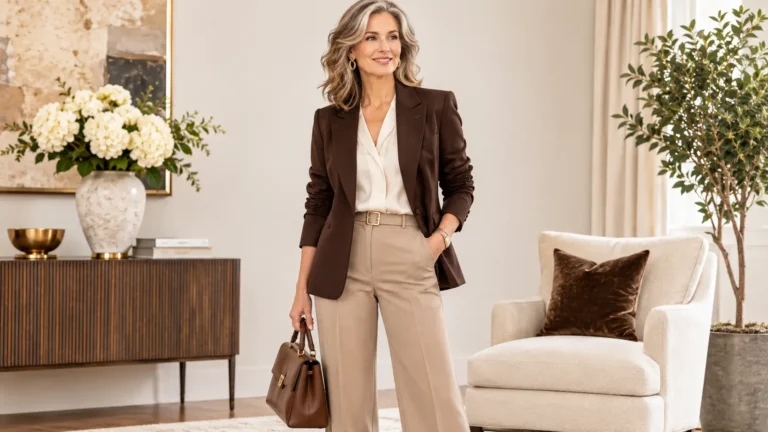
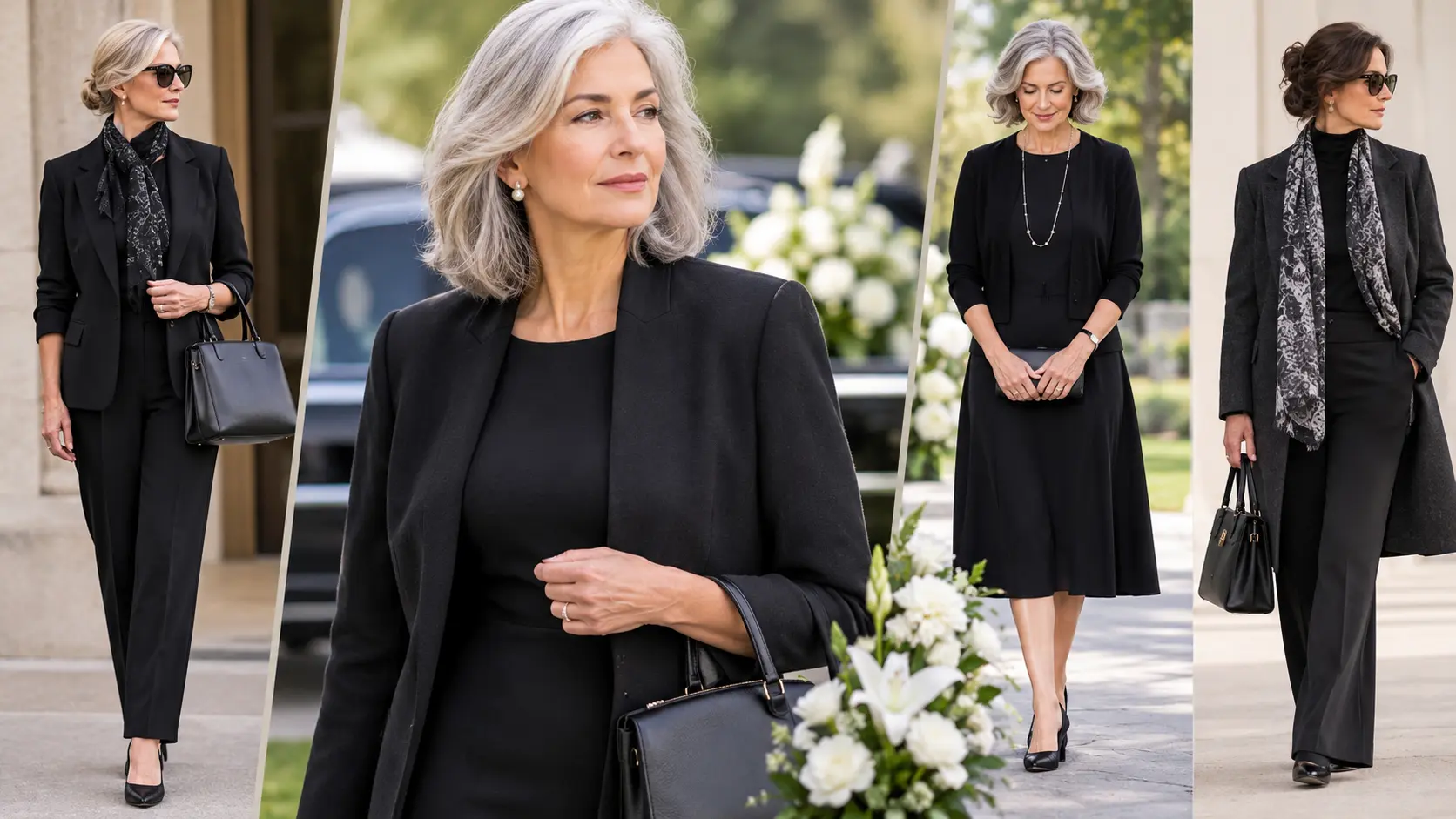

I think one of the hardest parts of getting dressed for a funeral is standing in front of your closet, knowing you want to look respectful without feeling like you’re wearing someone else’s clothes.
If you’re over 50, you may already have a few black dresses, a favorite pair of tailored trousers, or a cardigan you reach for when you want to look polished. The challenge is figuring out which pieces feel appropriate for the occasion and how to put them together without overthinking every detail.
When you’re deciding what to wear to a funeral over 50, I believe comfort, modesty, and simplicity matter far more than buying a completely new outfit. You don’t need an expensive designer dress or a head-to-toe black wardrobe.
You need something that fits well, feels comfortable enough to sit and stand in for an extended period, and allows you to focus on the people around you rather than adjusting your sleeves or worrying about your shoes.
I’ve always thought the best funeral outfits are the ones that don’t draw attention to themselves. They’re neat, understated, and appropriate for the setting, whether you’re attending a traditional church service, a graveside ceremony, or a more relaxed memorial gathering.
Below, I’m sharing outfit ideas, practical styling tips, and a few things I’d consider before deciding what to wear.
1. A Classic Black Dress With Comfortable Flats
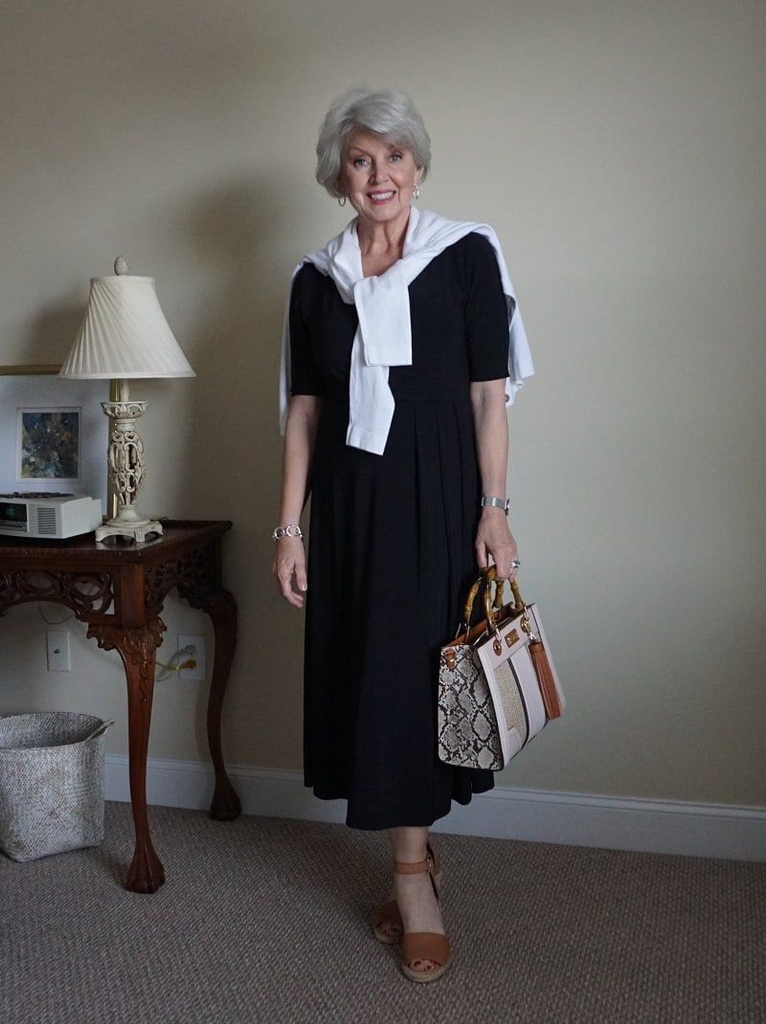
A simple black dress is one of the easiest choices when you’re unsure what to wear to a funeral over 50. It takes the guesswork out of coordinating separates, and you can usually find a suitable option already hanging in your closet. I would look for a knee-length or midi dress with a modest neckline, sleeves, and a silhouette that allows you to sit comfortably.
You don’t need a completely plain dress, either. Subtle details such as a soft pleated skirt, a fabric-covered button, or a gently defined waist can make an outfit feel thoughtful without becoming distracting. If the dress is sleeveless, bring a cardigan, blazer, or lightweight jacket so you can adjust to the formality of the service and the temperature indoors.
For shoes, I’d choose black ballet flats, low block heels, or supportive loafers. A funeral can involve more walking and standing than you expect, particularly if the service includes a cemetery visit afterward. This isn’t the day I’d choose brand-new heels that I’ve never worn outside the house.
Pro tip: Before wearing a dress, sit down in front of a mirror and check the hemline and neckline. A dress that looks perfectly modest while standing can fit differently when you’re seated.
2. Black Trousers With a Soft, Elegant Blouse

If dresses aren’t your thing, tailored black trousers and a blouse are an excellent alternative. I actually think this combination deserves more attention because it can look just as polished as a dress while offering greater flexibility and comfort.
Choose straight-leg, slim-straight, or gently wide-leg trousers in a fabric that holds its shape. Pair them with a black, charcoal, navy, or muted gray blouse. A matte fabric with minimal embellishment usually works better than shiny satin or anything heavily decorated.
For a more balanced silhouette, I like the idea of pairing wider trousers with a blouse that has a little structure around the shoulders. If your trousers are fitted, a slightly looser blouse can create a comfortable, understated look. Tuck the blouse in if you prefer a defined waist, or leave it untucked if the length and cut look intentional.
A black belt, small stud earrings, and closed-toe flats are enough to finish the outfit. You don’t need to add a statement necklace or a dramatic handbag; keeping accessories simple helps the overall look feel appropriate.
Pro tip: Check the trousers for wrinkles and pet hair before leaving home. Dark clothing tends to show both, especially in natural daylight.
3. A Navy Blue Dress for a Softer Alternative to Black
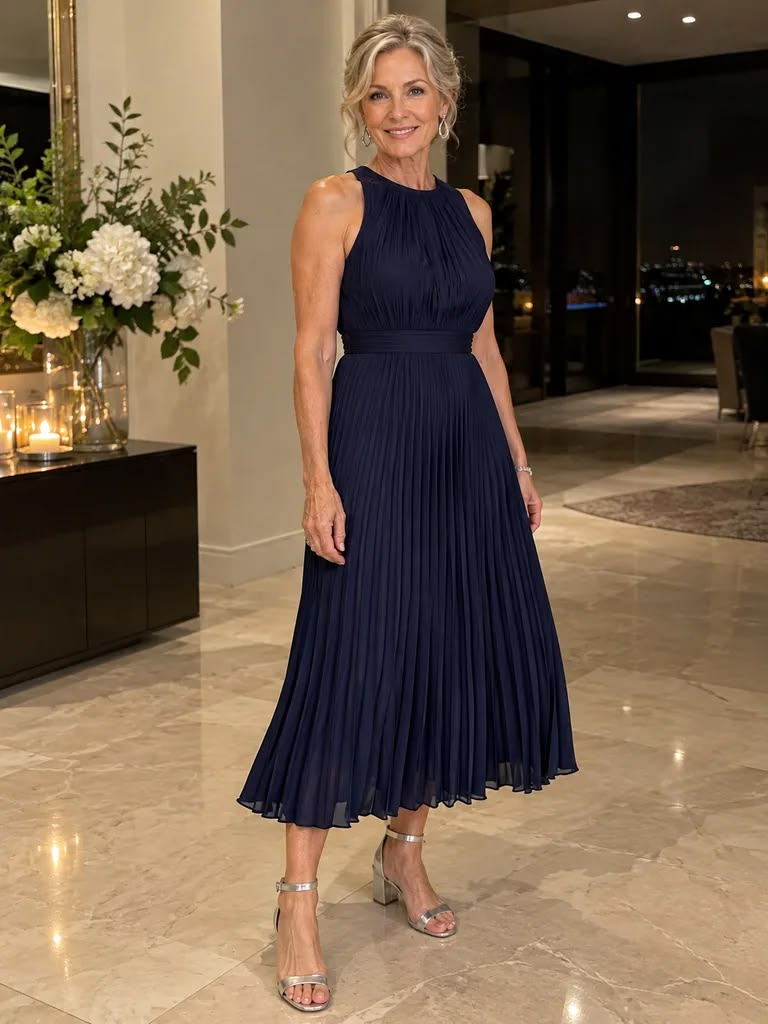
Not everyone owns a black dress they feel good in, and black isn’t a universal requirement for every funeral. Depending on the family’s wishes, religious customs, and local traditions, navy blue can be an equally respectful choice.
I particularly like navy for women over 50 who want a classic, understated outfit without wearing black from head to toe. A navy midi dress with sleeves, a matching cardigan, and black or navy shoes looks composed without feeling overly formal. You could also wear a navy sheath dress with a simple blazer for a more structured appearance.
Charcoal gray, deep plum, and dark brown may also be suitable alternatives, provided the family or ceremony doesn’t specify a particular dress code. If you’re attending a traditional service where black is strongly expected, I’d lean toward black or another dark neutral instead.
The important thing is to avoid assuming every funeral follows the same rules. Some families prefer traditional dark clothing, while others encourage guests to wear brighter colors to celebrate the person’s life.
Pro tip: If you’re unsure about color, ask a family member or check the funeral home’s guidance. A quick question can save you from worrying about your outfit all morning.
4. A Black Blazer and Tailored Trousers for a Polished Look

A black blazer is one of those wardrobe pieces I would keep for occasions when I need to look put together without much effort. It works beautifully for a funeral because it adds structure to a simple outfit and makes everyday basics feel more formal.
Wear it with black trousers and a plain blouse, or pair it with a charcoal skirt if you prefer a more traditional silhouette. A single-button or two-button blazer is easy to style, and a slightly relaxed fit can be more comfortable than a stiff, heavily tailored jacket.
If you’re attending a service in a church or another formal setting, this outfit is a dependable choice. You can remove the blazer during the reception if the atmosphere is more relaxed, which is particularly helpful when the weather is warm or the venue is crowded.
I’d avoid anything with prominent gold buttons, glittering trim, or a very dramatic cut unless you know the dress code allows it. The goal is understated polish, not a business outfit that feels too corporate.
Pro tip: If you don’t own a black blazer, a charcoal or navy one can work just as well. Check your closet before buying anything new, especially if you already have a dark jacket you wear for work or special occasions.
5. A Modest Midi Skirt With a Simple Sweater
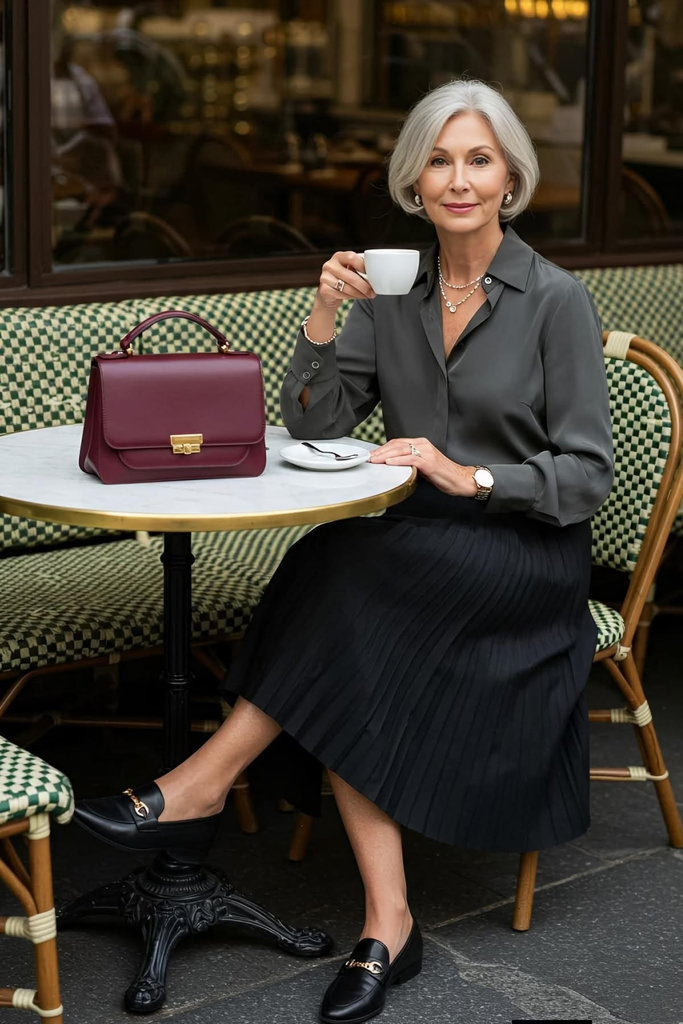
A midi skirt can be a lovely option if you want something feminine but don’t feel comfortable in a dress. The longer length offers coverage, and pairing it with a simple sweater creates an outfit that feels gentle and understated.
For a funeral, I’d choose a black, charcoal, or navy skirt in a fabric that isn’t too thin or clingy. A fine-knit sweater in a coordinating color works well, especially when the weather is cool. You can also wear a simple blouse tucked into the skirt for a slightly dressier finish.
Pay attention to the skirt’s movement. A pencil skirt may look elegant but can restrict your stride, while a very full, dramatic skirt may feel more festive than you intend. A straight or softly A-line midi skirt is a practical middle ground.
Finish with low heels or flats and a small structured handbag. If you want to wear jewelry, delicate earrings or a simple watch are enough.
Pro tip: Try walking up a few steps in the skirt before wearing it. If you have to keep pulling it down or adjusting the waistband, choose another option that lets you move naturally.
6. A Dark Floral Dress With Subtle Accessories
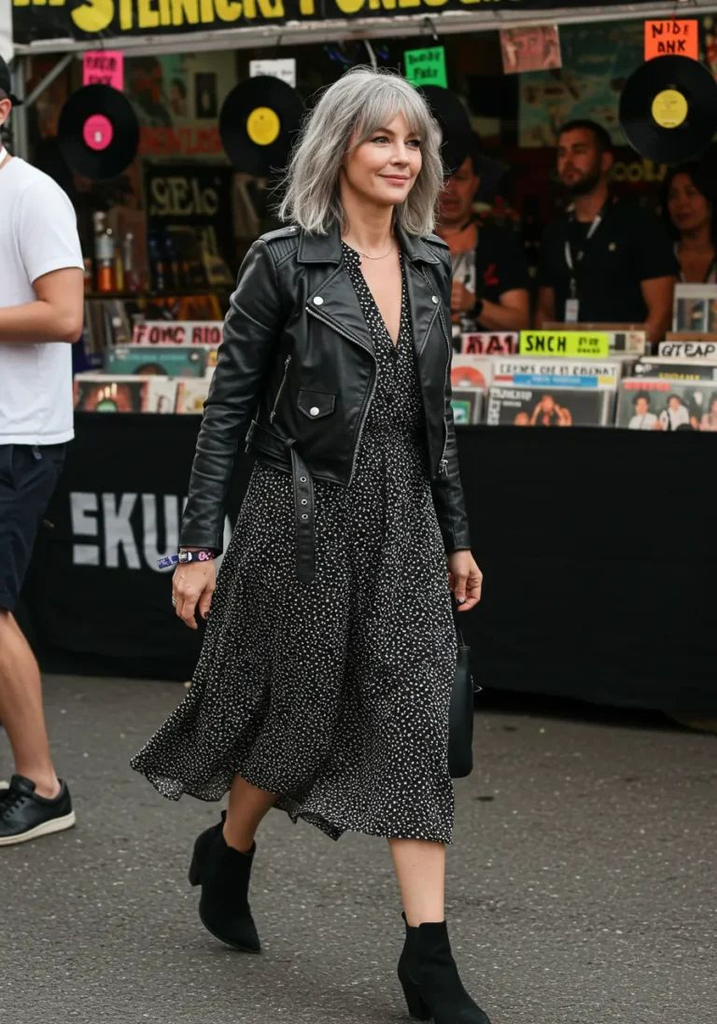
A floral dress can be appropriate for a funeral, particularly when the family has requested a celebration of life or a less traditional dress code. The trick is choosing a print that feels subdued rather than cheerful or attention-grabbing.
I’d look for a black or navy background with small gray, dusty blue, muted burgundy, or soft cream flowers. A midi dress with sleeves and a modest neckline can look respectful without feeling severe.
Keep the rest of the outfit simple. Black flats, a dark cardigan, and a small handbag allow the dress to remain understated. I’d skip oversized floral prints, neon colors, sequins, and ruffles that make the outfit feel more suited to a party.
If the service is very traditional, a solid dark dress may be the safer option. But for a memorial where the family has encouraged guests to wear something meaningful or colorful, a dark floral print can be a thoughtful choice.
Pro tip: Look at the dress from a few feet away. If the flowers dominate the outfit before you notice the overall dark color, the print may be too bold for a conservative service.
7. A Black Cardigan and a Simple Dress
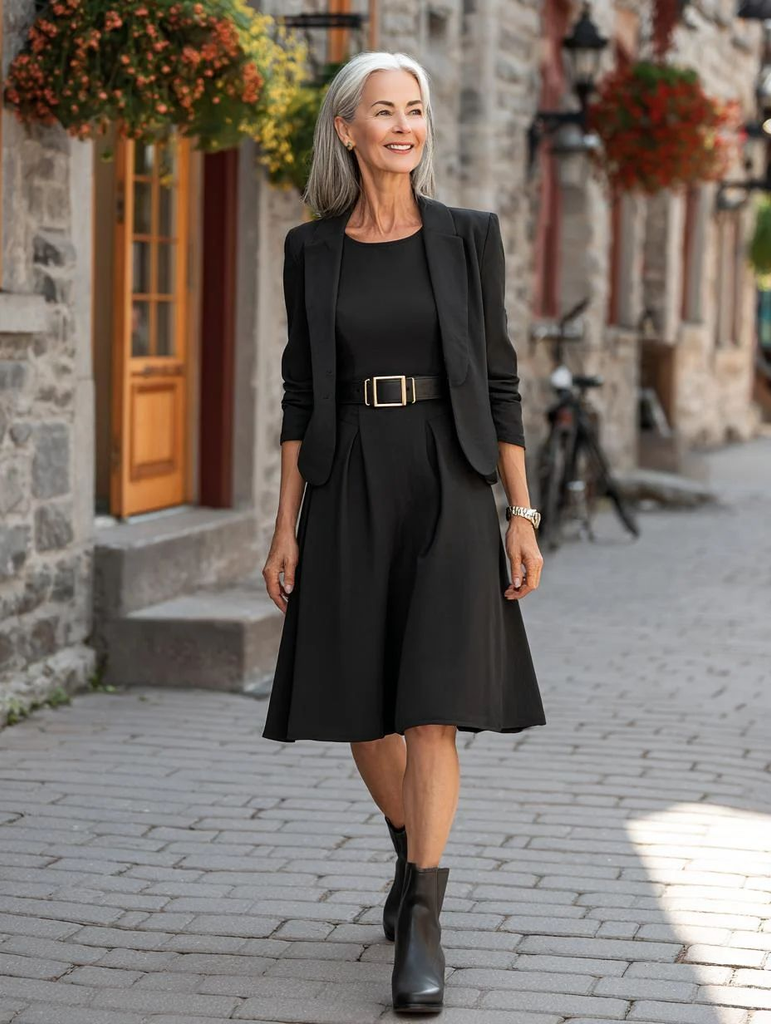
You don’t always need a blazer to make an outfit funeral-appropriate. A well-fitting black cardigan can provide coverage and warmth while keeping your outfit comfortable.
This works especially well if you have a sleeveless or short-sleeved dress that you otherwise like. A fine-knit cardigan in black, charcoal, or navy creates a softer look than a structured jacket, and it can be easier to wear throughout a long service.
Choose a cardigan that falls neatly around your hips or waist. Very oversized styles can look casual, while cropped versions may not provide the coverage you want. Simple buttons and a smooth knit are usually the easiest to style.
You can wear this combination with flats, loafers, or low heels. If the weather is cold, add a dark coat that can be removed once you’re indoors.
Pro tip: Bring a cardigan even if the forecast looks warm. Churches, funeral homes, and reception venues can have strong air conditioning, and you’ll appreciate having an extra layer.
8. A Charcoal Gray Suit for a Traditional Funeral
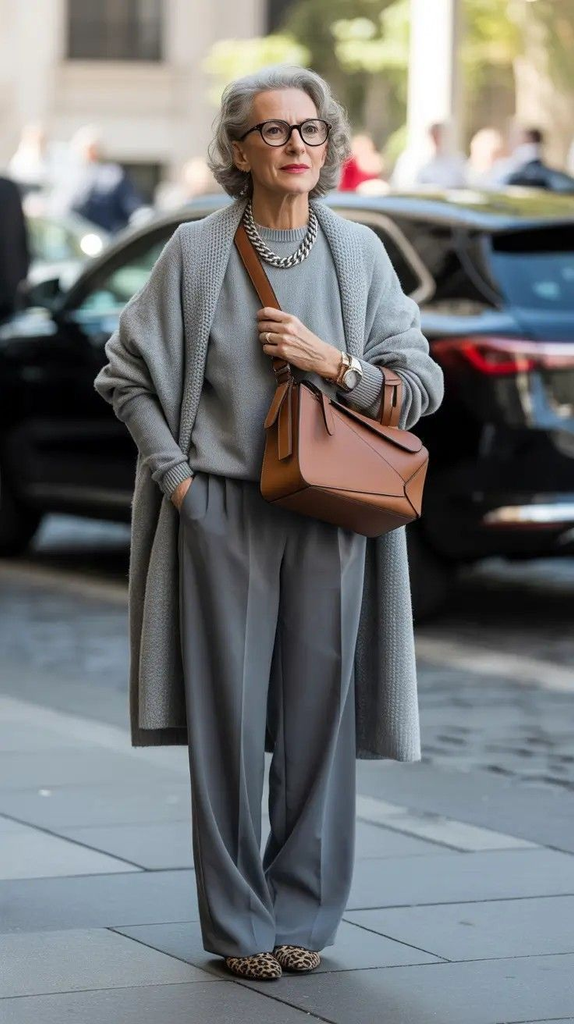
A charcoal gray suit is a particularly good choice if you prefer tailored clothing or want something more formal than a dress and cardigan. It’s understated, versatile, and suitable for many traditional funeral services.
I would choose a suit with a comfortable, lightly structured jacket and straight-leg trousers. Wear it with a black, white, or soft gray blouse, depending on the dress code. If you choose a white blouse, make sure the rest of the outfit remains subdued and that the blouse isn’t overly sheer.
A matching suit looks polished, but you can also combine a charcoal blazer with black trousers if you don’t have a complete set. The colors don’t need to match perfectly; they simply need to look intentional together.
This is also a useful outfit if you attend professional events or formal gatherings regularly, because the pieces can be worn separately afterward.
Pro tip: If you’re buying a suit specifically for the occasion, prioritize fit at the shoulders and waist over the brand. A comfortable, well-fitting suit will be more useful than an expensive one that needs constant adjusting.
9. A Long-Sleeved Black Maxi Dress for Extra Coverage

If you prefer more coverage, a long-sleeved black maxi dress is worth considering. It can feel particularly appropriate for traditional religious services or cooler weather, provided the style is simple rather than overly dramatic.
Look for a dress with a modest neckline, opaque fabric, and a hem that doesn’t drag on the ground. A soft jersey or crepe fabric can be comfortable for several hours, while a very thin material may cling or become see-through in bright light.
I would keep the silhouette relatively clean. A subtle waist seam or gentle pleating is fine, but a dramatic train, high slit, or plunging neckline can make the outfit feel less suitable for a conservative ceremony.
Wear the dress with low heels or flats, depending on the terrain. If there’s a graveside service, a floor-length hem can become inconvenient on grass or uneven ground, so a shorter maxi length is often more practical.
Pro tip: Check the hem while wearing your intended shoes. You should be able to walk without stepping on the fabric, especially if you’ll be walking outdoors.
10. Black Jeans With a Dressy Top for a Casual Memorial

There are situations where black jeans may be acceptable, especially for an informal memorial, a gathering at someone’s home, or a service where the family has specifically requested casual clothing. However, I wouldn’t make them my first choice for a traditional funeral.
If jeans are appropriate, choose a dark, clean pair without rips, fading, frayed hems, or decorative details. Pair them with a blouse, fine-knit sweater, or simple blazer to make the outfit look more polished.
Avoid distressed denim, leggings that resemble casual lounge wear, graphic T-shirts, and athletic sneakers unless the family has made it clear that everyday clothing is welcome.
When you’re unsure, tailored trousers are a safer option. They offer nearly the same comfort while looking more formal, and you can usually find an affordable pair without replacing your entire wardrobe.
Pro tip: Let the invitation or family’s wishes guide you. A celebration of life may have a completely different dress code from a traditional funeral, and it’s better to follow their preferences than rely on a general rule.
11. A Black Wrap Dress With a Modest Neckline

A wrap dress can be flattering and comfortable, but the neckline deserves a little extra attention when you’re choosing an outfit for a funeral.
I’d look for a wrap-style dress with a secure closure, sleeves, and a hem around the knee or midi length. A black or deep navy version is easy to style with a cardigan, blazer, or simple coat.
The benefit of a wrap silhouette is that it can accommodate small changes in fit and doesn’t usually feel as restrictive as a very fitted sheath dress. That said, some wrap dresses shift when you sit down or move your arms, which can become distracting during a service.
If you already own a wrap dress you love, try wearing it with a camisole underneath if the neckline opens too much. A small safety pin or discreet fashion tape can also help secure the fabric.
Pro tip: Sit, bend slightly, and reach forward while wearing the dress before deciding it’s suitable. You want to be able to greet people and offer condolences without worrying about your clothing.
12. A Dark Knit Dress With Low-Heeled Boots
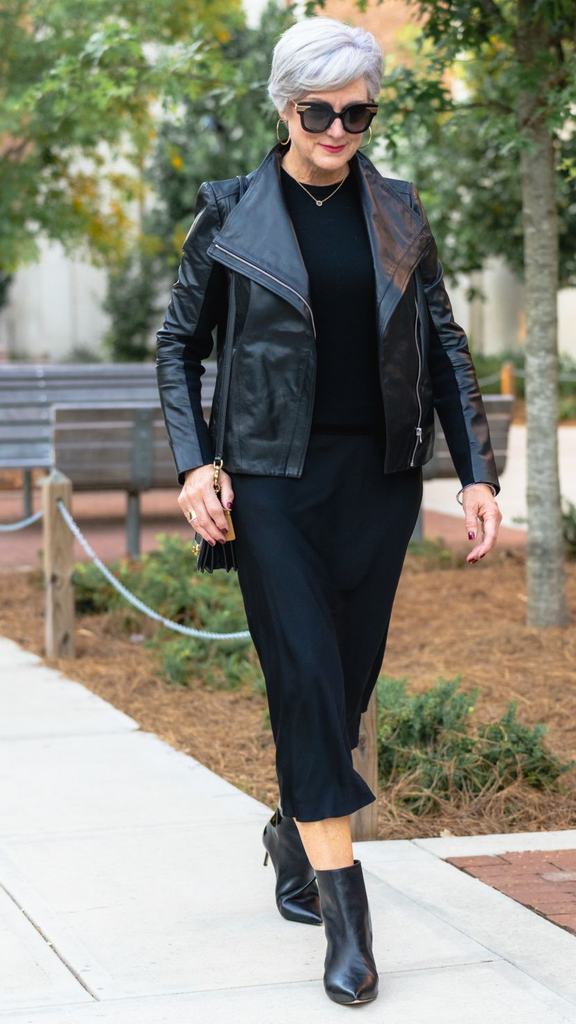
For a fall or winter funeral, a dark knit dress with low-heeled boots can be a practical and polished combination. It provides warmth without requiring several bulky layers, and it works well for women who prefer dresses but don’t want to feel cold outdoors.
Choose a black, charcoal, or navy knit dress that isn’t overly tight. A knee-length or midi style with long sleeves is usually easy to wear with a simple wool coat.
For boots, I’d stick with black leather or suede styles with a modest heel. Ankle boots can work particularly well with midi dresses, while taller boots may be suitable if the dress covers the top of the shaft and the overall outfit remains understated.
Keep accessories simple and choose a coat that coordinates with the dress. If the ceremony includes walking across wet grass or gravel, a stable sole is more important than a fashionable heel.
Pro tip: Check the weather and the venue before choosing suede shoes. Rain, mud, and cemetery paths can make delicate footwear impractical, even if it looks beautiful indoors.
13. A Dark Pantsuit With a Soft Blouse
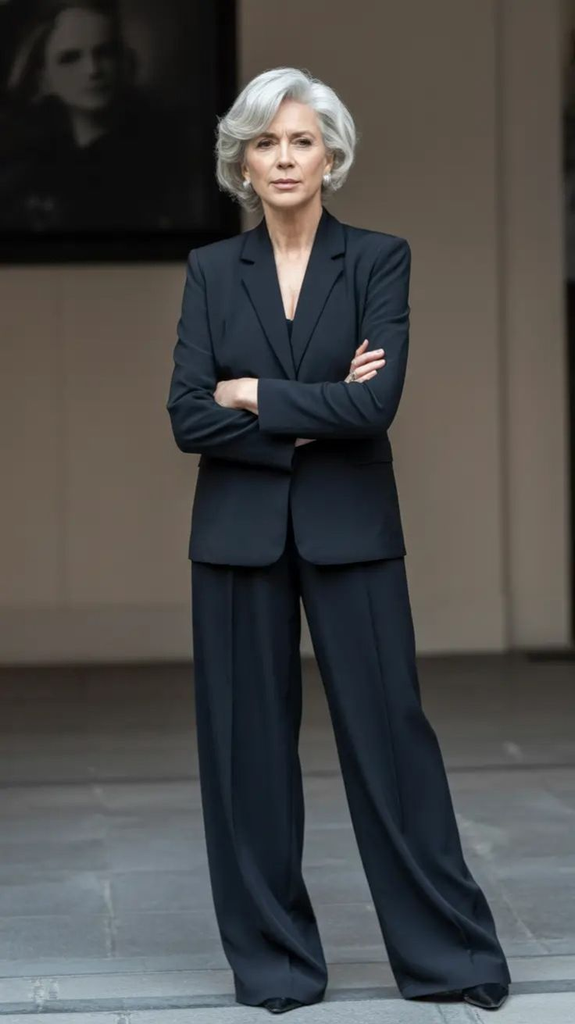
A pantsuit is a strong choice if you like the structure of a blazer but want a coordinated outfit that feels more modern. It can be just as appropriate as a dress for many funerals, especially when the fabric and fit are understated.
A black, navy, or charcoal pantsuit works well with a simple blouse in a matching dark shade. You can also choose a muted neutral if the dress code allows it. The key is to avoid overly shiny fabrics, exaggerated shoulder pads, or details that make the suit feel more suited to an evening party.
I like pantsuits because they reduce the number of decisions you need to make. The jacket and trousers already coordinate, so you only need to think about your blouse, shoes, and bag.
If you’re shopping for a new suit, look for pieces you can wear separately. A blazer that works with jeans or trousers and pants that coordinate with a knit top will give you more value than a suit you wear only once.
Pro tip: Check the fabric label before buying. A breathable blend may be more comfortable for a long indoor service than a heavy synthetic material that traps heat.
14. A Conservative Dress With a Matching Coat
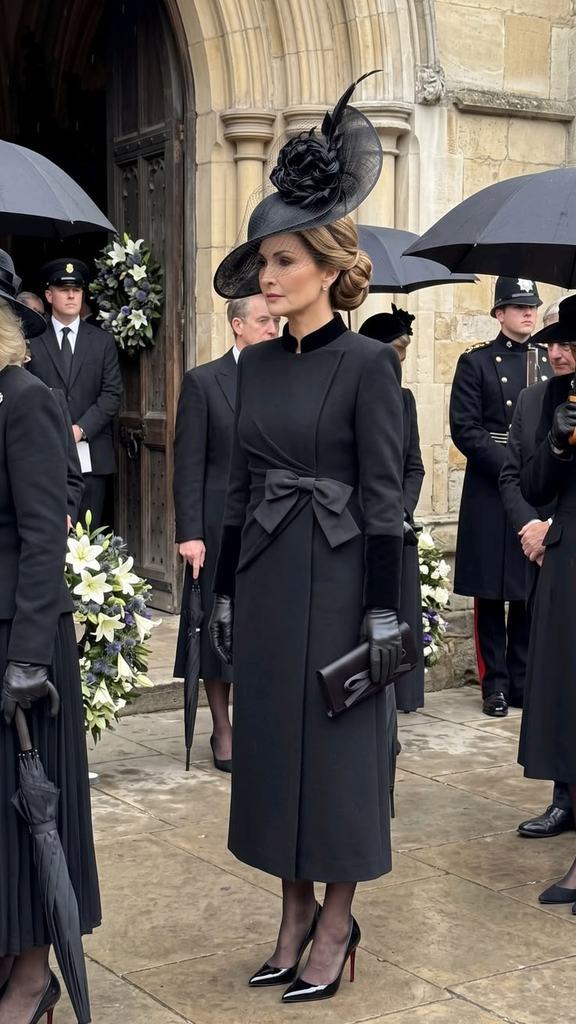
If the funeral is particularly formal or the weather is cold, a dress and matching coat can create a beautifully composed outfit. This combination is especially useful when the service involves both an indoor ceremony and an outdoor graveside gathering.
A black or navy dress with a knee-length or midi hem works well under a simple wool coat. You can also choose charcoal gray, depending on the dress code. A coat with clean lines and minimal embellishment tends to look more timeless than one with a lot of decorative buttons or dramatic trim.
Choose shoes that work with both the indoor and outdoor portions of the day. If you know you’ll be walking on grass, avoid narrow heels that sink into the ground.
You don’t necessarily need to buy a matching coat and dress as a set. A dark coat you already own can look just as appropriate when the colors and proportions work together.
Pro tip: Bring a compact umbrella if rain is expected. It’s a small detail, but staying dry helps you remain comfortable and composed throughout the service.
15. A Simple Black Skirt and Button-Down Shirt
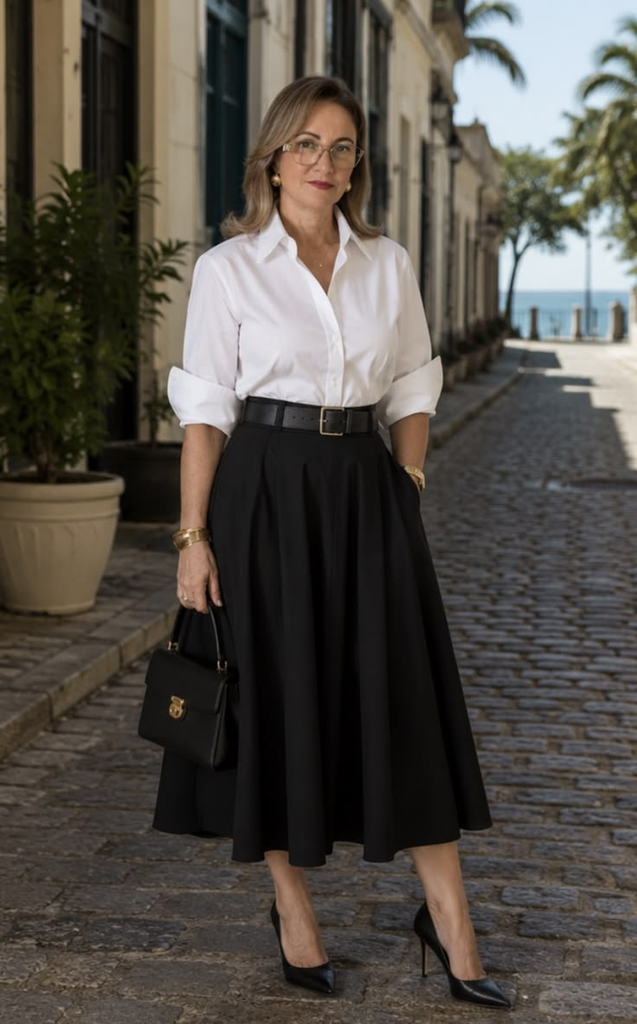
If you prefer classic clothing, a black skirt and button-down shirt can be one of the easiest funeral outfits to assemble. It’s particularly useful when you already own workwear that can be styled more conservatively.
Choose a knee-length or midi skirt with a comfortable waistband and a shirt in black, charcoal, navy, or white. A crisp white shirt creates contrast, while a dark blouse offers a more subdued appearance.
If you wear a white shirt, make sure the fabric isn’t transparent and that the neckline feels appropriate when the top button is undone. You can add a dark cardigan or blazer if you want more coverage.
For footwear, simple flats or low heels are usually enough. A structured handbag and minimal jewelry complete the outfit without making it feel overly styled.
Pro tip: Iron or steam the shirt before leaving home. A wrinkled collar or creased front can make an otherwise polished outfit look unfinished.
What Colors Are Appropriate for a Funeral Over 50?
Black remains a traditional choice in many cultures, but it isn’t the only respectful color. Your decision should reflect the family’s wishes, the type of service, and any religious or cultural expectations.
Here is how I’d approach the most common options.
| Color | Best for | My styling advice |
|---|---|---|
| Black | Traditional funerals and formal services | Pair with simple shoes and understated accessories |
| Navy blue | Traditional or semi-formal services | Combine with black, gray, or navy pieces |
| Charcoal gray | Formal services and tailored outfits | Works especially well with a suit or blazer |
| Dark brown | Less formal services where dark neutrals are appropriate | Keep the outfit simple and polished |
| Deep burgundy | Memorials with a flexible dress code | Choose a muted shade rather than bright red |
| Dark floral prints | Celebrations of life or less traditional services | Keep the background dark and the print subtle |
| Soft neutrals | Services where the family welcomes lighter colors | Check the dress code before wearing cream, beige, or pale gray |
I wouldn’t assume that a bright color is disrespectful in every situation. Some families ask guests to wear a favorite color of the person who died, while others prefer traditional black. When the family has expressed a preference, that matters more than any general fashion rule.
What Shoes Should Women Over 50 Wear to a Funeral?
Shoes are one of the most practical parts of funeral dressing because you may spend much of the day walking, standing, or moving between different locations.
I would prioritize comfort, stability, and a clean appearance over height or trendiness. You can look polished without wearing heels, and there’s no reason to choose uncomfortable shoes for an already emotional day.
| Shoe style | Comfort | Best setting |
|---|---|---|
| Black ballet flats | Usually comfortable for indoor services | Dresses, skirts, and trousers |
| Loafers | Supportive and structured | Tailored trousers and pantsuits |
| Low block heels | More stable than many narrow heels | Formal services and dress outfits |
| Low-heeled ankle boots | Useful in cooler weather | Knit dresses, trousers, and coats |
| Simple dress shoes | Depends on fit and construction | Traditional or formal ceremonies |
| Supportive walking shoes | Practical for long distances | Outdoor services when the dress code allows them |
Before leaving home, make sure your shoes are already broken in. If you have foot discomfort or balance concerns, choose footwear that supports your needs rather than forcing yourself into a particular style.
For a graveside ceremony, I’d also consider the ground. Grass, gravel, mud, and uneven paths can make stilettos difficult to walk in, even if they’re comfortable indoors.
What Should You Wear to a Funeral in Summer?
Summer funerals can be tricky because you want to look respectful without becoming uncomfortably hot. Heavy jackets, thick synthetic fabrics, and multiple layers can make an already difficult day feel even more exhausting.
I would start with a lightweight dress, a breathable blouse with tailored trousers, or a simple skirt and top. Linen blends, lightweight cotton, and breathable crepe can be useful options, provided the fabric isn’t transparent and the garment looks appropriate for the ceremony.
Black is still an option, but you can also consider navy or charcoal if the dress code allows it. If the service is outdoors, a lightweight cardigan or jacket may provide coverage without adding too much warmth.
Choose closed-toe flats or comfortable dress shoes if they suit the setting, and carry a small bottle of water if appropriate. A simple, compact handbag is easier to manage than a large tote when you’re greeting people or moving between venues.
One thing I’d avoid: wearing a very thin dress simply because it’s cool. Hold it up to the light before leaving home and check that the fabric provides enough coverage in bright sunlight.
What Should You Wear to a Funeral in Winter?
For winter funerals, I would build the outfit around layers rather than choosing one very heavy garment. A dark dress with a wool coat, or tailored trousers with a fine-knit sweater and blazer, can look appropriate while keeping you warm.
Black, navy, and charcoal are easy colors to coordinate. Add a dark scarf if the weather is cold, but choose something understated rather than a bright, heavily patterned accessory.
Boots can be practical for outdoor ceremonies, especially when the ground is wet or slippery. If you’ll be walking across a cemetery, look for a stable sole and a comfortable heel height.
You may also want to bring gloves and an umbrella, depending on the forecast. These practical details are easy to overlook when you’re focused on what to wear, but they can make the day considerably more comfortable.
What to Wear to a Funeral at Church
When you’re attending a church funeral, I would lean toward a more conservative outfit unless the family has requested something different. A black midi dress, a tailored pantsuit, or a blouse with dark trousers are all reasonable starting points.
Pay attention to the expectations of the particular congregation. Some religious communities prefer covered shoulders, longer hemlines, or head coverings, while others have a more relaxed approach to clothing.
If you’re unsure, choose an outfit with a modest neckline, sleeves, and a hem around the knee or below. A cardigan or blazer gives you an additional layer if needed.
I’d also avoid clothing with large logos, slogans, or distracting graphics. The goal is to dress in a way that respects the setting and allows attention to remain on the service.
What to Wear to a Graveside Funeral Service
A graveside service often requires a little more planning because you’ll be outdoors and may have to stand for an extended period.
For this setting, I would choose tailored trousers, a midi dress, or a skirt with a cardigan or coat. Wear shoes with a stable sole, particularly if the ground is uneven or wet.
Consider the weather carefully. A light jacket may be enough in mild conditions, but cold or windy weather may call for a warmer coat, scarf, and gloves.
I’d avoid floor-length hems that drag on the ground, narrow heels that sink into grass, and delicate shoes that aren’t suited to outdoor conditions. Practical clothing can still look polished, and you shouldn’t have to sacrifice comfort to dress respectfully.
What Should You Avoid Wearing to a Funeral Over 50?
There aren’t universal rules for every funeral, but certain choices may feel out of place at a traditional or conservative service.
Here are the things I’d reconsider before getting dressed.
- Very revealing clothing: Deep necklines, high slits, and extremely short hemlines may not suit a conservative ceremony.
- Bright or distracting prints: These can draw attention away from the service, particularly when the family has requested traditional attire.
- Heavy sequins or glitter: Eveningwear details may feel too festive for a formal funeral.
- Ripped or distressed jeans: These are usually too casual unless the family has explicitly requested relaxed clothing.
- Uncomfortable shoes: You may be standing or walking longer than expected, so choose footwear you can manage throughout the day.
- Strong perfume: A heavily scented fragrance can be uncomfortable for people nearby, particularly in a crowded indoor venue.
- Large statement jewelry: You don’t need to remove every accessory, but understated pieces are usually easier to wear for a solemn occasion.
- Clothing that needs constant adjustment: If you’re repeatedly pulling at your hem, neckline, or waistband at home, it will probably distract you during the service.
I wouldn’t spend hours worrying about whether every small detail is perfect. If your outfit is clean, neat, appropriate for the setting, and comfortable, you’re already making a thoughtful choice.
How Much Does a Funeral Outfit Cost?
If you already have a few dark basics, you may not need to spend anything at all. I’d start by looking at the clothes you own before shopping for something specifically for the occasion.
If you do need a new piece, these are reasonable illustrative budget ranges in the United States, rather than current store quotes.
| Item | Illustrative budget | When I’d buy it |
|---|---|---|
| Simple blouse | $20–$50 | When you need a more formal top |
| Dark tailored trousers | $30–$80 | When jeans are too casual |
| Cardigan | $25–$60 | When you need extra coverage |
| Simple dress | $40–$100 | When you want an easy one-piece outfit |
| Black flats | $25–$70 | When your current shoes aren’t suitable |
| Basic blazer | $40–$120 | When you need a more formal layer |
| Dark coat | $70–$180 | When the weather requires additional warmth |
Prices vary considerably by brand, fabric, location, and season. You may find suitable options for less at a thrift store or by shopping your own closet.
My personal approach would be to buy the missing piece that gives me the most flexibility. If I already owned black trousers and comfortable flats, I’d probably purchase a simple blouse rather than a whole new outfit.
How to Choose a Funeral Outfit When You Don’t Want to Wear Black
Sometimes black doesn’t feel right, or you simply don’t have enough black clothing to put together a complete outfit. That’s okay.
I’d start with the darkest neutral pieces already in your wardrobe. Navy trousers, a charcoal cardigan, and a muted blouse can work together beautifully. You can also use a dark brown skirt or a deep burgundy dress if the dress code allows it.
If the family has requested a specific color, follow that guidance even if it differs from traditional funeral attire. For a celebration of life, guests may be encouraged to wear brighter shades or clothing connected to the person’s personality.
The important distinction is between dressing according to tradition and dressing according to the family’s wishes. Both can be respectful, but the family’s guidance should take priority when it’s clearly communicated.
How to Look Polished Without Buying a New Outfit
You don’t need a completely new wardrobe to dress appropriately for a funeral. In fact, I think the most useful outfits are often built from simple pieces you already wear.
Here is the order I’d follow when putting an outfit together:
- Start with one suitable main piece. Choose a dark dress, tailored trousers, or a skirt that fits comfortably.
- Add a coordinating layer. A blazer, cardigan, or coat provides coverage and helps the outfit feel finished.
- Choose practical shoes. Make sure you can walk, stand, and sit comfortably.
- Keep accessories understated. Small earrings, a simple watch, and a modest handbag are usually enough.
- Check the fit in natural light. Look for transparent fabric, unexpected wrinkles, and necklines that shift when you move.
- Consider the entire day. Think about travel, the indoor service, any graveside ceremony, and a gathering afterward.
You can also save money by choosing pieces that will work for other occasions. A black cardigan, tailored trousers, or a simple dress can be worn to family gatherings, religious services, work events, and other formal occasions.
Frequently Asked Questions
Can a woman over 50 wear pants to a funeral?
Yes. Tailored trousers, a blouse, and a blazer or cardigan can make a respectful funeral outfit. The main consideration is the formality of the service and any specific dress code. If you’re attending a traditional ceremony, tailored trousers are generally a safer choice than jeans.
Is it disrespectful to wear something other than black?
Not necessarily. Black is traditional in many cultures, but navy, charcoal, and other subdued colors can also be appropriate. Some families even request brighter colors for a celebration of life. When possible, follow the family’s wishes and the customs of the service.
Can I wear a sleeveless dress to a funeral over 50?
A sleeveless dress may be suitable, depending on the setting and dress code. If you’re attending a conservative religious service, bringing a cardigan or blazer is a practical way to provide extra coverage. You can also check with the family if you’re unsure.
Are open-toe shoes appropriate for a funeral?
They may be acceptable at some services, particularly in warm weather or less formal settings. However, closed-toe flats, loafers, and low heels are versatile choices if you’re unsure. For a graveside ceremony, stable shoes are especially important.
Can I wear a floral dress to a funeral?
Yes, if the print and overall outfit suit the occasion. A dark floral dress with small, muted flowers is usually easier to style for a traditional service than a bright, bold print. For a celebration of life, you may have more flexibility.
What should I wear if I don’t own a black dress?
You don’t need one. Dark trousers with a blouse, a navy dress, a charcoal skirt with a sweater, or a simple pantsuit can all work. Start with what you own and focus on fit, coverage, and the formality of the ceremony.
Should women over 50 wear heels to a funeral?
No. There is no requirement to wear heels, and comfort should come first. Ballet flats, loafers, low block heels, and suitable ankle boots can all look polished. Choose footwear that allows you to walk and stand comfortably throughout the day.
Is it okay to wear jeans to a celebration of life?
It can be, depending on the family’s wishes. Some celebrations of life are informal, while others follow the same dress expectations as traditional funerals. If the invitation doesn’t clarify the dress code, tailored trousers are a more versatile choice.
Should I wear makeup and jewelry to a funeral?
You can wear both if you wish. I’d keep makeup comfortable and understated and choose jewelry that doesn’t distract from the occasion. You don’t need to change your personal style completely; a simple, polished version of your usual look is enough.
Final Thoughts on What to Wear to a Funeral Over 50
When I think about what to wear to a funeral over 50, I keep coming back to one simple idea: you should feel comfortable enough to be present for the people who matter.
I’d start with a dark dress or a pair of tailored trousers, add a cardigan or blazer if needed, and choose shoes I know I can wear for several hours. I’d check the family’s dress expectations, consider the weather, and resist the urge to buy an entirely new outfit just because the occasion feels important.
You don’t need to look younger, follow every fashion trend, or hide your personal style to dress respectfully. A well-fitting outfit, thoughtful colors, and a little attention to practical details are more than enough.
And if you’re getting dressed while dealing with the sadness of losing someone, please give yourself some grace. Choose something that feels right, make sure you’re comfortable, and let the rest of the day be about remembering the person you’re there to honor.